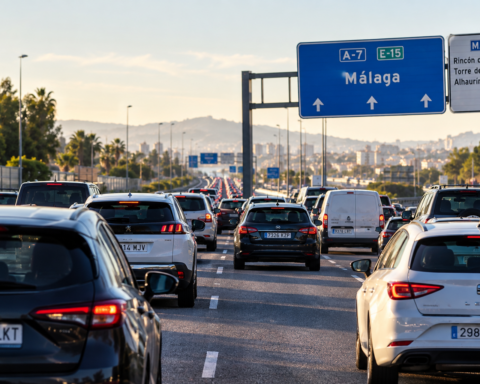
Spain is apparently facing yet another exceptionally hot summer. According to forecasts from the Spanish weather agency AEMET, Málaga could experience one of the most intense summers since records began in 1961 this year. Even spring 2026 already points towards an extreme heat season, characterised by significantly above-average temperatures and pronounced drought conditions.
Spain Expat Press Editorial Team
by Marlon Gallego Bosbach
The warning follows an already unusually warm spring, which meteorologists consider one of the hottest in recent decades. At the same time, many parts of Andalusia received significantly less rainfall than usual, causing soils to dry out early in the year and creating the conditions for a particularly intense summer season.
Early start to the heat season
As early as mid-June, Andalusia is showing a clear trend towards extreme temperatures. In the Málaga region, initial heat warnings have already been issued, as local temperatures may rise to between 35 and nearly 40°C. Particularly notable is the fact that these heatwaves are occurring unusually early in the year and are persisting for several days at a time.
Meteorologists also point out that night-time temperatures are barely dropping, leaving the population with little opportunity to recover. This so-called tropical night-time warmth further increases the health burden and is a typical feature of intense heatwaves in southern Spain. A similar pattern is also emerging at the national level, as early summer temperature peaks have already been recorded in several regions, significantly above long-term averages.
AEMET sees a long-term heat trend
The Spanish weather agency AEMET estimates that the likelihood of an above-average hot summer in Andalusia is around 50 to 60 percent. This assessment is based on climatological models that have shown a clear warming trend in the region for years.
Meteorologists emphasise that Andalusia is particularly strongly affected by warming compared to many other parts of Spain. Summers are not only becoming hotter, but are also starting earlier and ending later, significantly increasing the overall heat burden. The combination of rising average temperatures and longer heat periods means that extreme values occur more frequently and have a greater impact on daily life and the environment.
After a record-breaking summer comes the next one?
A look at recent years clearly illustrates the trend. The summer of 2025 was already recorded as the hottest summer since records began in Spain. Temperatures were significantly above historical averages nationwide, accompanied by long and intense heatwaves.
In the years prior to that, there has also been a clear trend towards increasingly frequent and more intense heat extremes. Several summers over the past decade now rank among the warmest since records began, further reinforcing the scientific consensus on ongoing climate change in the region. AEMET therefore warns that the current developments are not an isolated event, but part of a long-term trend that is expected to continue.
Particularly affected: Málaga and the Costa del Sol
For Málaga and the entire Costa del Sol, this development means an increasing burden from extreme summer heat. The region is not only experiencing more frequent heatwaves, but also longer periods without sufficient night-time cooling. As a result, thermal stress is rising significantly, particularly in urban areas, as cities heat up more and retain warmth for longer.
Tourism, which is of central economic importance to the region, is also increasingly feeling the impact. High temperatures during the summer months are changing visitor behaviour, while at the same time increasing demands on infrastructure, water supply, and healthcare services. Particularly at risk are elderly people, as well as those who spend extended periods outdoors.
Impact on daily life and tourism
The persistent heat is increasingly affecting everyday life for the population. Outdoor activities are often shifted to the early morning or late evening hours, while midday is largely avoided in many areas. The strain on the healthcare system is also rising, as heat-related illnesses and circulatory problems become more common.
In the tourism sector, high temperatures are leading to changes in travel behaviour. Many visitors are increasingly retreating to air-conditioned indoor spaces or avoiding prolonged outdoor stays during the hottest parts of the day. At the same time, the importance of heat protection measures in hotels, public facilities, and tourist areas is growing.
A summer of extremes is taking shape
The current forecasts leave little doubt that Málaga could be facing an exceptionally hot summer. The combination of an already dry spring, early heatwaves, and long-term climatological trends points to a season that is likely to be significantly above the average of recent decades.
Although specific peak values are, by their nature, difficult to predict, a clear picture is already emerging: the summer of 2026 in Málaga could once again rank among the hottest since records began, posing significant climatic and societal challenges for the region.