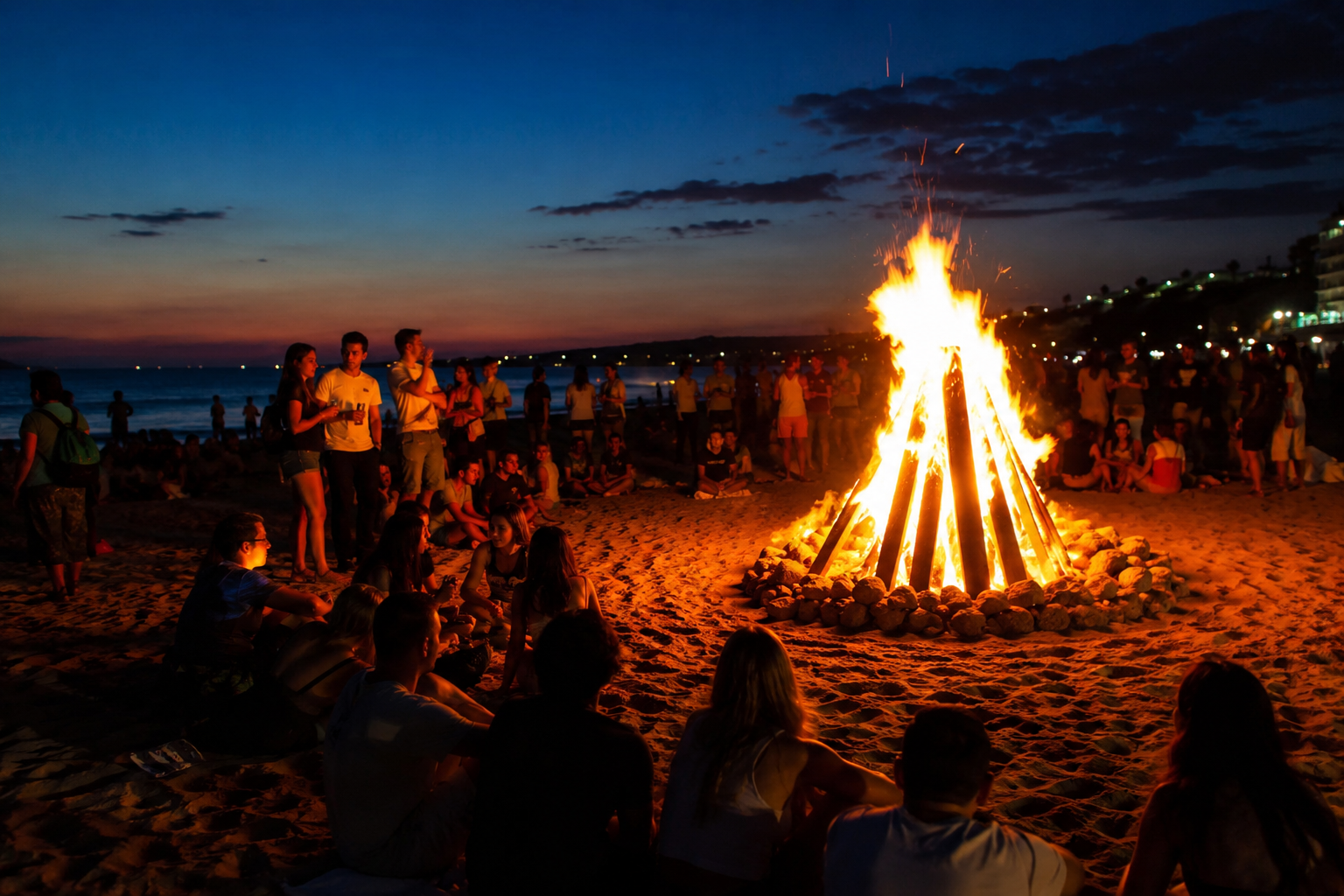

Every year on the evening of 23 June, as the sun sets and the shortest night of the year begins, beaches, town squares and villages across Spain are transformed by bonfires, music and age-old rituals. Known as the Night of San Juan, or Noche de San Juan, it is one of Spain’s most cherished and spectacular traditions.
Today, the celebration is synonymous with beach gatherings, fireworks and festivities that last until dawn. Yet its origins stretch back thousands of years, long before Christianity arrived on the Iberian Peninsula.
Spain Expat Press Editorial Team
Older Than Christianity: The Pagan Origins of San Juan
The roots of the Night of San Juan lie in ancient pagan celebrations linked to the summer solstice. For centuries, communities throughout Europe marked the arrival of summer by lighting large fires in honour of the sun, which begins its gradual decline after the solstice.
Fire was believed to possess purifying and protective powers. According to ancient traditions, flames could ward off evil spirits, bring good fortune and ensure prosperous harvests.
With the spread of Christianity, the Church incorporated these long-established customs into the religious calendar, associating them with the birth of Saint John the Baptist, celebrated on 24 June. The result was the modern Night of San Juan – a unique blend of pagan beliefs and Christian tradition.
A Magical Night Celebrated Across Spain
Although San Juan festivities take place throughout Spain, the most famous celebrations are undoubtedly those held along the country’s coastline.
In cities such as Alicante, Málaga, Barcelona and A Coruña, thousands of people flock to the beaches to welcome the summer around roaring bonfires.
Particularly renowned are the Hogueras de San Juan in Alicante, one of Spain’s most impressive summer festivals. During these celebrations, enormous artistic monuments are set ablaze in a spectacular ceremony known as La Cremà.
The Most Popular San Juan Rituals
The Night of San Juan is surrounded by countless rituals and superstitions, many of which are believed to bring luck, love and prosperity.
Among the most popular traditions are:
Jumping over bonfires: Traditionally, people leap over the flames three or seven times to symbolically cleanse themselves of negative energy.
Midnight swims in the sea: Bathing in the sea at midnight – or at least dipping one’s feet into the water – is said to bring health and good fortune for the coming year.
Burning wishes and fears: Many people write down their hopes, dreams or worries on paper before casting them into the flames as a symbolic fresh start.
Washing the face with seawater or morning dew: According to popular belief, this ritual ensures beauty and good health throughout the year.
More Than Just a Festival
For many Spaniards, the Night of San Juan marks the true beginning of summer. It is a night spent with family and friends, sharing food, music and traditions beneath the stars.
In an increasingly modern society, the festival continues to demonstrate the enduring importance of tradition in Spain. Year after year, millions gather around bonfires to keep alive a celebration that has survived for centuries.
Denn für viele ist die Magie der Johannisnacht auch heute noch genauso lebendig wie vor Tausenden von Jahren.