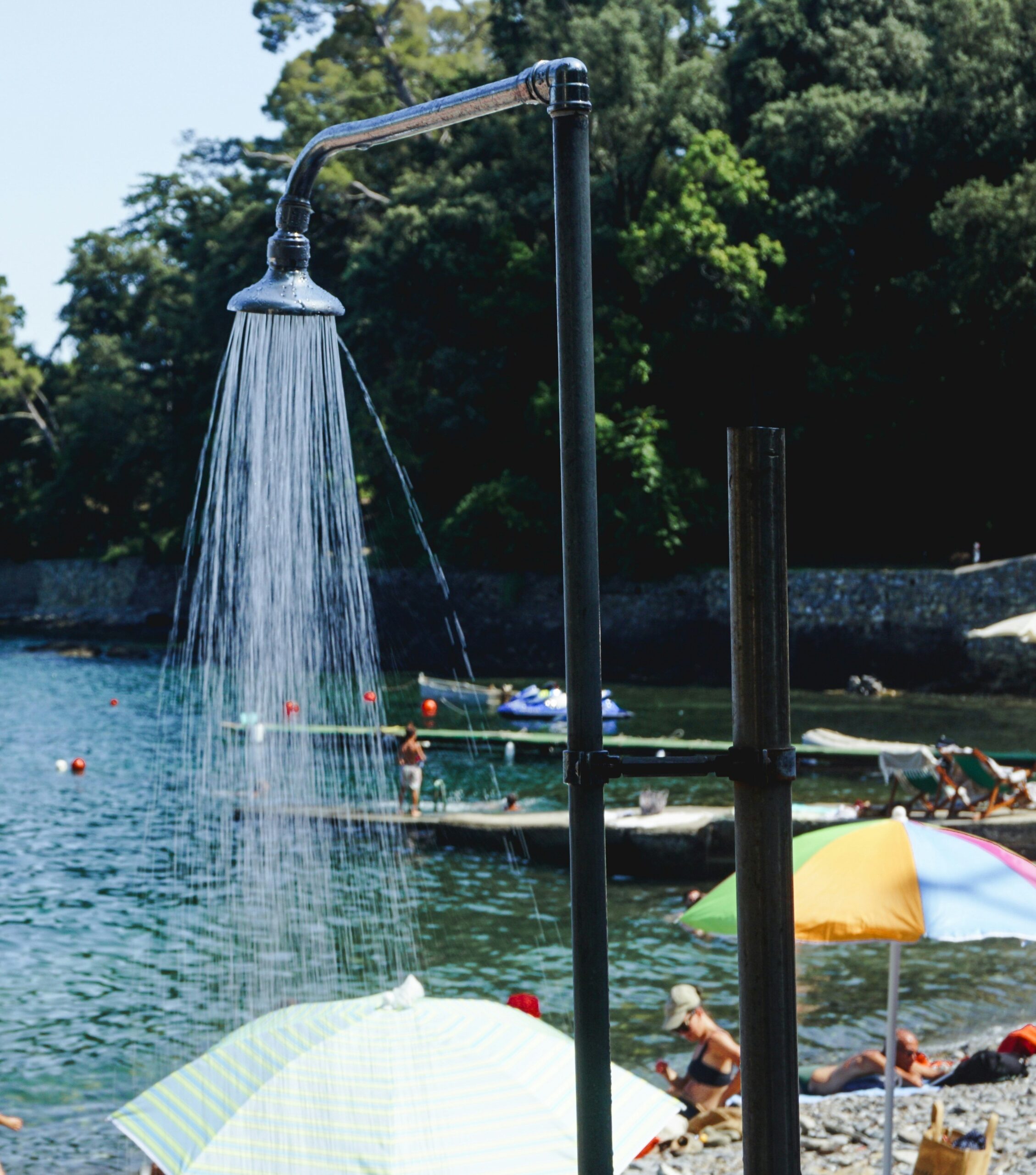
At several beaches in Andalusia, a new system is currently being tested that could fundamentally change the traditional use of beach showers. In the coastal area of Matalascañas (Huelva), so-called smart showers have been installed which digitally record water consumption and could, in the long term, become chargeable.
Spain Expat Press Editorial Team
by Marlon Gallego Bosbach
The idea is already sparking debate, as public beach showers in Spain have traditionally been a free service for beachgoers. However, this model could change in the future, at least in some regions with a particular focus on water conservation.
Digital technology replaces traditional beach showers
The new installations no longer work like traditional showers with a simple button or lever. Instead, access is digitally controlled. Users are expected to either sign in via a QR code using their smartphone or, depending on the model, activate the system through a payment platform. The shower then runs for a limited time and stops automatically once the booked usage period has expired.
During the current testing phase, there are no costs for beachgoers. The systems are initially being used solely for data collection in order to better analyse water consumption and usage patterns.
Debate over possible per-minute charges
Whether the showers will become chargeable in the long term has not yet been finally decided. However, current plans include the possibility of billing based on usage time. Various scenarios are being discussed, with potential charges ranging from a few cents per minute to small flat fees for very short usage periods, depending on the model.
This would mean that a quick rinse after a swim in the sea would no longer automatically be a free public service, but instead a small, time-limited paid service.
Background: water conservation on the Andalusian coast
The main driver behind the project is the management of water resources. Andalusia is one of the regions in Spain that regularly faces drought and water scarcity. During the peak tourist season in particular, water consumption at public beaches rises significantly, especially due to showers used to rinse off sand and saltwater.
Local authorities see the smart showers as a way to better manage water consumption and reduce unnecessary usage. Through digital monitoring, it should be possible to accurately track how much water is actually being used and at what times consumption peaks occur.
Holidaymakers would have to adapt to new procedures
If the system is introduced beyond the trial phase, it would change a routine aspect of daily life for many beachgoers in Andalusia. Instead of simply walking up to a shower, users may in future be required to complete a short digital registration or payment process.
This could initially feel unfamiliar, particularly for international tourists, as public beach showers in many parts of Europe have traditionally been free to use. In addition, access would become more dependent on smartphones or other digital payment methods.
Criticism between progress and restriction
The introduction of smart showers is being viewed differently at local level. Supporters see it as a modern approach to using resources more efficiently and making coastal infrastructure more sustainable. The technical aspect of consumption monitoring is also considered an advantage.
Critical voices, however, warn that a previously free public service could gradually be turned into a paid model. In particular, the potential reliance on digital systems and the additional cost burden for beachgoers are fuelling debate.
No final system has yet been decided
It is important to note, however, that the current installations in Andalusia are still in the testing phase. There is currently no plan for a widespread rollout or a binding pricing structure. A decision on whether and in what form the system will be implemented permanently will only be made after the pilot phase has been evaluated.
For now, it therefore remains unclear whether beachgoers in Spain will in future actually have to pay for every minute under the shower – or whether the project will remain simply an experimental solution aimed at better managing water consumption.