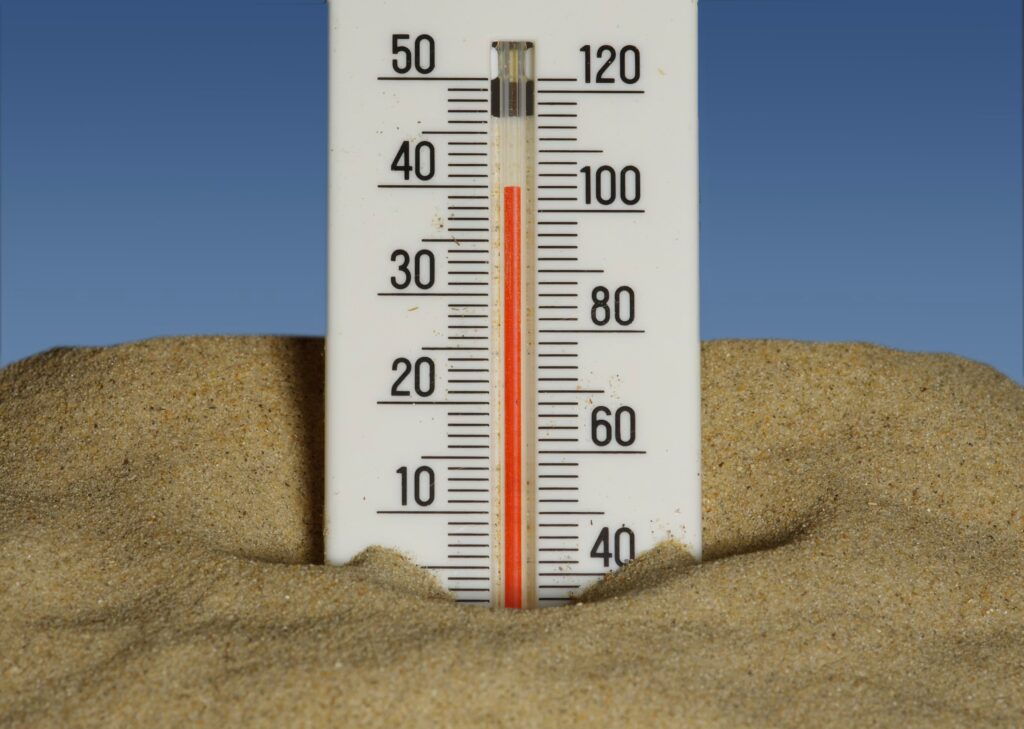
The sea around the Balearic Islands has reached temperatures rarely seen even at the height of summer, with a monitoring buoy off Mallorca recording a remarkable 33.02C this week
Spain Expat Press Editorial Team
The measurement was taken on Wednesday at the Dragonera buoy, located south-west of Mallorca. According to Spain’s state meteorological agency AEMET, the figure could represent a new all-time record within the monitoring network operated by Puertos del Estado.
Satellite analysis from the European Copernicus Marine service also indicates unusually high sea-surface temperatures across the waters surrounding the Balearic archipelago.
If confirmed, the latest measurement would represent a substantial increase on the previous record.
Previous record surpassed by 1.66C
The previous highest temperature recorded at the Dragonera buoy dated back to the exceptionally hot summer of 2022.
On 11 August that year, the buoy registered 31.34C. Less than two weeks later, on 24 August, the temperature climbed slightly further to 31.36C, establishing what had remained the highest reading in the series.
The new measurement of 33.02C would exceed that record by 1.66C.
Such a difference is particularly significant when it comes to sea temperatures, as large bodies of water generally heat up and cool down much more slowly than the atmosphere.
Waters around the Balearics unusually warm
The extreme reading off Dragonera does not appear to be an isolated phenomenon.
Satellite observations from Copernicus Marine show sea-surface temperatures around Mallorca, Menorca, Ibiza and Formentera running well above the seasonal average.
Current analysis indicates anomalies of around 2C above normal in parts of the waters surrounding the islands.
The figures suggest that the exceptional warmth is not restricted to a single coastal location, but forms part of a much broader period of unusually high temperatures across the western Mediterranean.
Why a 33C Mediterranean matters
For holidaymakers, exceptionally warm seawater may initially sound appealing. From an environmental and meteorological perspective, however, temperatures of this magnitude are far from insignificant.
The Mediterranean regularly becomes very warm during July and August, but temperatures above 30C are considered exceptional, particularly when they persist across large areas.
Prolonged marine heat can place considerable stress on underwater ecosystems. Species adapted to relatively stable temperature ranges can struggle during extended periods of extreme warmth, while warmer conditions can also alter the distribution of marine life.
Higher sea temperatures also increase evaporation, allowing more moisture to enter the atmosphere.
A warmer sea can provide more energy for severe weather
Exceptionally warm Mediterranean waters can also become an important factor in the region’s weather.
Warm seas release both heat and moisture into the atmosphere. However, high sea temperatures alone do not cause torrential rain or severe storms.
For extreme rainfall to develop, several atmospheric ingredients need to come together.
When very warm Mediterranean waters encounter colder air aloft and an unstable weather pattern, particularly towards late summer and autumn, the additional heat and moisture available from the sea can contribute to more powerful thunderstorms and intense rainfall.
This is one reason meteorologists monitor Mediterranean sea temperatures particularly closely as summer progresses.
Another extraordinary figure in Spain’s extreme summer
The Dragonera measurement comes during a summer already characterised by exceptionally high temperatures across Spain.
While heat warnings remain in force on land and parts of the country are once again facing temperatures around or above 40C, the latest figures from the Balearic Sea provide another indication of just how much heat has accumulated across the region.
The 33.02C measurement will need to be fully validated before being regarded as an official record.
What is already clear, however, is that the waters surrounding the Balearic Islands are exceptionally warm — even by the standards of a Mediterranean summer.