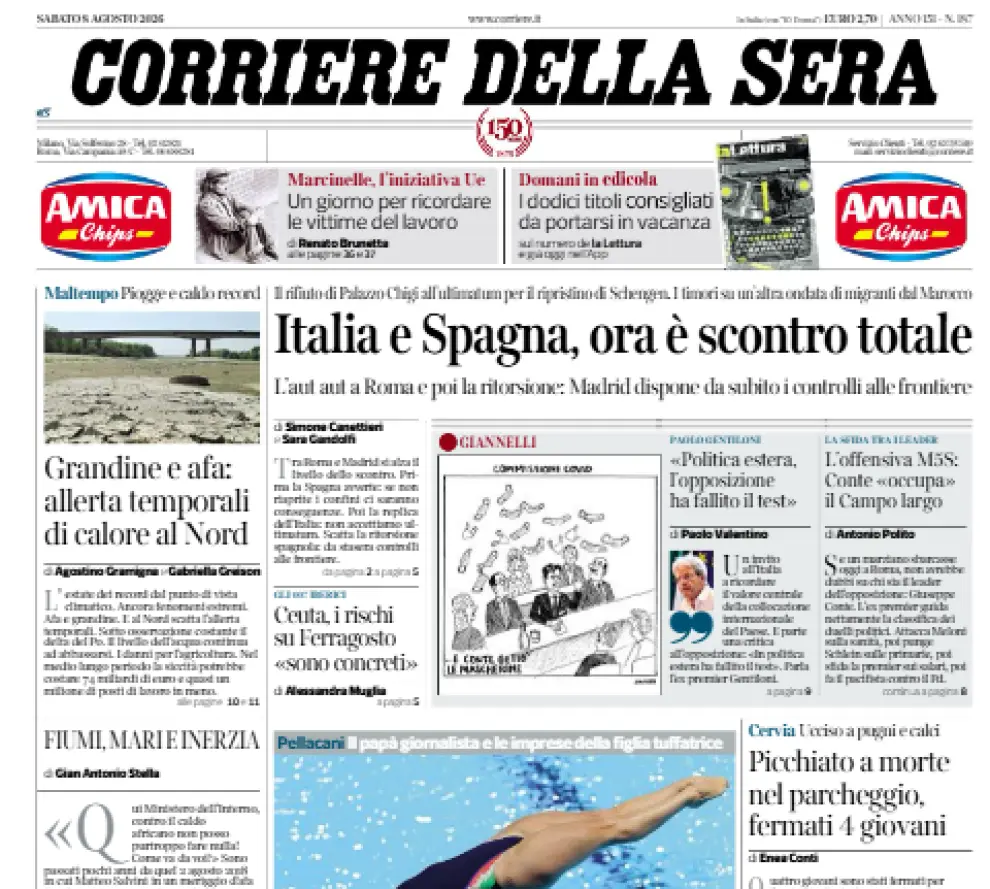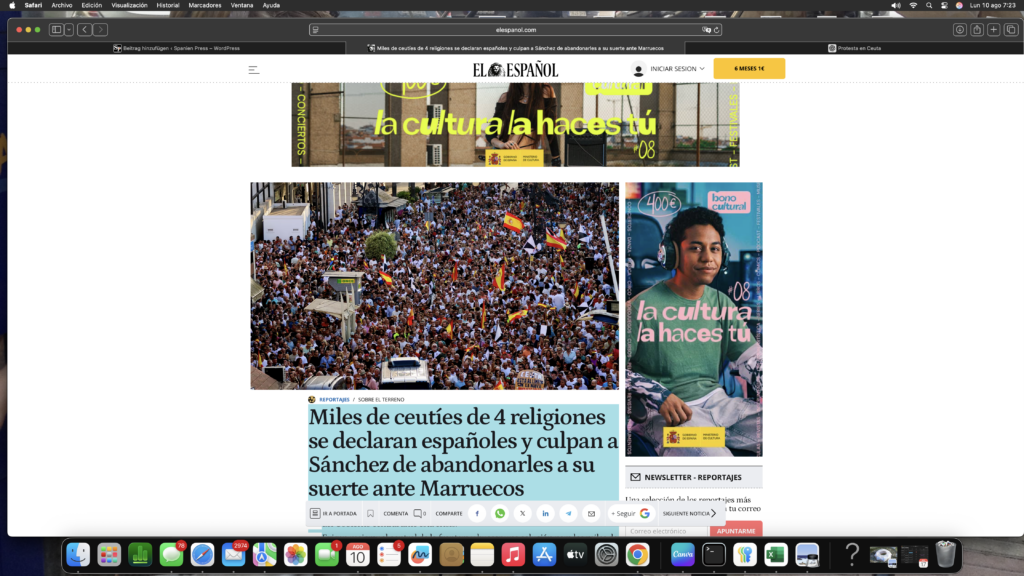
The border is quiet again and most of the television crews have moved on. But ten days after the extraordinary mass arrival from Morocco, Ceuta remains caught between normality and the aftermath of a crisis it was never equipped to absorb. Children are still being identified, the care system is overwhelmed and local mothers are opening their homes to vulnerable girls. Europe may have moved on to arguing about Schengen. Ceuta has not.
Spain Expat Press Editorial Team
In the morning, Ceuta looks like Ceuta again.
The cafés open. Cars edge through its narrow streets. Across the water and beyond the border lies Morocco, as close as it always is in this small Spanish city on the North African coast.
Ten days ago, nothing here felt ordinary.
On 30 and 31 July, tens of thousands of people crossed from Morocco into Spanish — and therefore European — territory in the space of barely two days. Some swam. Others crossed on foot. There were children among them, some travelling alone. And there were those who never made it.
Europe watched the pictures.
Then the cameras moved on.
Ceuta was left to deal with what came afterwards.
The Spanish authorities estimate that around 70,000 of the roughly 72,000 people who entered during the extraordinary migration surge have since returned to Morocco.
On paper, that sounds remarkably close to the end of a crisis.
On the streets of Ceuta, it does not feel like one.
A city trying to count its children
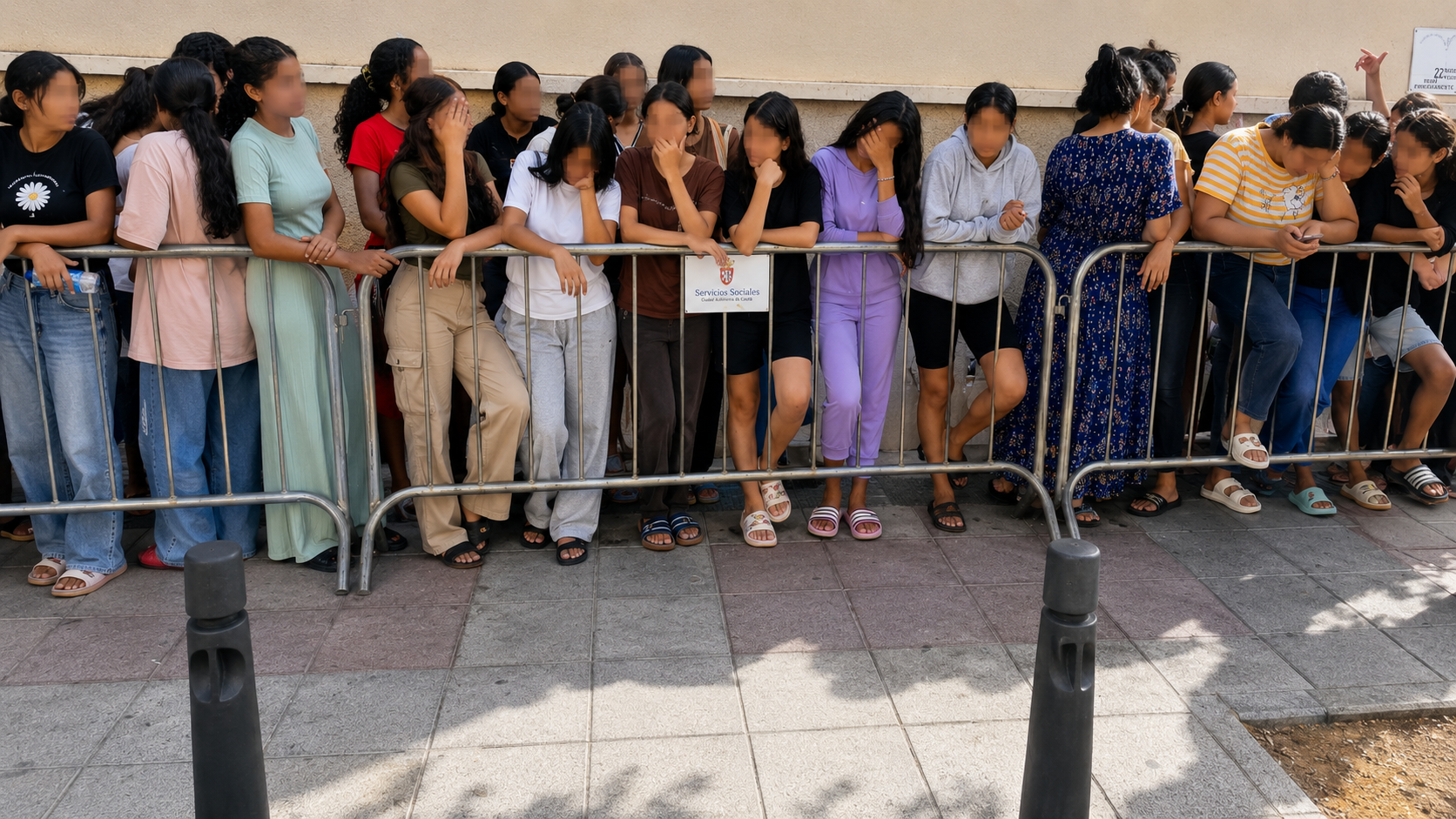
The Spanish authorities have now officially registered 1,342 minors.
It is an extraordinary figure for a city of only about 85,000 inhabitants.
And nobody can say with certainty that it is the final number.
Aid organisations have warned that children and teenagers may still remain outside the official protection system — sleeping rough, staying with private individuals or moving between parks, wooded areas and other improvised places of refuge.
At the height of the emergency, Save the Children cited estimates suggesting that between 4,000 and 7,000 minors may have crossed into Ceuta during the mass arrival. Those figures are not official and should not be confused with the number now registered by the authorities.
But they illustrate the scale of the problem confronting the city.
At one point, residents themselves began trying to establish how many children were out there.
A group of locals compiled its own list of minors encountered across different neighbourhoods.
A citizens’ initiative had become, in effect, an improvised census.
Perhaps nothing better illustrates the strange reality of Ceuta over the past ten days.
Where institutions could not move quickly enough, ordinary people began filling the gaps.
When a stranger’s child sleeps in your home
This is the other story of Ceuta.
One that received considerably less attention than the extraordinary pictures at the border.
Residents have distributed food, water and clothes. Some have helped children find the authorities. Others have provided somewhere to sleep.
And some have simply opened their front doors.
The situation facing the girls is particularly disturbing.
Spanish media have documented cases of local women — many of them mothers themselves — taking young Moroccan girls into their family homes because they were frightened to leave them sleeping outside.
Women such as Zohra, Wafa and Rajaa have offered food, clean clothes, a shower and a bed to girls who, only hours earlier, were complete strangers.
There is nothing institutional about it.
No grand programme.
No European strategy.
Just one woman looking at a frightened girl and deciding that she cannot leave her outside for the night.
In the Sidi Embarek neighbourhood, residents have even turned a small five-a-side football pitch into an improvised refuge reserved for girls.
It is an extraordinary act of solidarity.
It is also an indication of how dangerous the alternative can be.
The most dangerous nights
A court in Ceuta is now investigating six alleged sexual assaults involving migrant girls following the events at the end of July.
At least four minors have received medical attention in cases involving alleged sexual violence, according to health sources. Two reported attempted rape, while in two other cases there were indications of completed rape.
The authorities are investigating.
But there is another question hanging over Ceuta: how many cases will never reach a hospital, a police station or a courtroom?
Nobody can responsibly put a number on that.
Nor should speculation be presented as fact.
What child-protection organisations can say is that girls living outside the formal care system are exceptionally vulnerable — to sexual violence, exploitation and trafficking.
Some are very young.
Many arrived without their parents.
They have little or no money, do not know the city and may have no idea which adults they can trust.
It is precisely this fear that has prompted women in Ceuta to take girls into their own homes.
The fear that a child without a safe bed tonight might become another victim before morning.
It is one of the most striking images of the aftermath.
While Madrid and Rome quarrel over Schengen and Brussels tries to contain the diplomatic fallout, mothers in Ceuta are opening their doors to girls whose names they did not know the day before.
A city both frightened and generous
It would, however, be misleading to turn Ceuta into a simple tale of civic heroism.
The city has also been frightened.
During the most chaotic days, residents in some neighbourhoods erected makeshift barriers to prevent strangers entering residential streets. There were searches for migrants still hiding or sleeping in neighbourhoods and reports of thefts, confrontations and tense encounters.
For some residents, the sudden arrival of a population almost equivalent to that of the city itself was deeply unsettling.
There was anger.
There was suspicion.
There was fear.
And, sometimes only a few streets away, there were people handing out sandwiches and water or allowing a Moroccan child to sleep under their roof.
The two realities are not contradictory.
A city can be frightened and compassionate at the same time.
A mother can worry about uncontrolled migration and still refuse to leave a 14-year-old girl sleeping alone in the street.
Ceuta is living with both truths.
A child-protection system pushed beyond its limits
For the authorities, the most urgent problem is now the minors.
Ceuta was already struggling to meet its legal obligations towards unaccompanied children before the latest crisis.
After the mass arrival, the regional government said its designated capacity had at one point reached an extraordinary 2,872 per cent occupancy.
The word “overcrowded” hardly seems adequate.
The Spanish government has pledged an additional €25 million in support.
Youth and Children Minister Sira Rego has travelled to Ceuta for talks with Juan Jesús Vivas, the president of the autonomous city, and a permanent technical team is due to begin work on 16 August to accelerate identification, protection procedures and possible transfers to mainland Spain.
Vivas continues to describe the situation as unsustainable.
He wants Morocco to be part of the solution.
The central government, meanwhile, insists that each child’s circumstances must be examined individually, including the possibility of family reunification, while some minors could be transferred to other Spanish regions.
And inevitably, another political battle has begun.
Several regional governments are resisting the prospect of receiving more children.
The minors of Ceuta have become part of Spain’s domestic political argument.
Doctors and nurses were pushed hard, too
The city’s health services also felt the force of the emergency.
More than a thousand additional medical consultations were recorded in connection with the migration crisis.
During its most intense phase, the nursing union SATSE warned of severe operational pressure and exhausted staff struggling to cover additional shifts.
But precision matters here too.
Ceuta’s healthcare system has not collapsed.
Medical services continued to function, and the health authorities subsequently stressed that care was being maintained.
What the crisis exposed was something different: how little spare capacity a city of Ceuta’s size possesses when tens of thousands of people arrive almost overnight.
A hospital can continue operating and still be pushed frighteningly close to its limits.
🏠 Vecinos de Ceuta habilitan un polideportivo para mujeres y niñas.
👧 Cerca de 200 mujeres y menores que estaban en la calle han encontrado refugio gracias a los vecinos, que denuncian la falta de agua, baños y productos de higiene.
⚖️ Abogadas voluntarias trabajan para… pic.twitter.com/haQckQQdjY
— Malas Lenguas (@MalasLenguas_Tv) August 7, 2026
And then there are the dead
There is another Ceuta that is easier to overlook now that normal life is returning.
The Ceuta of the dead.
At least 142 people are reported to have died during the attempt to reach Spanish territory in the crisis surrounding the mass crossings.
Bodies still had to be identified days after the initial emergency, while families waited for news.
The number changes the perspective on almost everything that followed.
The diplomatic argument between Spain and Italy.
The row over internal Schengen border checks.
The debate about which Spanish region should take how many children.
The political calculations in Madrid, Rome and Brussels.
Behind all of them is the sea.
And people died in it.
Now Ceuta is watching 15 August
The city is already looking towards another date.
15 August.
Calls circulated on social media for another mass attempt to cross the border from Morocco.
Nobody knows whether those messages will translate into another serious movement of people.
But after what happened at the end of July, nobody in Ceuta can afford simply to dismiss them.
The security services are watching closely.
The date has even acquired significance beyond Spain. Italy has cited the possibility of further migration pressure on Ceuta as part of the justification for its controversial checks on travellers arriving from Spain — measures that have now triggered retaliatory Spanish controls on arrivals from Italy and drawn Brussels into efforts to defuse the confrontation.
A crisis in a tiny Spanish territory in North Africa has thus travelled remarkably far.
It has reached Madrid.
Rome.
Brussels.
And the heart of the argument over Schengen.
The border is quiet. Ceuta is not.
That may be the clearest way of understanding Ceuta ten days on.
The extraordinary crowds have disappeared.
Most of those who crossed have returned to Morocco.
The border is calm.
But crises do not end simply because people stop climbing fences or swimming across the sea.
They end when the children who remain have somewhere safe to sleep.
When the authorities know who and where they are.
When girls no longer need to be hidden away on an improvised football pitch for fear of what might happen to them during the night.
When nurses, police officers, social workers and volunteers can return to something resembling an ordinary working day.
And when families no longer have to decide whether to open their own front door to somebody else’s child.
Europe is now debating Schengen, migration policy and the political confrontation between Pedro Sánchez and Giorgia Meloni.
In Ceuta, the question can be much simpler.
Who will make sure this girl has somewhere safe to sleep tonight?