Following the total solar eclipse of 2026, Spain is already preparing for another extraordinary celestial spectacle. On 2 August 2027, the Moon’s shadow will once again sweep across the country – this time through the south. Andalusia, the Costa del Sol, as well as Ceuta and Melilla, will be at the centre of the event.
Spain Expat Press Editorial Team
by Marlon Gallego Bosbach
Anyone in Spain who looked towards the Sun on 12 August 2026 witnessed an extraordinary natural spectacle. But the series is far from over for Spain. The next total solar eclipse will take place as early as 2 August 2027 – and this time, it will primarily affect the southern part of the country.
While the 2026 eclipse brought large parts of northern Spain and the Balearic Islands into the spotlight, the path of totality in 2027 will cross the far south of the Iberian Peninsula. This will make Andalusia one of the most interesting places in Europe from which to witness the event.
Andalusia lies directly within the path of totality
The Moon’s umbral shadow will reach Spain from the Atlantic before crossing the southern part of the Iberian Peninsula. Parts of the provinces of Cádiz, Málaga, Granada and Almería will be particularly affected. Ceuta and Melilla will also lie within the path of totality.
The region around the Strait of Gibraltar is among the locations of particular interest. In Tarifa, astronomical calculations indicate that totality could last around four and a half minutes. Ceuta also experiences a phase of similar duration. In Málaga, however, the situation is somewhat more nuanced: not the entire city area lies within the zone of totality, meaning the precise observation location plays a crucial role.
This means that anyone wishing to experience the darkness in full should not simply choose just any location on the Costa del Sol. A difference of just a few kilometers can determine whether the sun disappears completely or is only partially covered by the moon.
Several minutes of darkness
The eclipse is particularly spectacular not only because of its totality but also because of its duration. In parts of southern Spain, the sun will be completely covered by the moon for more than four minutes. Totality lasts even longer further south and east. The peak of the entire eclipse occurs in Egypt, where totality can last more than six minutes.
For Spain, however, this means an exceptionally long period of totality—and thus significantly more time to observe the characteristic phenomena of a solar eclipse. During totality, the sky darkens noticeably in a short space of time. For a few minutes, the surroundings can take on the appearance of an unusual twilight.
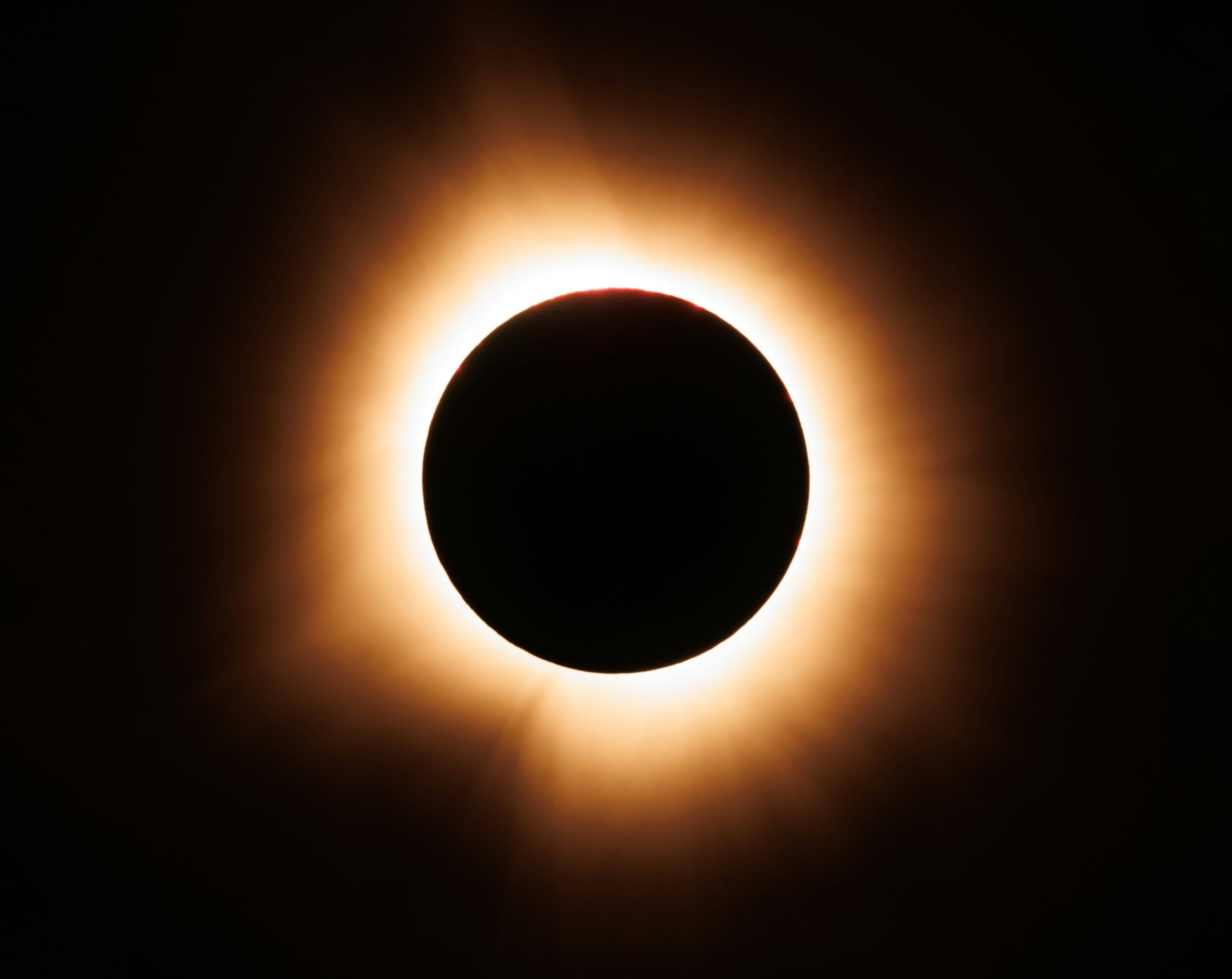
The solar corona, which becomes visible during the period of total obscuration, is particularly impressive. Shortly before and after totality, the so-called “diamond ring” and Baily’s beads can also be observed. It is precisely these few minutes that make a total solar eclipse one of the most extraordinary astronomical events that can be experienced with the naked eye.
2027 could become a new tourism event for the Costa del Sol
The eclipse is likely to be of interest to more than just astronomers; it could also prove significant for Andalusia in terms of the economy and tourism.
The Costa del Sol is already one of Spain’s most important holiday regions. Places such as Málaga, Marbella, and the towns along the coast attract large numbers of visitors in August. Moreover, a total solar eclipse provides an additional reason for international visitors to travel specifically to southern Spain.
The 2026 eclipse already demonstrated the level of interest such an event can generate. For 2027, the focus is likely to shift southward. Consequently, hotels, vacation rentals, campsites, and restaurants in prime viewing areas could see high demand well in advance.
Anyone wishing to experience the darkness should plan early
August 2, 2027, falls on a Monday and falls right in the middle of the Spanish holiday season. At the same time, many people will be trying to find a suitable viewing spot as close as possible to the zone of totality. This could lead to significant traffic problems, particularly around Cádiz, Tarifa, Málaga, and the Strait of Gibraltar.
Anyone wishing to observe the event specifically should therefore not wait until the morning of the eclipse to set out from Málaga or Marbella. It would likely make more sense to arrive in the chosen region a few days in advance. Several factors also play a role in selecting an observation site: the exact duration of totality, the altitude of the sun, an unobstructed view of the sky, and, of course, weather conditions.
Spain is experiencing an extraordinary run
The event is made even more remarkable by an extraordinary series of solar eclipses: within a span of just about a year and a half, Spain will experience three spectacular celestial events—a total solar eclipse on August 12, 2026, another total solar eclipse on August 2, 2027, and an annular solar eclipse on January 26, 2028.
During the annular eclipse in January 2028, the Sun will not disappear completely. Instead, a bright ring will remain visible around the Moon—the so-called “Ring of Fire.” This makes Spain the setting for a series of extraordinary solar events within a short period.
In Germany there will only be a partial eclipse in 2027
Anyone wishing to experience the total eclipse must travel south from Germany, Austria, or Switzerland. While the solar eclipse will be visible in German-speaking regions, it will only be partial. The crucial difference is that the solar disk disappears completely only within the narrow zone of totality.
For many observers, southern Spain is therefore likely to be particularly attractive. The region is relatively easy to reach from Germany and combines the astronomical event with a stay on the Mediterranean.
Eye protection remains crucial
For the 2027 solar eclipse, the same rule applies: one must never look directly at the sun without protection during the partial phases. Suitable solar eclipse glasses or appropriately certified solar filters are required.
The Sun can be viewed without a filter only during the brief phase of complete totality. As soon as any part of the solar disk becomes visible again, eye protection must be used once more.
A date Spain should already have on its calendar
The total solar eclipse on August 2, 2027, promises to be far more than just an astronomical event for Spain. Following the 2026 eclipse, the next major celestial spectacle will arrive just a year later—this time centered on Andalusia and the south of the country.
Anyone wishing to experience totality should therefore start thinking about their choice of location well in advance. After all, one thing is already certain: on August 2, 2027, many people will be turning their gaze toward southern Spain. And anyone wanting to witness the eclipse from a prime viewing spot would do well not to wait until the hotels and best locations are already fully booked.