Anyone driving from Spain to Portugal won’t face a traditional border check, but they do need to be prepared for some important differences. Rules regarding tolls, roundabouts, and emergency equipment, in particular, are ones that many Spanish drivers are unfamiliar with. There are also a few things to keep in mind when driving a rental car.
Spain Expat Press Editorial Team
by Marlon Gallego Bosbach
For many people in Spain, Portugal is practically on their doorstep. Whether for a summer holiday, a long weekend, or a quick trip to Porto, Lisbon, or the Algarve, crossing the border is straightforward. Nevertheless, drivers should not assume that the same traffic rules automatically apply in Portugal as in Spain.
The most important difference concerns tolls. In addition to traditional toll booths, Portugal has roads where fees are collected exclusively via electronic systems. Drivers who simply continue without paying may subsequently receive a payment request or even a fine.
No regular border control – but important documents
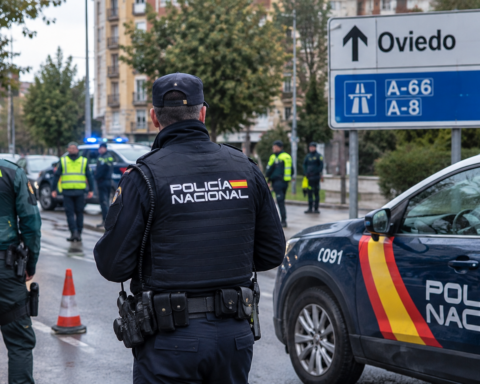
Spain and Portugal are both part of the Schengen Area. Consequently, there are generally no routine border checks at their shared border. Nevertheless, drivers should always carry their essential documents with them. These include an identity card or passport, a driver’s license, vehicle registration documents, proof of the ITV (vehicle inspection), and valid insurance.
Especially during a traffic stop or an accident, it can be important to be able to produce the relevant documents immediately.
These speed limits apply in Portugal
As in Spain, the speed limit depends on the specific road. In general, the maximum speed in Portugal is 50 km/h on urban roads. A limit of 90 km/h applies to secondary roads, while speeds of between 100 and 120 km/h are permitted on motorways and expressways, depending on the specific route. However, the actual signage on site is always the deciding factor.
Spanish drivers are also largely familiar with the other basic rules. Seat belts are mandatory, children must be properly secured, and the use of a mobile phone while driving is prohibited. Regarding alcohol and driving, the general limit is 0.5 grams per liter of blood. A lower limit of 0.2 grams per liter applies to novice and professional drivers.
Portuguese tolls: Here lies the biggest trap
For many Spanish drivers, Portuguese tolls are the most complicated part of the journey. Portugal has two different systems. At traditional toll stations, payment is made directly—just as in Spain—either in cash or by card. Drivers with a compatible electronic toll system can use the designated lanes.
However, there are also roads without toll barriers. On these roads, cameras capture the license plate, and the toll is processed electronically. Drivers traveling without the appropriate payment registration risk running into problems later on and potentially facing a fine.
What options are there?
Those who already own a compatible electronic toll device have the easiest time of it. The Via-T system from Bip&Drive, which is widely used in Spain, is compatible with the Portuguese system. A temporary Vía Verde device can also be used.
There are several alternatives for drivers who do not have an electronic device. One of the simplest options is EasyToll, which links a bank card to the vehicle’s license plate. The system remains active for 30 days. Registration is possible at specific border crossings, including the A28 near Viana do Castelo, the A24 about 3.5 kilometers past the border near Chaves/Verín, the A25 in the Alto de Leomil area near Vilar Formoso, and the A22 near Vila Real de Santo António.
Another option is the TollCard. This is a prepaid solution that can be purchased online, at Portuguese post offices, or in select shops. The card is linked to the vehicle’s license plate and can be topped up with amounts ranging from 5 to 40 euros. The balance is deducted accordingly when passing through electronic toll points. Therefore, anyone who frequently uses toll roads should ensure they do not run out of credit.
Virtual options are also available for foreign vehicles. These include a three-day virtual pass offering unlimited travel for a flat rate. In addition, there is a virtual multi-trip pass for specific routes, including connections between Spain and the airports in Porto or Faro.
Especially important: Roundabouts in Portugal
One traffic rule consistently causes uncertainty among foreign drivers: how to behave at a roundabout.
In Portugal, anyone not intending to take the first exit must generally use the inner lane. The driver remains in that lane until approaching their desired exit, only moving to the outer lane immediately before the exit itself.
Conversely, anyone who stays in the outer lane while passing an exit can face a fine of between 60 and 300 euros. It is therefore worthwhile for drivers from Spain to be particularly attentive at Portuguese roundabouts.
Dashcams in Portugal: Proceed with caution
There is also a significant difference compared to Spain when it comes to dashcams. The Portuguese data protection authority (CNPD) prohibits the use of dashcams on public roads due to applicable data protection regulations. Even installing a dashcam in the vehicle can be problematic and lead to heavy fines.
Anyone driving with a dashcam—common in Spain—should therefore not simply leave it running when driving into Portugal.
Fill up while still in Spain
Another practical tip concerns fuel. Anyone driving to Portugal should try to fill up while still on the Spanish side of the border. Petrol and other fuels are generally cheaper there than in Portugal. Consequently, travelers passing a gas station shortly before the border can often save money.
Rental cars: Book in advance for Portugal
Anyone renting a car in Spain and planning to drive it to Portugal should not simply set off without preparation. Many rental companies require advance notification of the trip to Portugal. Additionally, a so-called cross-border fee may apply to cover insurance protection outside Spain.
You should also check the toll system. Spanish rental cars do not automatically come with a Vía Verde transponder suitable for Portugal. Alternatively, EasyToll can be used.
Don’t forget the high-visibility vest and warning triangle
There is another point of particular interest for Spanish drivers: Spain has now introduced the V-16 warning light as mandatory emergency equipment. Portugal, on the other hand, continues to rely on high-visibility vests and a warning triangle.
The high-visibility vests should not simply be left somewhere in the trunk; instead, they should be kept within easy reach inside the vehicle, for example in the glove compartment.
The border is simple – traffic rules aren’t always
The drive from Spain to Portugal is straightforward and, for many holidaymakers, one of the easiest ways to explore the neighboring country in their own car. The biggest surprise awaiting drivers is not at the border, but on the road.
In particular, it is advisable to familiarize yourself with the electronic toll system, roundabout rules, and differing regulations regarding emergency equipment before setting off. Taking these points into account allows for a much more relaxed start to the journey.
And one final tip: If you want to cross the border with a full tank, you should ideally fill up while still in Spain. Fuel is generally cheaper there than on the Portuguese side.