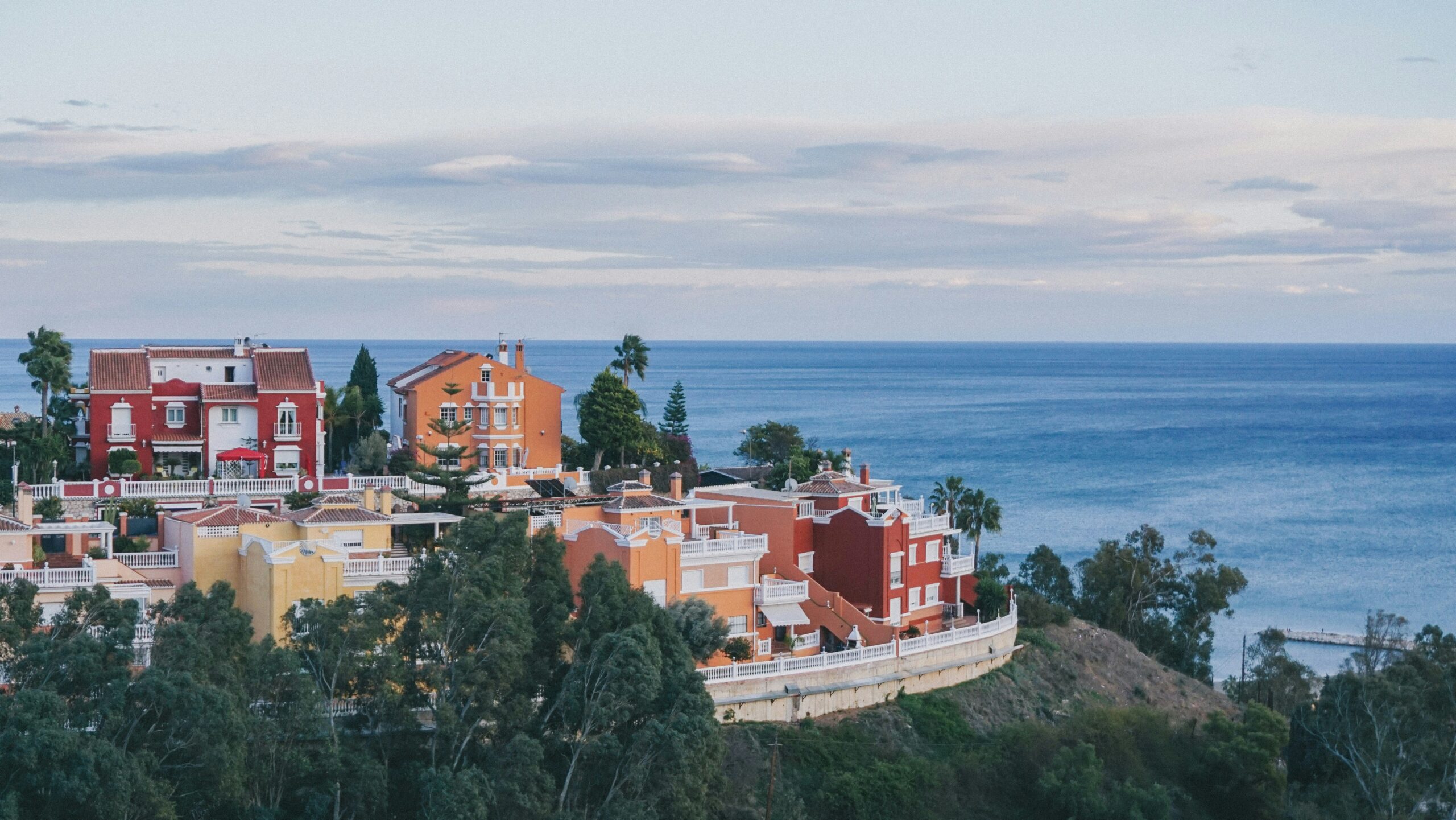
Property prices in Spanish coastal municipalities rose by 13.5 per cent in the first quarter of 2026. At the same time, households now have to spend an average of 40 per cent of their disposable income on purchasing a property. The situation is particularly strained in the Balearic Islands and along the coasts of Málaga and Alicante.
Spain Expat Press Editorial Team
by Marlon Gallego Bosbach
The property boom along Spain’s coast is exacerbating housing problems for local residents. While demand for holiday homes and second properties remains high, prices continue to rise significantly. At the same time, the supply of housing available for long-term residents is becoming increasingly limited. In more and more coastal areas, local residents are therefore competing directly with holiday-home buyers and investors.
This is the conclusion reached by the latest Vivienda en Costa 2026 report by property consultancy Tinsa by Accumin, which analysed more than 250 coastal municipalities across 51 areas and 22 provinces. The analysis shows that the housing market along Spain’s coast is increasingly moving away from the needs of the local population.
Property prices on the coast rise by 13.5 per cent
The average value of residential property in the coastal municipalities surveyed – excluding provincial capitals – stood at €1,992 per square metre in the first quarter of 2026.
Property prices therefore rose by 13.5 per cent over the course of a year. The strongest increases were recorded in the Balearic and Canary Islands, at 14.1 per cent, followed by the Mediterranean coast at 13.9 per cent. Along the northern coast and the Andalusian Atlantic coast, nominal prices rose by 11.7 per cent in each case.
Prices are even higher in the holiday-home segment. According to Tinsa, the average value reached €3,150 per square metre. Holiday homes and second residences are therefore significantly more expensive than the overall national property price level.
Buying a home is becoming increasingly unaffordable for local residents
The problem is not simply the level of property prices, but the financial burden they place on households. In coastal areas, buyers now have to spend an average of around 40 per cent of their disposable income on purchasing a property. Tinsa considers 35 per cent to be a sustainable level of housing expenditure.
The situation is even more strained in some regions. According to Tinsa, the cost of purchasing a property on the Balearic Islands accounts for 59 per cent of disposable income. Along the Málaga coast, the figure is 57 per cent, while on the Alicante coast it stands at 46 per cent.
As a result, home ownership is becoming increasingly difficult to afford for a large proportion of the local population.
Holiday homes are squeezing out the local housing market
The trend has another consequence: the second-home market is becoming increasingly influential and is having a growing impact on the market for primary residences. According to Tinsa, the second-home market now distorts the primary-residence market in six out of ten coastal areas surveyed. As a result, prices are rising while the amount of housing available to local residents is falling.
The distinction between primary and second homes is also becoming increasingly blurred. The proportion of areas where there is now little distinction between the two segments has risen from 8 per cent to 20 per cent in the space of a year.
Demand for holiday properties is therefore increasingly competing directly with the housing needs of people who live permanently on the coast.
Seasonal rentals are adding to the pressure
Another factor is the growing appeal of holiday and seasonal rentals. For property owners, it can be more financially attractive to rent out a property to holidaymakers or seasonal tenants on a short-term basis rather than offering it to a local household on a long-term tenancy.
Tinsa also points to the growing importance of property purchases specifically intended for rental purposes. At the same time, smaller investors are becoming increasingly significant in this segment. As a result, additional housing is being removed from the traditional market for permanent residence.
New housing construction is not enough
The problem is further exacerbated by the fact that, despite increased construction activity, supply is still failing to keep pace with demand. In 2025, 204,089 properties were sold in coastal municipalities, 1.7 per cent more than the previous year. At the same time, the number of permits for new-build properties along the coast rose by 21.7 per cent to 29,101.
However, new housing does not automatically solve the problem. Some construction activity is concentrated in regions and on properties that are particularly attractive to the holiday-home and second-home market. As a result, more new homes can be built without necessarily creating enough affordable housing for the local population.
The Balearic Islands are particularly badly affected
The trend is particularly pronounced in the Balearic Islands. According to Tinsa, the islands have the highest housing purchase burden among the regions surveyed, with buyers having to spend 59 per cent of their disposable income on a property. The coasts of Málaga and Alicante are also among the most strained markets.
High international demand, tourism and the islands’ appeal as second-home destinations are colliding with limited supply. This is creating growing competition for housing among local residents, with demand for holiday properties often backed by greater purchasing power.
Further price increases remain possible in 77 per cent of areas
Despite the already high prices, Tinsa still sees room for further price increases in a large proportion of the areas surveyed. According to the report, second-home prices could continue to rise in 77 per cent of the coastal regions analysed. However, this figure has fallen from the previous year, when it stood at 94 per cent.
In the remaining 23 per cent of areas, there are initial signs of a slowdown. In some locations, property prices may already have reached levels that the current demand can sustain. These regions include Barcelona, Tarragona, Mallorca, Ibiza, Formentera, Murcia, Almería, Málaga, Cádiz, Gran Canaria, Lugo and Asturias.
A slowdown does not necessarily mean that prices will fall. Rather, the sharp price increases seen in recent years could begin to ease in these areas.
Demand is increasingly shifting northwards
Another trend is emerging along Spain’s northern coast. According to Tinsa, the proportion of areas surveyed where a shift in tourist demand from the Mediterranean and the islands towards the Atlantic and Cantabrian coasts has been observed has risen from 14 per cent to 34 per cent in the space of a year.
Reasons cited include milder temperatures, lower levels of tourist saturation and property prices that are still lower than in many traditional holiday destinations. Prices are therefore also rising significantly in these areas. In Cantabria, they increased by 15.8 per cent, by 13.6 per cent in Asturias and by 13.5 per cent in A Coruña.
A growing conflict between tourism and housing
The development along Spain’s coasts highlights a fundamental conflict. Tourism is an important economic driver for many coastal regions. Holiday properties and seasonal rentals generate income and serve strong demand from both domestic and international buyers. At the same time, people who live and work in these regions permanently need access to affordable housing.
As more homes are converted into holiday properties while prices rise faster than incomes, local residents risk being priced out. This can be particularly problematic for workers in tourism, hospitality, retail and other sectors that rely on a local workforce.
The coast is becoming a housing market for the wealthiest buyers
The Tinsa report therefore points to a structural change: in more and more areas, the development of the property market is no longer determined solely by local housing demand. Instead, primary residences, second homes, holiday properties and investment properties are competing for the same limited supply. The more attractive a coastal region becomes to tourists and international buyers, the greater the pressure on the local population can become.
The key question for Spain’s coastal regions is therefore increasingly not just how much further property prices can rise, but also who will still be able to afford to live on the coast in the future. The property boom has long since become more than a matter of supply and demand. It is developing into a social and economic challenge for numerous coastal regions across Spain.