The news is causing a stir in Spain: Volkswagen cannot guarantee the future of the SEAT brand beyond 2030. However, a final decision regarding the continued existence of the long-established Spanish car brand has not yet been made. What is certain, however, is that SEAT S.A. and the plant in Martorell will retain an important role within the Volkswagen Group.
Spain Expat Press Editorial Team
by Marlon Gallego Bosbach
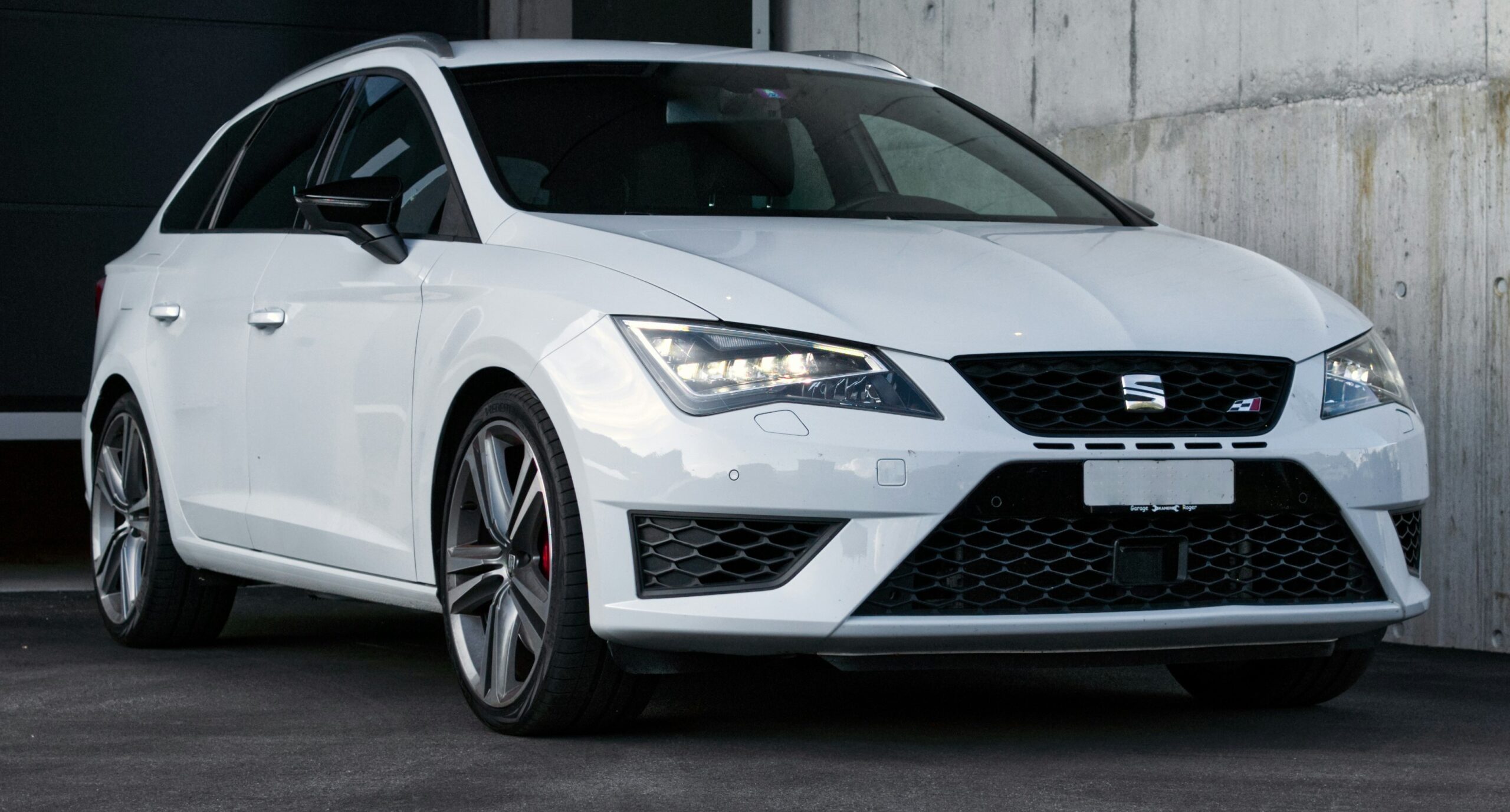
This is a message that resonates far beyond the automotive industry in Spain. SEAT has been part of the country’s industrial identity for decades. Models like the Ibiza, León, and Arona are ubiquitous on Spanish roads. Now, the brand itself faces an uncertain future.
As part of its new Future Plan 2030, the Volkswagen Group has clarified that the continuation of the SEAT brand beyond the current product cycle cannot be guaranteed. However, a final decision has not yet been made.
This makes the situation significantly more nuanced than the recently circulating claim that SEAT will disappear completely by 2029.
Volkswagen is leaving several scenarios open
According to the company, the future of the brand depends significantly on how European regulations, customer demand and competitive conditions develop in the coming years.
Above all, the increasing demands on the automotive industry pose a difficult challenge for SEAT. At the same time, the costs of electrification are rising. A new generation of fully electric vehicles would require significant investments in development, technology, and production.
For Volkswagen, this raises a fundamental question: Is it worthwhile to invest in the electrification of the SEAT brand in parallel, when a rapidly growing electric brand already exists within the group? This brand is called CUPRA.
CUPRA is becoming increasingly important
Within just a few years, CUPRA has evolved from a sporty offshoot of SEAT into an independent and internationally successful brand. The Volkswagen Group’s strategy now heavily relies on CUPRA’s growth. In the first half of 2026, the brand achieved a new record with 170,100 vehicles delivered.
A look at production also reveals the direction things are headed. The CUPRA Raval marks the beginning of a new era of electromobility in Martorell. This model belongs to the Volkswagen Group’s new family of electric urban cars, which are produced in Spain.
For SEAT, this means a paradoxical situation: The company behind the brand is gaining in importance, while the long-term future of the brand name itself is increasingly uncertain.
Martorell should not disappear
For the workers in Catalonia, a different question is therefore perhaps more important than the logo on the radiator grille: What will happen to Martorell?
Volkswagen is sending a much more positive signal here. The group emphasizes that SEAT S.A. – the company behind SEAT and CUPRA – has a solid future. Martorell is to be developed into an important center for European electromobility.
Back in 2022, Volkswagen announced investments of around ten billion euros to drive electrification in Spain. Today, this transformation is becoming visible step by step. Electric vehicles, battery systems, and new industrial expertise are being developed in Martorell. The site is thus taking on tasks within the Group that extend far beyond the production of classic SEAT models.
Ibiza and Arona will remain closed for now
Anyone who currently drives a SEAT or is planning to buy one doesn’t need to worry that the brand will suddenly disappear from the market. Volkswagen intends to continue its already planned product strategy for the time being. This includes, among other things, mild-hybrid versions of the Ibiza and the Arona, which are scheduled to be launched in 2027.
Existing obligations to customers and the dealer network will be fulfilled regardless of the long-term decision. The uncertainty therefore primarily concerns the period after the current product cycle – not the immediate disappearance of the brand.
For Spain, it’s about more than a logo
SEAT is far more than just a car manufacturer in Spain. The company’s history is closely linked to the industrial development of Barcelona and Catalonia. Generations of Spaniards have grown up with vehicles of the brand. The SEAT 600 once became a symbol of the country’s increasing motorization, and later, the Ibiza and León models shaped the Spanish roadscape. A potential demise of the brand would therefore also have a strong symbolic dimension.
However, the future of the industrial structures is more economically decisive. This is precisely where Volkswagen is apparently attempting to make a clear distinction: the SEAT brand is open in the long term – SEAT S.A., Martorell, and the industrial base in Spain, on the other hand, are to be maintained and further developed.
Not yet goodbye to SEAT
It would therefore be premature to speak of a definitive end for the brand at this point. Volkswagen explicitly states that no decision has yet been made. At the same time, the company makes it clear that the further development of SEAT will become more difficult the more the European automotive industry moves towards electromobility.
The coming years will therefore be crucial. Will SEAT remain an independent brand? Will the brand be more closely integrated with CUPRA? Or will Volkswagen focus its long-term investments entirely on CUPRA and other group brands? None of these questions have been definitively answered yet.
One thing is certain: SEAT has a future in the short term – but what happens after 2030 is officially open for the first time. And while the fate of the brand name is being discussed, the industrial future of the Volkswagen Group is already taking shape in Martorell.