The eviction of 87-year-old Maricarmen, who was forced to leave the Madrid home where she had lived for more than seven decades, has triggered a protest movement that now extends far beyond her individual case. Following a demonstration in Madrid, protesters set up tents in Puerta del Sol and are calling on the Spanish Government to immediately adopt a package of measures they have dubbed the “Maricarmen Decree”.
Spain Expat Press Editorial Team
Within a matter of days, the case of Maricarmen has become a symbol of Spain’s increasingly heated debate over housing, tenant protection and evictions.
The eviction of the 87-year-old from the home where she had lived for more than 70 years prompted an enormous reaction, particularly on social media. It also sparked a wider public debate over tenant protection, property rights and the extent to which the state should intervene in the rental market.
Now that debate has moved onto the streets.
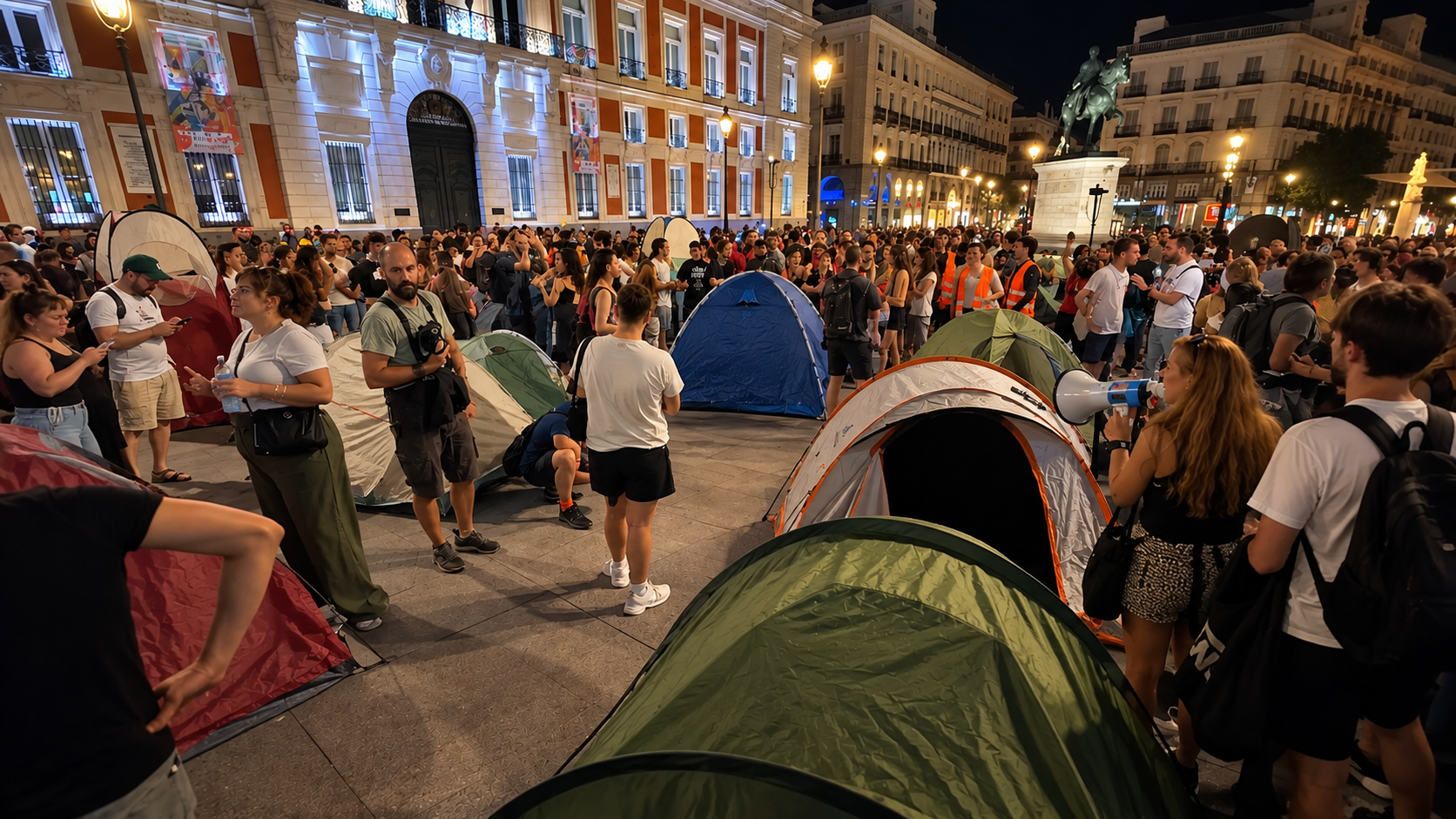
On Saturday, a demonstration against evictions was held in Madrid, culminating in a protest camp in Puerta del Sol. The Madrid Tenants’ Union (Sindicato de Inquilinas) has presented Maricarmen’s case as the catalyst for the mobilisation and is demanding immediate action from the Government. Texto pegado
From Maricarmen to a wider reform of the rental market
The protesters’ demands, however, go considerably further than the individual case of the 87-year-old.
The so-called “Maricarmen Decree” is not currently a decree approved by the Spanish Government. It is the name given by the Tenants’ Union to a package of measures it wants the Government to introduce.
One of its central demands is the automatic renewal of rental contracts, effectively allowing them to become indefinite.
The movement is also calling for structural measures to prevent evictions, a freeze on rent increases and a reform of Spain’s Urban Leases Act (Ley de Arrendamientos Urbanos, LAU) to regulate seasonal and room rentals more strictly.
It is also demanding effective extensions of existing rental agreements. Texto pegado
The scope of the proposals is significant. The debate would therefore move beyond protecting individual tenants considered particularly vulnerable and towards much broader changes to the rules governing Spain’s rental market.
🔴 Directo: Acampada en Sol, 3 de la madrugada. Unas 150 tiendas y buena parte de la plaza ocupada. Tras el amanecer se espera la llegada de cientos de personas. Veremos… pic.twitter.com/OEJ7huJK8l
— Olmo Blanco (@rebonico) September 27, 2026
Protest camp in Puerta del Sol
After the demonstration ended, some of the participants decided to remain in Puerta del Sol and set up tents in the square, in scenes inevitably reminiscent of Madrid’s 15-M protest movement in 2011.
By midnight, around 30 tents had been erected, while numerous other demonstrators and supporters remained in the square. Texto pegado
The Tenants’ Union said the camp was intended to increase pressure on the Government. For the time being, no specific date has been set for ending the protest. Texto pegado
Organisers want the Government to take action at the next Council of Ministers meeting and regard the proposed “Maricarmen Decree” as only a first step towards broader changes in Spanish housing policy.
Huge discrepancy over attendance figures
There are sharply differing estimates of the number of people who took part in Saturday’s demonstration.
Organisers claimed 300,000 people attended, while the Government Delegation put the figure at 25,000 — an exceptionally large discrepancy between the two estimates. Texto pegado
Young people, families and older residents took part in the demonstration. Protesters voiced criticism of the Government alongside demands relating to rents, housing and evictions. Texto pegado
The Maricarmen case takes on a new dimension
What began with the eviction of an 87-year-old woman has now developed into a much wider debate about Spain’s housing model.
Maricarmen’s case has brought together many of the tensions currently surrounding the Spanish rental market.
On one side are those demanding substantially greater protection for tenants, particularly older people and those considered vulnerable. On the other is the continuing debate over how far such measures should go without disproportionately restricting property owners’ rights and the legal certainty of existing contracts.
For now, the so-called “Maricarmen Decree” remains a demand put forward by the organisations behind the protests and is not an approved law.
But the movement surrounding Maricarmen’s case has already moved from social media onto the streets — and into the very heart of Madrid.
And it all began with the case of Maricarmen.