Spain is facing one of the most politically charged days of recent months as the government’s two controversial housing decrees are debated in parliament this morning. With Junts still threatening to vote against both measures and the government scrambling for support, another question has suddenly entered the political conversation in Madrid: could defeat over housing ultimately pave the way for an early general election?
Spain Expat Press Editorial Team
The outcome remains uncertain.
After days of negotiations, protests and shifting positions, Pedro Sánchez is facing one of the most difficult parliamentary tests of the current legislature. If Junts follows through on its pledge to oppose the measures and no alternative majority can be assembled, at least a significant part of the government’s new housing package could fall.
But the debate has moved beyond the contents of the decrees themselves.
Increasingly, the question in Madrid is what Sánchez would do next.
Talk of an early election begins to grow
There has been no announcement of a snap election. Sánchez has not said that he intends to dissolve parliament, and he has repeatedly maintained that his intention is to see out the legislature until 2027.
Nevertheless, the political atmosphere has shifted markedly.
Spanish media have reported discussions among senior Socialists and figures within the government about whether a significant defeat over housing could force Sánchez to reconsider the future of the legislature.
What was until recently largely the preserve of political commentators has therefore begun to enter the conversation within government circles.
The timing is significant.
Few domestic issues have become as politically potent in Spain as housing.
Housing moves to the centre of Spanish politics
Soaring rents, a shortage of affordable homes and the increasing difficulty faced by younger people and families trying to find somewhere to live have pushed housing to the top of Spain’s political agenda.
The dispute has also spilled beyond parliament.
Protests and housing demonstrations have increased pressure on the government, while landlords’ organisations, property experts and opposition parties have warned that further intervention in the rental market could produce precisely the opposite effect to that intended.
Their argument is that greater regulation and uncertainty may encourage private landlords to withdraw properties from the long-term rental market.
The government takes a fundamentally different view, arguing that tenants need greater protection in a market where housing costs have become unaffordable for many households.
It is this clash between two very different approaches to Spain’s housing crisis that could now acquire a much wider political significance.
Could housing become an election issue?
If Sánchez were eventually to call an early election, housing could provide one of the defining arguments of the campaign.
The government could seek to portray the parliamentary defeat as evidence that it attempted to introduce greater protections in response to a social emergency but was blocked by a collection of parties with very different political agendas.
Opponents of the decrees would offer a different interpretation: that rejecting the measures does not amount to opposing affordable housing, but rather to rejecting policies they believe could further reduce rental supply.
Sánchez himself has already sharpened the language surrounding the vote, framing it as a choice between standing with ordinary citizens and standing with speculators.
That rhetoric goes considerably beyond the technical details of tenancy agreements and housing regulation.
It is political language – and language that could readily find its way into an election campaign.
Junts once again holds a crucial position
At the heart of the immediate problem is Junts.
Since Sánchez formed his government after the 2023 general election, his administration has depended on a complicated parliamentary arithmetic involving parties whose political priorities frequently diverge.
Major legislation can therefore require a fresh negotiation each time it reaches parliament.
Junts’ opposition to the housing decrees once again exposes the fragility of that arrangement.
The government had already divided its housing measures into two separate decrees, making it possible for parties to support one while rejecting the other and, in theory, making it easier to construct different parliamentary majorities.
Even that may not be enough.
Friday’s debate is consequently about far more than individual rules governing rents, tenancy contracts, evictions or tax incentives.
It is also another test of whether Sánchez still has a workable parliamentary majority for some of his government’s most important policies.
Parliament must decide first
For all the speculation, one fact remains important on Friday morning: Spain has not called an early general election.
Sánchez has made no such announcement.
Nor is the defeat of both housing decrees a foregone conclusion. Negotiations can continue until shortly before a vote, and parliamentary arithmetic in Spain has repeatedly produced last-minute surprises.
The events should therefore not be pre-empted.
What is clear, however, is how rapidly the political stakes have risen.
Only days ago, Spain was arguing about tenancy extensions, rent regulation and how far the state should intervene in the housing market.
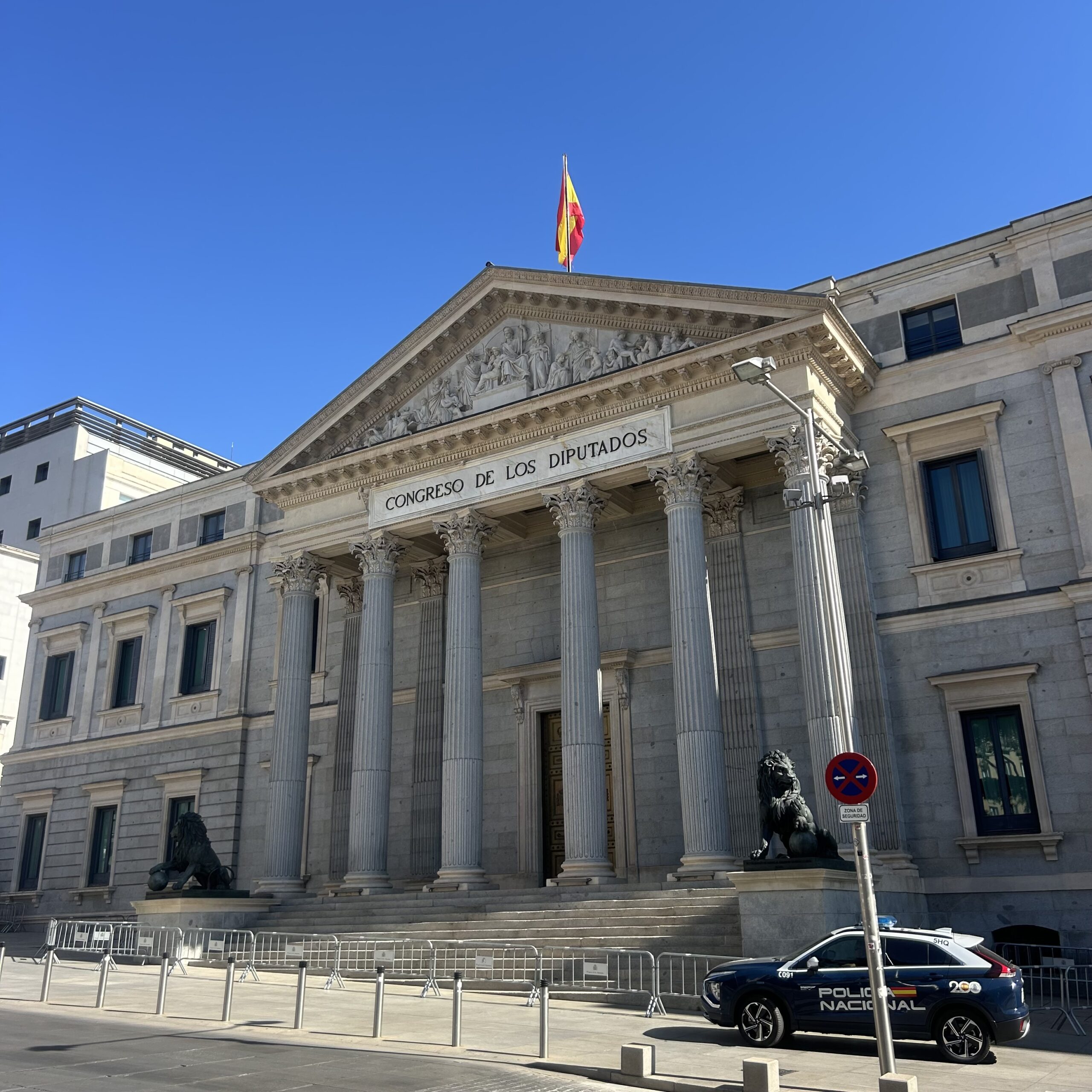
This morning, those same measures are being debated in the Congreso de los Diputados against a backdrop of street protests, an increasingly fragile parliamentary majority and growing speculation about the future of the legislature itself.
First, parliament will decide the fate of the housing decrees.
After that, Spain may find itself asking a much bigger question:
how much longer can this legislature last?