When a Swiss woman’s beloved cat disappeared on Mallorca, she turned her heartbreak into a mission to help other pet owners. Today, her organisation Mascotafind operates across Spain – and is embracing artificial intelligence to reunite missing dogs and cats with their families.
For any pet owner, it is a familiar nightmare. A cat fails to return home. A dog disappears during a walk. Hours turn into days, and what follows is often a desperate search involving posters, telephone calls, social media appeals and the constant hope that someone, somewhere, has spotted the missing animal.
In Spain, finding a lost pet can be particularly challenging. Where should owners report a disappearance? Who should be contacted when a stray animal is found? And how can the person who finds an animal be connected with the family searching for it?
One Swiss woman living on Mallorca decided to do something about it. Her story began with a loss she has never forgotten.
The disappearance that changed everything
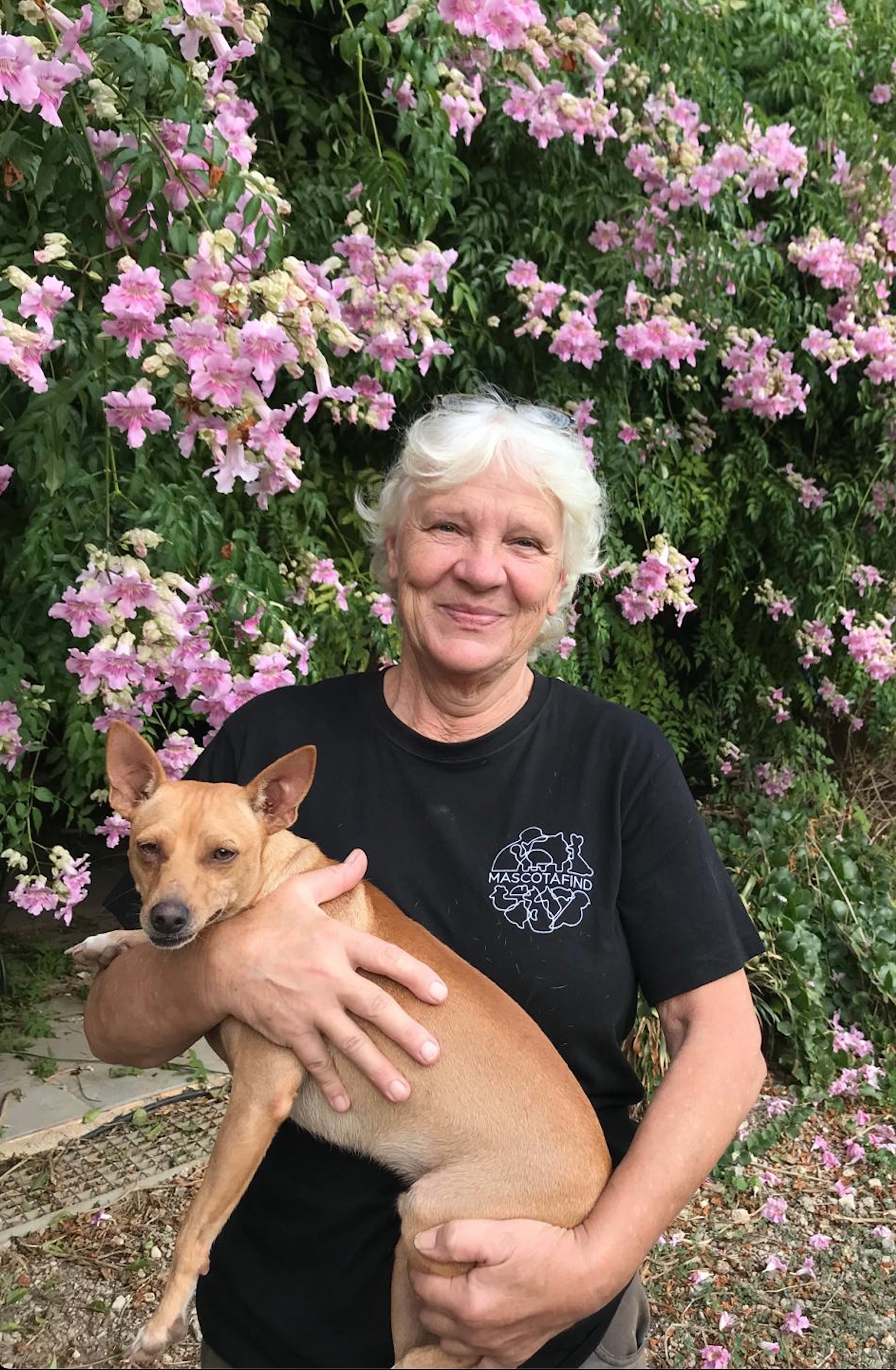
On a rural property near Porto Cristo, on the island of Mallorca, Connie Otto has spent more than three decades surrounded by olive trees and animals.
But five years ago, her life was turned upside down when her nine-year-old cat, Natascha, vanished without a trace.
“She was nine years old when she disappeared. One day she was simply gone,” Otto recalls.
She searched tirelessly, distributing leaflets, placing advertisements and seeking advice from experts. Yet despite her efforts, Natascha was never found.
The experience eventually inspired her to act.
Two years after her cat disappeared, Otto founded Mascotafind, a non-profit organisation designed to help people across Spain locate their missing pets.
“In Switzerland, there is a central animal reporting service. I felt something like that was missing here in Spain,” she explains.
Her ambition was straightforward: to create a central point of contact connecting people who had lost animals with those who had found them.
How a WhatsApp photo could reunite pets with their owners
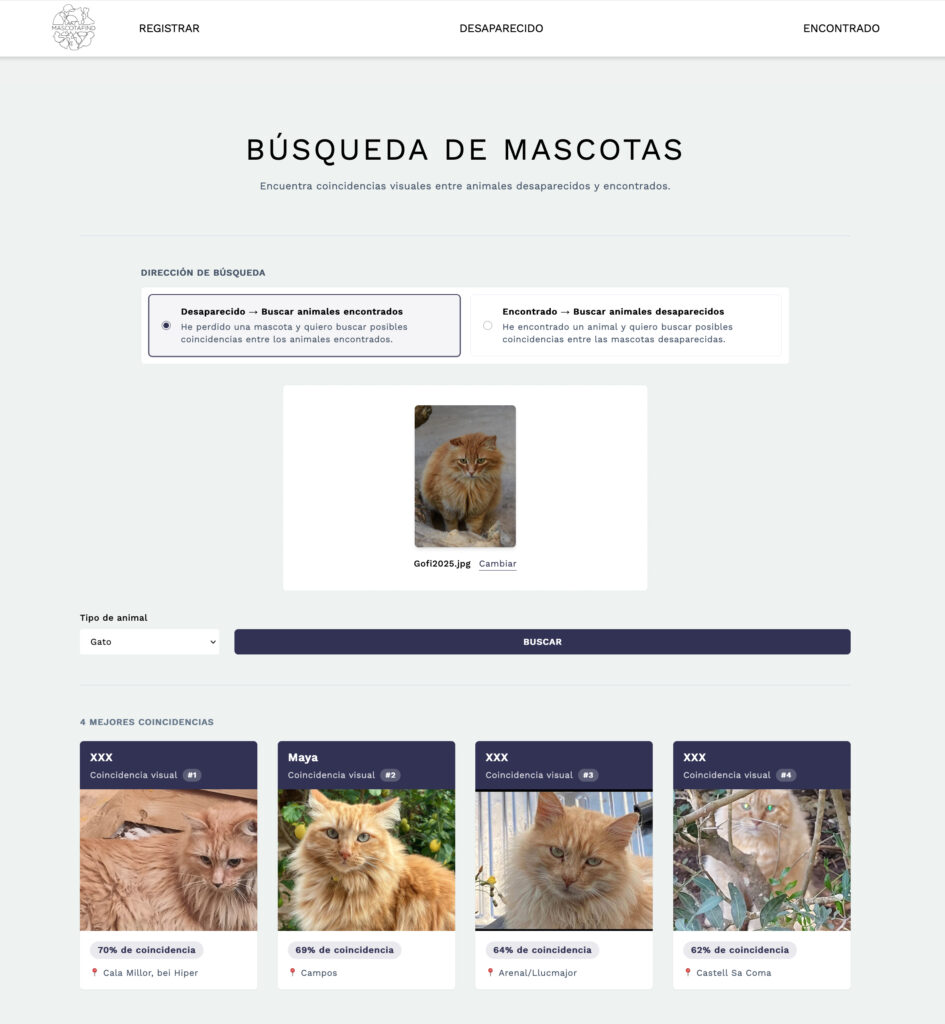
Mascotafind has now taken its work a step further by introducing artificial intelligence-powered image recognition.
The concept is remarkably simple.
Anyone who comes across a stray dog or cat can take a photograph and send it to Mascotafind via WhatsApp.
There is no need to download a dedicated app or register for an account.
The AI system then examines the animal’s visible characteristics and compares the photograph with images of dogs and cats reported missing through the Mascotafind platform.
If the technology identifies a potential match, the organisation’s team reviews the result before arranging contact between the finder and the pet’s owner.
Crucially, the technology does not make the final decision. It is designed to assist the search, with human verification remaining an essential part of the process.
A single photograph taken on a mobile phone could therefore provide the clue that finally brings a missing pet home.
The system could prove particularly useful when animals are discovered some distance from where they originally disappeared.
Why microchips still matter
Despite the promise of artificial intelligence, Otto is keen to emphasise that the technology is not intended to replace existing identification methods.
“A microchip remains indispensable,” she says.
“Our AI is designed to complement traditional search methods. We will continue producing missing-pet posters, distributing alerts and using social media. Image recognition simply provides an additional way of searching that was not previously available.”
The distinction matters.
Animals of the same breed can look remarkably similar, photographs may be unclear, and an animal’s appearance can change over time.
That is why every potential match must be checked by a member of the Mascotafind team.
The technology offers another opportunity to identify a missing animal, rather than a guarantee of finding it.
A free service for anyone who finds an animal
For members of the public who discover a stray or apparently lost animal, reporting it to Mascotafind is free.
They simply send a photograph via WhatsApp. No registration or app installation is required.
Pet owners, meanwhile, can register their animals on the platform in advance, uploading photographs and information about their distinguishing features.
Registration costs €10 per animal per year, helping to fund the organisation’s operations and further development of its technology.
Owners can also register their pets after they have gone missing.
Joining Mascotafind without registering an animal is free, as is reporting a found animal.
Privacy is another important consideration.
The organisation says owners’ names, addresses and telephone numbers are never published on the platform. Instead, communication between finders and owners is coordinated through Mascotafind.
Animal shelters could be next
The organisation is already planning the next stage of its development: working directly with animal shelters and rescue organisations across Spain.
“We want to offer animal shelters and animal welfare organisations the opportunity to collaborate with Mascotafind free of charge,” Otto explains.
The long-term aim is to integrate the image-recognition system with shelters’ existing websites or computer systems.
When a shelter takes in a stray dog or cat, staff will generally photograph the animal as part of the admission process.
Under the proposed system, that photograph could automatically be compared with Mascotafind’s database of missing pets.
The advantage would be that shelters could continue their usual procedures without taking on additional administrative work, while the AI carried out comparisons in the background.
For now, this remains a planned expansion rather than an established nationwide network.
Nevertheless, it could eventually make it easier to connect lost animals with their owners, even when they are taken to shelters far from home.
A labour of love – without the salary
For Otto, Mascotafind has become much more than a charitable project.
According to the organisation, its existing search activities have already helped reunite missing animals with their families.
The new technology is intended to build on those efforts.
Volunteers play an important role, managing social media channels, distributing missing-pet alerts and supporting owners during their searches.
“It’s practically a full-time job,” Otto says with a laugh. “Just without the salary.”
Her affection for animals extends well beyond her work with Mascotafind.
At her finca on Mallorca, she currently cares for three donkeys, a horse, four dogs and ten cats.
“When you’re involved with animals, you inevitably come across poor creatures looking for somewhere to live,” she says.
“But I do have to be careful not to end up with too many.”
Although the AI image-recognition system currently focuses on dogs and cats, Mascotafind also allows owners to register other animals, including birds, rodents and hoofed animals.
Could technology transform the search for missing pets?
Across Spain, countless families experience the distress of losing a beloved animal.
Some pets are eventually found, but reuniting them with their owners can prove difficult, particularly when the person who discovers the animal has no idea where to report it.
Mascotafind hopes to close that gap.
“Nobody should have to spend hours wondering how to help an animal they have found,” Otto says.
Whether artificial intelligence will significantly increase the number of successful reunions remains to be seen.
But the idea is compelling: someone spots a lost animal, takes a photograph and sends it through WhatsApp. Behind the scenes, technology begins searching for a possible match.
For an owner who has spent days or weeks looking for a missing pet, that single photograph could make all the difference.
And for Connie Otto, whose own cat Natascha never returned, helping another family avoid the same heartbreak is what makes the work worthwhile.
How to contact Mascotafind
Website: www.mascotafind.es
Telephone: +34 971 65 48 15 / +34 652 21 75 96
Email: connie@mascotafind.es
Reporting a found animal is free of charge.