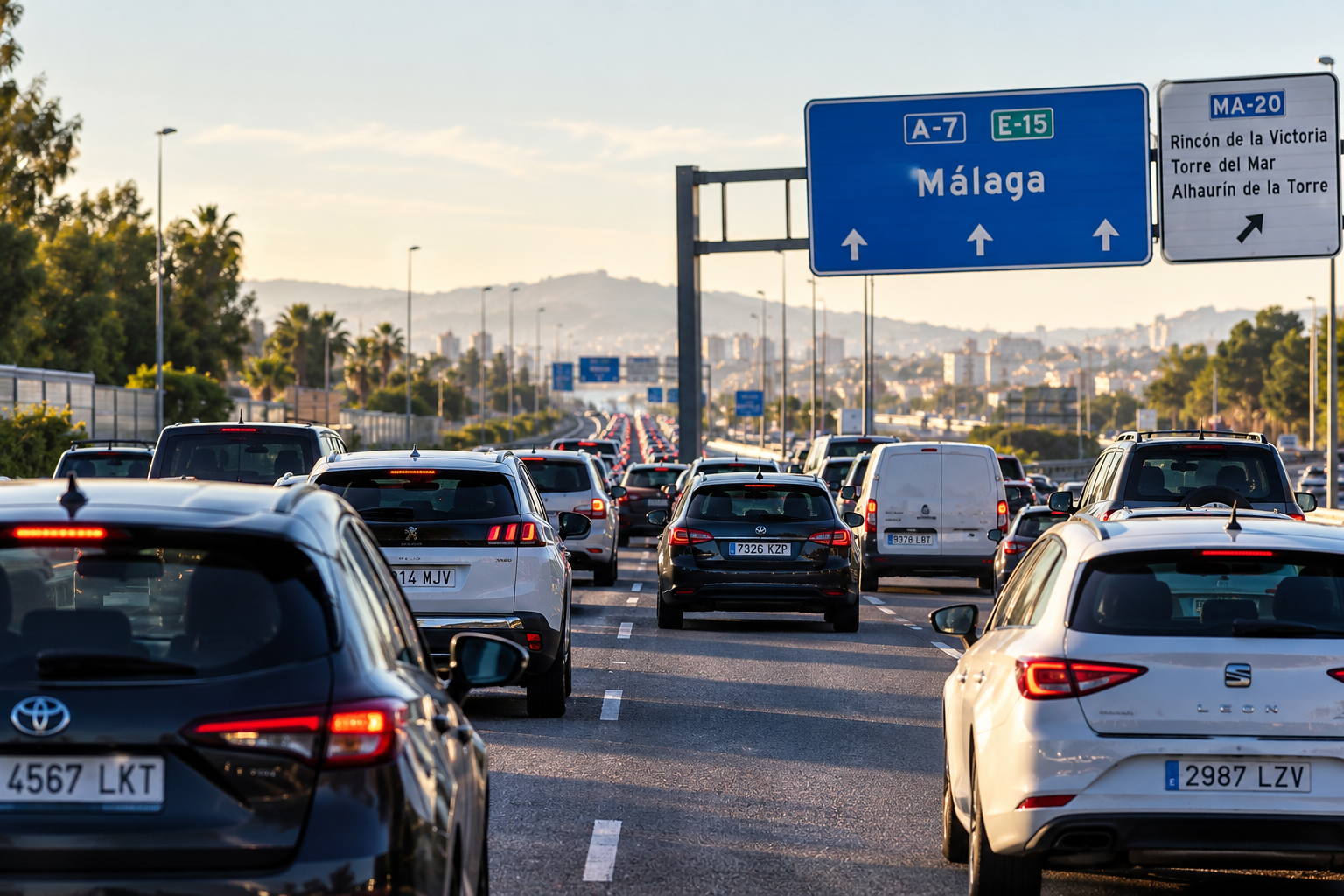
Millions of people across Spain are preparing to hit the road today as the country heads into a three-day weekend. Spain’s traffic authority, the DGT, expects around 5.76 million long-distance journeys between Friday afternoon and Monday night, with significant congestion anticipated on major motorways, particularly during the Friday getaway and Monday’s return.
Redaktion Spanien Press
Spain is preparing for one of the autumn’s busiest weekends on the roads as millions of residents take advantage of the national holiday on Monday, 12 October.
The public holiday, which marks Spain’s National Day, gives many workers a three-day break. Families are expected to travel to coastal resorts, mountain destinations, holiday homes and cities hosting traditional celebrations.
Spain’s Directorate-General for Traffic (DGT) has launched a nationwide special traffic operation, beginning at 3pm on Friday and continuing until midnight on Monday.
The authority forecasts approximately 5.76 million long-distance journeys over the four-day period, equivalent to an average of 1.44 million per day.
Friday afternoon expected to bring the first major traffic jams
Traffic is expected to increase sharply from early Friday afternoon as motorists leave major cities for holiday destinations.
The DGT anticipates particularly heavy congestion between 4pm and 10pm, with the wider period from 3pm to 11pm considered unfavourable for travelling.
Saturday morning is also expected to be busy, especially on routes towards coastal resorts and popular leisure destinations.
Traffic volumes are forecast to peak between 9am and 1pm, although the DGT advises avoiding travel between 8am and 2pm where possible.
Sunday should be relatively quieter, with most journeys expected to involve shorter trips to recreational areas and nearby attractions.
Monday’s return could cause widespread congestion
The biggest challenge for motorists may come on Monday afternoon, when millions of holidaymakers are expected to return home.
With 12 October a public holiday throughout Spain, many travellers are likely to postpone their return journeys until the final hours of the long weekend.
The DGT expects particularly heavy traffic between 4pm and 11pm.
Congestion is likely to develop first along major intercity motorways before spreading to the approaches to Spain’s largest urban areas.
Drivers are being encouraged to travel outside peak periods whenever possible.
Andalusia and the Costa del Sol prepare for increased traffic
Andalusia is among the regions likely to experience heavier traffic as residents and visitors head towards the coast and other popular destinations.
Routes connecting major cities with the Costa del Sol, Costa de la Luz and other tourist areas could see increased traffic volumes.
Motorways serving Málaga, Marbella and the wider Mediterranean coastline may be particularly busy during the main departure and return periods, although actual congestion will depend on local conditions.
The Valencia region is also expecting substantial travel activity. Friday, 9 October, is already a regional public holiday, meaning many residents will enjoy an extended four-day break.
Zaragoza is another popular destination, with the city celebrating its traditional Fiestas del Pilar around 12 October.
More police patrols, speed cameras and drones
The DGT is stepping up traffic enforcement throughout the holiday period in an effort to reduce accidents and improve road safety.
Additional Guardia Civil traffic officers will be deployed alongside mobile and fixed speed cameras, helicopters, drones and roadside surveillance equipment.
Officers will pay particular attention to speeding, mobile phone use while driving and failure to wear seat belts.
A separate campaign targeting driver distraction will also remain in operation until Sunday.
On particularly busy roads, the authorities may introduce additional lanes or temporarily reverse the direction of traffic on selected carriageways to improve traffic flow.
Some roadworks will be suspended, while restrictions on heavy goods vehicles and abnormal loads will apply on certain routes.
Autumn weather could complicate journeys
Unlike the summer holiday season, October brings the possibility of rapidly changing weather conditions.
Heavy showers, fog and shorter daylight hours can make driving more difficult, particularly in mountainous areas and on unfamiliar roads.
The DGT advises motorists to check weather forecasts before setting off, adjust their speed to road conditions and maintain a safe distance from other vehicles.
Drivers planning longer journeys should also check their tyres, lights and windscreen wipers before departure.
How to check traffic conditions before travelling
Motorists are encouraged to consult the latest traffic information immediately before setting off.
Live updates on congestion, accidents, road closures and alternative routes are available through the DGT’s official website, www.dgt.es, and its traffic information telephone service on 011.
For anyone planning to travel this weekend, the advice is straightforward: leaving outside the busiest periods could make the difference between a smooth journey and spending hours in motorway traffic.