As the Mediterranean summer slowly gives way to cooler evenings, a much-loved culinary ritual returns to Spanish kitchens. From Madrid’s legendary cocido to the comforting pucheros of Andalusia, autumn is the season when Spain rediscovers the simple pleasure of a meal best enjoyed with a spoon : CUCHAREO!
Spain Expat Press Editorial Team
Mornings arrive with a hint of coolness. Evenings call for an extra layer. And somewhere, behind the shutters of a family kitchen or inside a traditional neighbourhood restaurant, a large pot is beginning to simmer.
Welcome to la temporada de cuchareo — quite literally, the season of spoon dishes.
It is one of Spain’s most comforting culinary traditions, a celebration of slow-cooked stews, nourishing broths and recipes passed down through generations. These are not dishes designed to impress with elaborate presentation. Their appeal lies in something far more enduring: patience, simplicity and flavour.
For travellers looking to discover Spain beyond its beaches, tapas bars and fashionable restaurants, the arrival of cuchareo season offers a delicious invitation to explore the country, one region at a time.
Cocido madrileño: Madrid’s great culinary institution

This substantial stew brings together chickpeas, vegetables, beef, chicken and various cured meats, all gently cooked until their flavours merge into a wonderfully rich broth.
Traditionally, cocido is served in three stages, known as vuelcos. First comes the soup, usually accompanied by fine noodles. Next, the chickpeas and vegetables arrive, followed by a generous selection of meats.
What began as a practical, filling meal for working families has become one of the capital’s most treasured gastronomic traditions.
In Madrid, cocido is not something to be rushed. It is the sort of lunch that stretches comfortably into the afternoon, preferably accompanied by good conversation and a glass of Spanish red wine.
For visitors, ordering a traditional cocido is as much a cultural experience as it is a culinary one.
Fabada asturiana: A taste of Spain’s green north

Travel north to Asturias, where lush green landscapes, dramatic mountains and Atlantic weather provide the perfect setting for one of Spain’s richest regional dishes.
Fabada asturiana is a celebration of the humble white bean.
Its essential ingredient is the faba asturiana, a large, delicate bean that becomes beautifully tender during cooking. Combined with chorizo, morcilla (blood sausage) and cured pork, it produces a deeply satisfying stew.
The secret lies in the slow cooking. A proper fabada cannot be hurried, and its creamy texture depends on allowing the ingredients to develop their flavours gradually.
In Asturias, fabada is more than a regional speciality. It is an expression of local identity, proudly served in village restaurants and family homes.
On a misty autumn afternoon, few dishes could feel more appropriate.
Lentejas con chorizo: The taste of Spanish childhood

Lentejas con chorizo is one of the great staples of Spanish home cooking, a wonderfully uncomplicated dish made with lentils, vegetables, potatoes and, in many households, a generous helping of chorizo.
Its beauty lies in its accessibility. The ingredients are inexpensive, the preparation straightforward and the result remarkably comforting.
Every family, of course, has its own version.
Some cooks add smoked paprika, others prefer bay leaves or extra vegetables. Certain households make their lentils thick and hearty, while others favour a lighter, more soupy consistency.
There is no universally agreed recipe, although most Spaniards will confidently insist that their grandmother’s was the finest.
And perhaps that is precisely the point. Some of Spain’s most memorable food is not found in celebrated restaurants, but around ordinary family tables.
Puchero andaluz: The comforting soul of southern Spain

As temperatures begin to fall, puchero andaluz returns to kitchens across Seville, Cádiz, Málaga and the surrounding provinces.
At its heart is a fragrant broth prepared with meat, chickpeas and vegetables, slowly simmered to create a wonderfully nourishing base.
The broth is often served first, accompanied by rice or fine noodles, while the remaining ingredients can be enjoyed separately.
One of the most appealing aspects of puchero is its resourcefulness. The leftover meat can be transformed into pringá, a delicious mixture of shredded meats traditionally eaten with bread.
It is a perfect example of the ingenuity of Spanish home cooking, where very little goes to waste and one pot can provide the basis for several meals.
For anyone spending autumn on the Costa del Sol, puchero offers a reminder that Andalusian cuisine is every bit as comforting as it is vibrant.
Potaje de garbanzos y espinacas: A humble Andalusian treasure

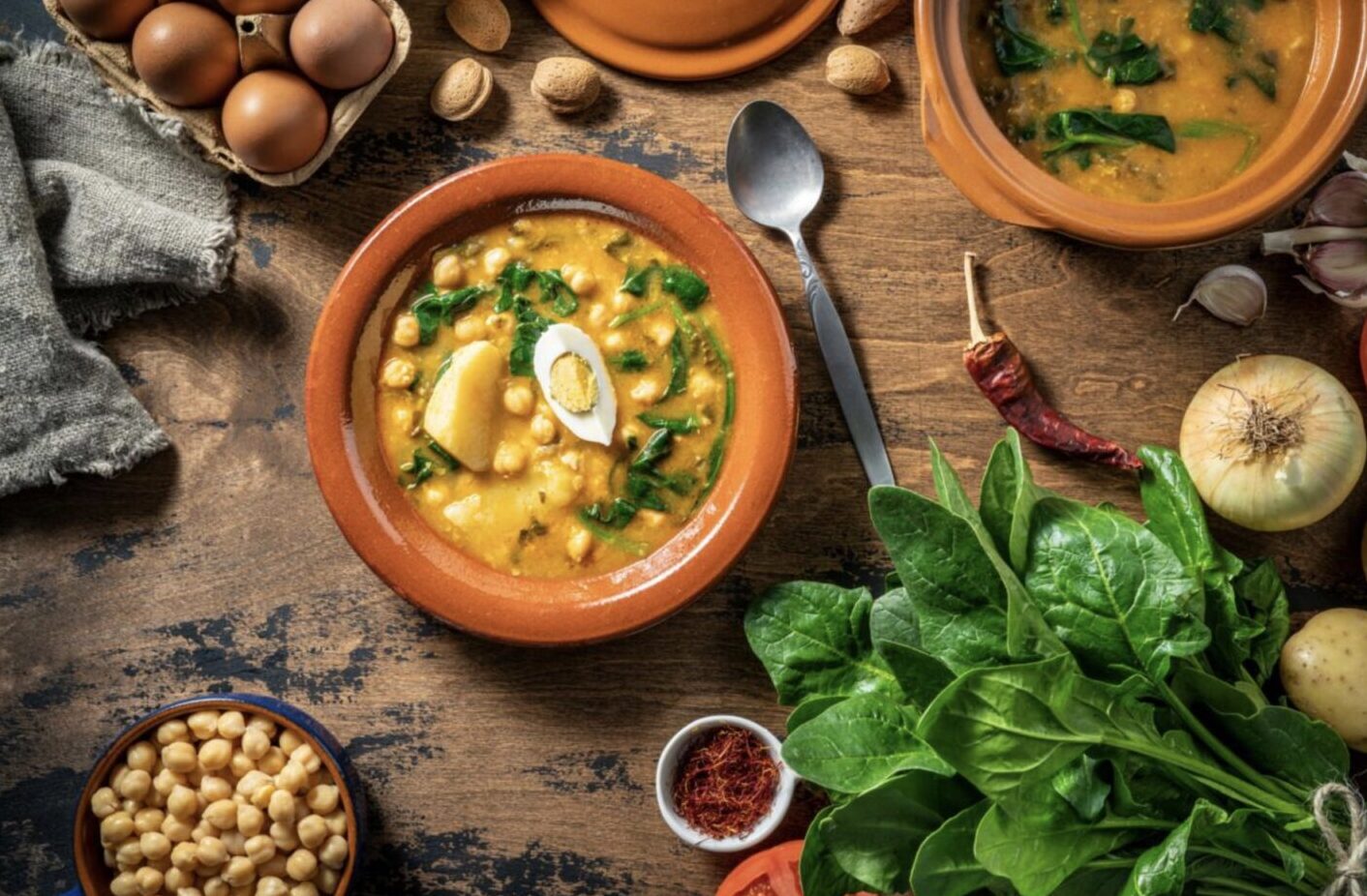
Potaje de garbanzos y espinacas, a traditional combination of chickpeas and spinach, is proof that a handful of simple ingredients can create something extraordinary.
Garlic, olive oil and paprika lend richness to the chickpeas and greens, producing a dish that is both satisfying and deeply rooted in Spanish culinary history.
In Andalusia, this potaje is particularly associated with Lent, when meat-free dishes traditionally occupied an important place on family menus. Some versions include salt cod, while others remain entirely plant-based.
Today, it is enjoyed well beyond the religious calendar.
Its appeal is timeless: inexpensive ingredients, straightforward preparation and the unmistakable flavour of traditional Spanish cooking.
Marmitako: The fishermen’s stew of the Basque Country

Marmitako, one of the Basque Country’s best-loved recipes, originated among fishermen who needed substantial meals during long days at sea.
Its name comes from marmita, the cooking pot traditionally used on fishing boats.
Fresh tuna, potatoes, peppers, onions and tomatoes are gently cooked together to produce a fragrant stew that reflects the region’s close relationship with the Atlantic.
Unlike the meat-rich cocidos of central Spain, marmitako is lighter in character, though no less satisfying.
It also offers a glimpse into the remarkable diversity of Spanish regional cuisine. Travel just a few hundred miles and the ingredients, traditions and flavours can change entirely.
Why Spain’s spoon dishes are making autumn irresistible
They ask for time rather than technique, good ingredients rather than luxury, and an appreciation of the pleasures of sitting down to eat.
They also tell the story of a country through its geography.
In Asturias, hearty beans and cured meats reflect the traditions of the cooler north. In Madrid, cocido speaks of generations of family gatherings. In Andalusia, puchero recalls kitchens where nothing was wasted. And in the Basque Country, marmitako preserves the culinary heritage of the fishing communities.
Each dish carries a little of the place from which it comes.
For travellers, autumn is therefore an especially rewarding time to explore Spain’s gastronomic landscape. Beyond the crowded summer resorts, local restaurants return to seasonal menus, markets fill with autumn produce and traditional cooking takes centre stage.
And while the Costa del Sol may still be enjoying afternoons warm enough for the beach, the first pots of puchero are already beginning to simmer.
Because in Spain, autumn does not always announce itself with falling leaves or rainy afternoons. Sometimes, it arrives quietly, with the comforting sound of a spoon against a bowl.