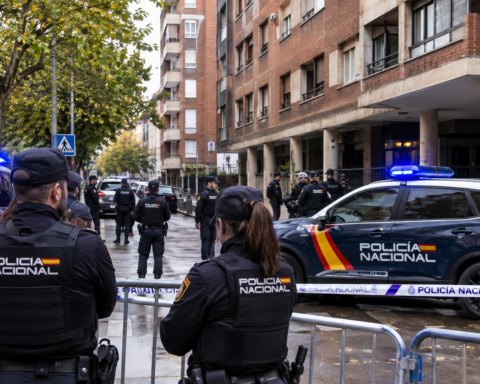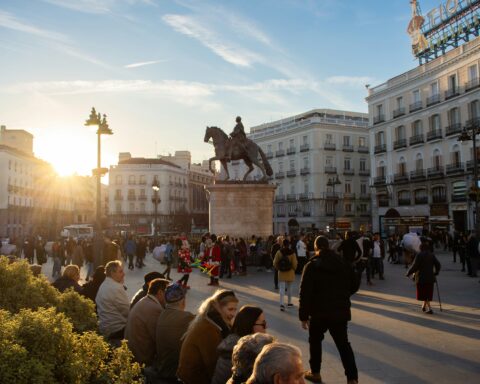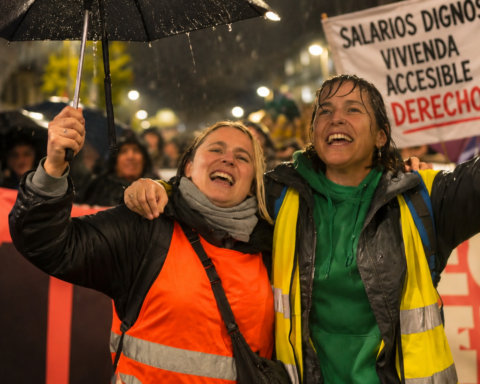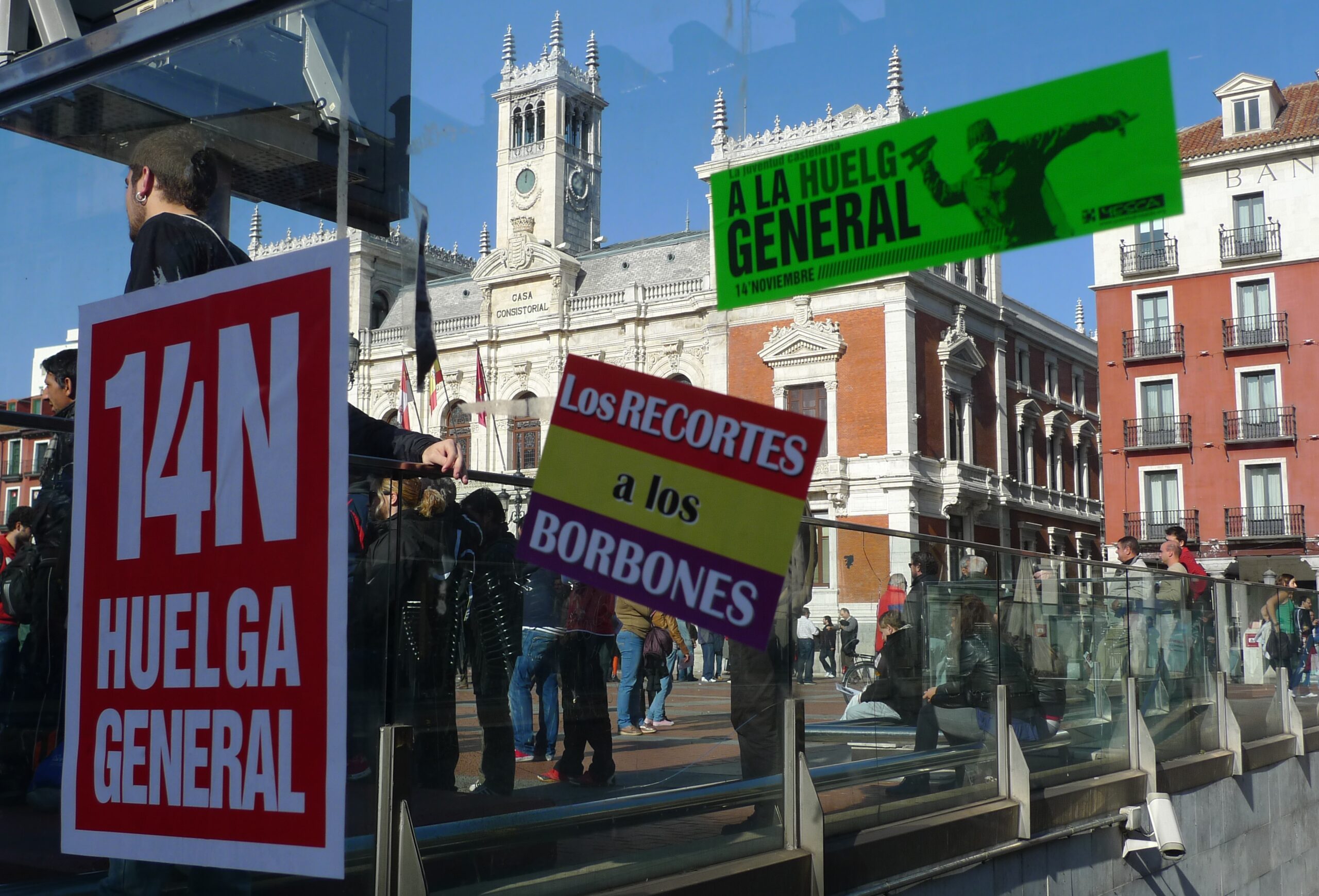
Tens of thousands of people took to the streets across Spain yesterday to protest against soaring rents, rising living costs and wages that no longer stretch far enough. Yet much of the country continued to function as normal. And while trade unions hailed the demonstrations as a success, an uncomfortable political question remained: was this general strike really directed at the government – or, as many critics believe, at the opposition?
Spain Expat Press Editorial Team
The images from yesterday told two very different stories.
In Madrid, Barcelona, Valencia and other Spanish cities, demonstrators filled the streets, waving trade union flags and demanding affordable housing, better wages and a decent standard of living.
Elsewhere, shops opened, offices remained busy and restaurants continued serving customers. There were disruptions to transport and industrial activity, but Spain did not come to a standstill.
Fourteen years after the country’s last major general strike in November 2012, the contrast could hardly have been more striking.
Spain is economically stronger today, with record employment and continued growth. Yet millions of people are struggling to make ends meet.
And this time, the strike was about more than wages and housing. With a general election approaching on 29 November, the protests also raised questions about the relationship between Spain’s major trade unions and the Socialist government of Prime Minister Pedro Sánchez.
A general strike against the opposition? Even the Socialists said so
General strikes are traditionally directed against governments. After all, governments make political decisions and are ultimately responsible for implementing them.
Yesterday’s strike, however, presented a rather unusual situation.
The Socialist-led government expressed sympathy for the demonstrators’ demands, while politicians from the conservative People’s Party (PP) and Vox accused the country’s two largest trade unions, CCOO and UGT, of using the mobilisation to put pressure on the political opposition rather than the government itself.
What made the controversy particularly remarkable was that this interpretation did not come exclusively from the government’s political opponents.
María Jesús Montero, a senior figure in the governing Socialist Party (PSOE), had already suggested ahead of the strike that, while general strikes are normally directed against governments, this mobilisation was aimed at the opposition.
She linked the argument to opposition parties’ resistance to housing measures in parliament.
Her remarks added an extraordinary political dimension to an already contentious protest.
The PP and Vox questioned why the unions had chosen to organise a nationwide general strike after eight years of Socialist government, just weeks before Spaniards were due to vote.
The unions rejected accusations of party-political motivation, insisting that their demands were directed at all those responsible for tackling Spain’s housing crisis and improving workers’ living standards.
Representatives of tenants’ organisations also stressed that their criticism extended to governments of different political persuasions.
Nevertheless, the controversy left a question hanging over yesterday’s demonstrations: why had a general strike over the cost of living become so closely associated with the political opposition?
In 2012, Spaniards feared losing their jobs. Today, many cannot afford to live on their wages
When Spain went on general strike in November 2012, the country was in the grip of one of the worst economic crises in its modern history.
Millions had lost their jobs, unemployment exceeded 25 per cent and businesses were closing across the country.
The conservative government of Mariano Rajoy faced fierce opposition over austerity measures, public spending cuts and labour market reforms.
For many families, the concern was immediate and devastating: how to keep their jobs, pay their mortgages and avoid losing their homes.
Fourteen years later, Spain looks very different on paper.
Employment has reached record levels, the economy continues to expand and tourism remains a major driver of growth.
Yet the financial reality for many households tells another story.
Having a job no longer necessarily means being able to afford an independent life.
Nowhere is that more evident than in the housing market.
In Madrid, Barcelona, Málaga and along the Costa del Sol, rents and property prices have risen to levels that are increasingly difficult for ordinary workers to afford.
In Marbella, for example, people employed in hotels, restaurants, shops and other service industries often face a considerable challenge finding accommodation close to their workplace.
Even those with permanent contracts and regular salaries may struggle to rent a modest flat.
For younger generations, leaving the family home has become a financial obstacle rather than a natural step towards adulthood.
And the frustration is no longer confined to those on low incomes.
The streets were crowded yesterday – but workplaces were not empty
The difference between yesterday’s strike and the one held in November 2012 is also reflected in electricity consumption.
During the general strike of 14 November 2012, electricity demand fell by more than 13 per cent below expected levels for much of the day.
The reduction pointed to substantial disruption across industry and other sectors of the economy.
Yesterday, the picture was rather different.
According to available figures from Spain’s electricity grid operator, Red Eléctrica, demand at around 6pm was approximately 3.7 per cent below forecasts.
Electricity consumption is not, of course, a precise measure of how many people joined a strike. Weather conditions, economic activity and other factors can influence demand.
Nevertheless, the figures suggest that the economic impact was considerably less pronounced than in 2012.
The unions highlighted the turnout at demonstrations while acknowledging that participation varied between regions and industries.
Employers, meanwhile, offered a more restrained assessment of the strike’s impact.
The world of work has also changed dramatically over the past fourteen years.
Remote working, digitalisation and more flexible employment arrangements mean that transport disruption does not necessarily prevent people from carrying on with their jobs.
And not everyone who sympathises with the demonstrators’ demands can afford to lose a day’s pay.
Eight years of Sánchez – and questions for the trade unions
For the conservative opposition, the timing of yesterday’s strike was one of the most controversial aspects of the mobilisation.
Pedro Sánchez has governed Spain since 2018.
During that period, housing affordability has deteriorated significantly in many parts of the country.
Food prices and other everyday expenses have increased, while millions of households continue to experience financial pressure despite being in employment.
The PP and Vox therefore question why the major trade unions have not adopted the same confrontational approach towards Sánchez as they did towards Mariano Rajoy.
CCOO and UGT reject that criticism, pointing to their campaigns for higher wages, improved working conditions and stronger employment protections under the current government.
Responsibility for Spain’s housing crisis is, in reality, shared across several levels of government.
The national administration determines important elements of housing legislation, while regional governments and local councils control crucial aspects of planning, development and housing policy.
But for someone spending an ever