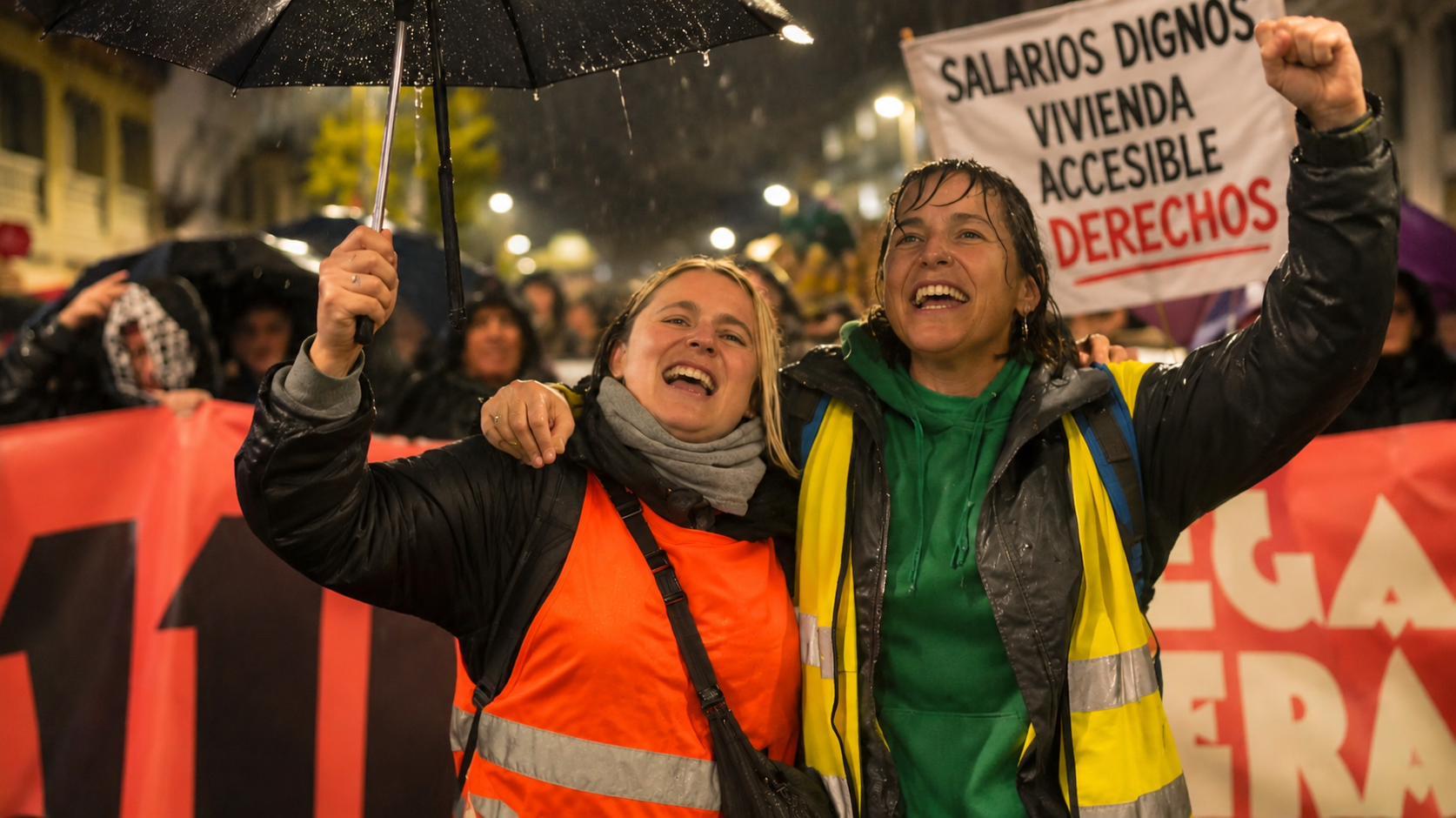
Burning bins, smashed shop windows and tear gas: the nationwide general strike for affordable housing ended on Wednesday evening with rioting in the centres of Madrid and Barcelona. A day later, a fierce debate has broken out over who is to blame. The tenants’ organisation Sindicato de Inquilinas is already warning that the conflict will escalate unless the housing situation changes.
Spain Expat Press Editorial Team
What happened on Wednesday
It was Spain’s first general strike in 14 years. It was called by the Sindicato de Inquilinas and backed by the country’s main trade unions, CCOO and UGT, under the slogan of housing, wages, public services and pensions. One of the triggers for the protests was the forced eviction in September of an 87-year-old woman in Madrid, who died a few days later.
Hundreds of thousands of people took to the streets. In Madrid, the central government’s local office counted 120,000 marchers, while in Barcelona the city police put the figure at 55,000. The organisers claimed 400,000 in each city. There were also large demonstrations in Valencia, Málaga, Granada, Valladolid and Santander. How many people actually went on strike remains disputed: the unions reported very uneven participation from region to region, while the employers’ federation CEOE described the strike as a “failure”.
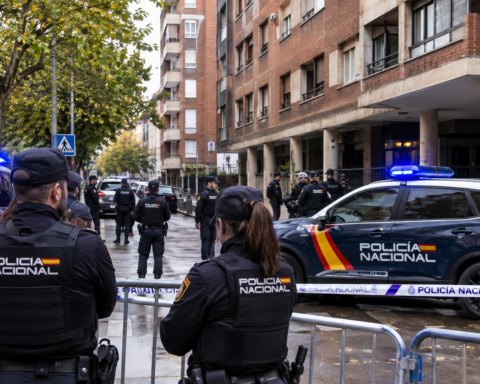
Rioting broke out after the demonstrations ended. In Barcelona, hooded groups around Plaça Catalunya smashed shop windows, looted shops, set bins on fire and threw fireworks. The Catalan police, the Mossos d’Esquadra, responded with rubber bullets, and 18 people were arrested. In Madrid, police used batons and pepper spray on the Gran Vía and in the Plaza de España, and nine officers were injured. Nationwide, more than 70 people had been arrested by late evening, most of them in connection with picket lines and clashes. Elsewhere, an explosive device went off outside the UGT union office in Vigo, and two members of the People’s Party (PP) were injured in an attack on their party office in Barakaldo.
Tensions between the unions and the tenants’ movement
There were clear tensions between the main unions and the tenants’ movement even before the strike. CCOO and UGT wanted a “calm” day of protest, with information pickets and marches. The Sindicato de Inquilinas, by contrast, had called for night-time pickets and blockades, including actions targeting large retail chains and public transport. Union sources spoke of considerable anger, fearing precisely the scenes that eventually unfolded.
After the strike, however, the unions directed their criticism mainly at the police. The CCOO leader, Unai Sordo, announced a criminal complaint over the use of pepper spray against peaceful demonstrators in Madrid. Amnesty International also called for an investigation into possible excessive use of force.
“Violence is going to increase”
Valeria Racu, a spokeswoman for the Sindicato de Inquilinas, told Spanish television on Thursday that violence would increase unless the next government fundamentally changed the housing model, wages and the distribution of wealth. She blamed “cowardly governments that kneel before landlords”, but described the rioting itself as separate incidents with no connection to the strike. Her organisation had already said weeks ago that its fight for affordable housing was directed at governments of all political colours and would not wait for any electoral timetable. CCOO and UGT also see the strike as the start of further street protests.
Arde la entrada de la tienda Apple de Passeig de Gràcia de Barcelona en la manifestación del #11NHuelgaGeneral https://t.co/lVEfipqDSw
— M 📺 (@casasola_89) November 11, 2026
Political reactions
With the general election on 29 November just over two weeks away, reactions were as polarised as the campaign itself. The Catalan president, Salvador Illa of the Socialist PSC, said that neither violence nor vandalism represented the people who had demonstrated peacefully throughout the day. “Protest is legitimate, violence is not,” he said.
The Labour Minister, Yolanda Díaz, expressed her “respect and support” for the unions and workers. The PP-led regional government of Madrid spoke of “political tactics” and described the unions as an appendage of the Sánchez government. The Vox leader, Santiago Abascal, called them “mafia unions”. The Podemos candidate, Irene Montero, accused the government of sending in the police against picket lines.
Will the new housing decree help?
The day after the strike, parliament approved the government’s housing decree. It caps rent increases, allows existing tenancies to be extended and tightens the rules on short-term lets. The most controversial measure, the automatic renewal of tenancies for a further five years, was however rejected.
Critics argue that the decree fails to tackle the underlying problem. In their view, it mainly protects those who already have a home, while making things even harder for those looking for one, as landlords take their properties off the market for fear of further restrictions. The economic think tank Fedea warns that the measures could push up rents and reduce supply. The landlords’ association ASVAL goes further, saying they will destroy supply. Shortly after the plans were announced, the property portal Idealista reported a 20 per cent fall in the number of rental properties advertised in Madrid.
The government disagrees, arguing that protecting tenants and giving security to small landlords are not contradictory. Alongside the tenant protections, the decree includes tax breaks for landlords who lower their rents and interest-free loans for first-time buyers.
For the tenants’ movement, none of this goes far enough. It is calling for significantly lower rents, open-ended tenancies as the norm and the expropriation of homes owned by large landlords. As a result, the housing question is likely to be fought out on the streets as well as in parliament long after 29 November.