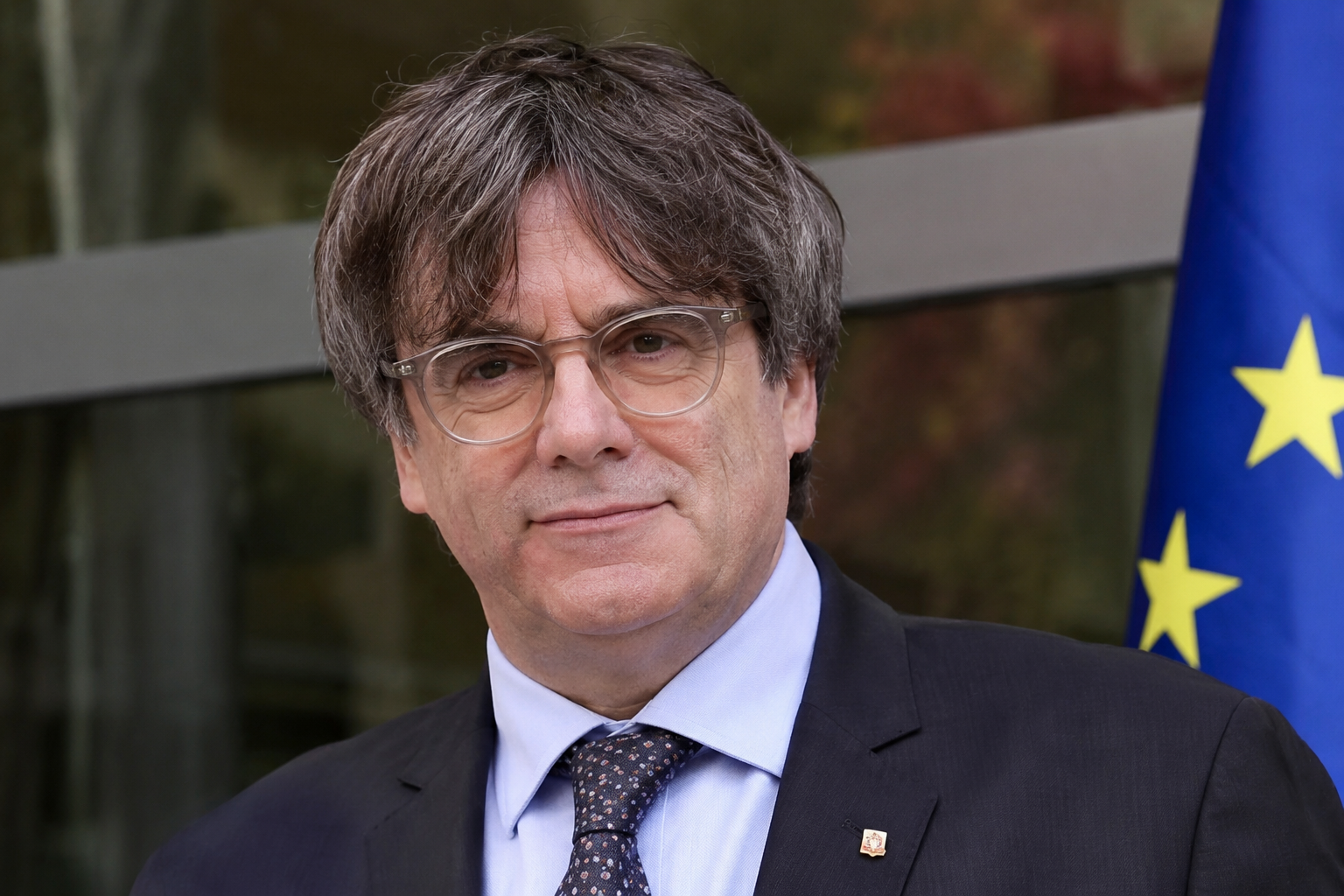
Carles Puigdemont has broken his silence at the worst possible moment for Pedro Sánchez. In an exclusive interview with the Madrid daily El Mundo, conducted by Esteban Urreiztieta and previewed on Wednesday night, the leader of the Catalan separatist party Junts describes from his Belgian exile in Waterloo how he negotiated the Spanish prime minister’s 2023 re-election. One line already leads every news bulletin: “We took advantage of Sánchez’s ambition to defeat Spain.”
Spain Expat Press Editorial Team
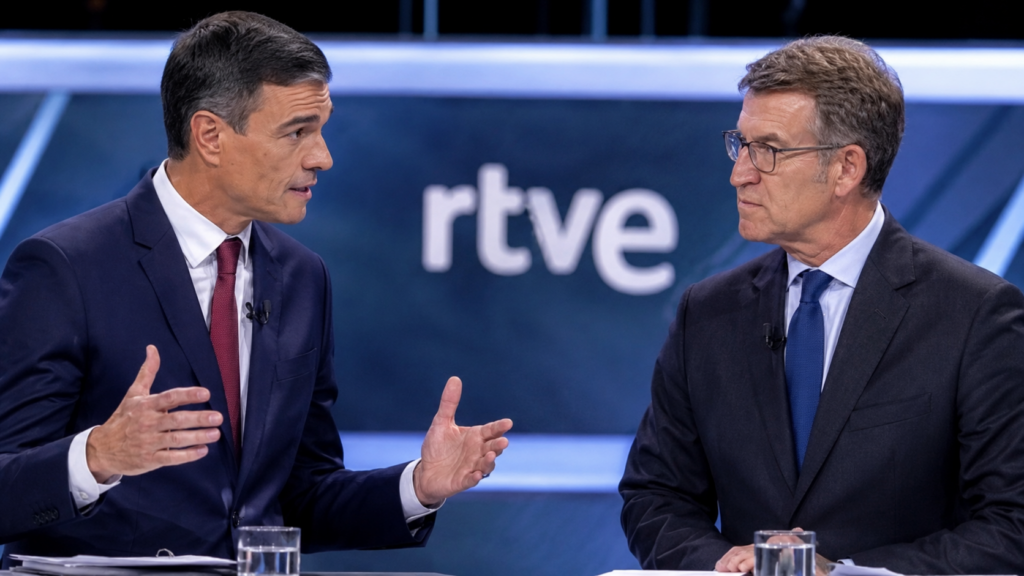
The interview comes out on the day of the only head-to-head TV debate between Sánchez and conservative opposition leader Alberto Núñez Feijóo (PP), just ten days before the general election on 29 November. For the government, it is a blow it did not see coming. What stuns many is less what Puigdemont says than how bluntly he says it.
“They were the ones who knocked on our door”
Puigdemont’s account turns the official version on its head. Junts did not go looking for the Socialists (PSOE), he says; it was they who knocked on his door after the July 2023 election, after years of contempt for his party. The reason was simple: Sánchez did not have the votes to stay in power. The PP had come first, and without Junts’ seven MPs there was no majority for him.
That is the heart of the matter: Sánchez cared only about staying in power. He had promised voters there would be no amnesty. Three days before the 23 July vote he flatly ruled it out on the TV channel laSexta, and for months he repeated that an amnesty “fits neither the law nor the Constitution”. In 2019 he had even promised to bring Puigdemont back to Spain to face justice. Yet as soon as he needed the votes, he rushed to call the former Catalan leader who had fled to Brussels. On 28 October 2023 he defended, for the first time, the amnesty he had ruled out.
The talks that followed were surprisingly easy, Puigdemont says. Junts put the amnesty for those involved in the 2017 independence bid on the table, along with other demands he calls “short-term”, such as devolved powers and funding. According to Puigdemont, the PSOE ended up accepting every condition, including some the government itself had called impossible shortly before.
That is what hurts most at Socialist headquarters. For years the government presented the amnesty as its own decision, taken for the sake of coexistence. Puigdemont describes it as a victory wrung from a prime minister willing to do almost anything.
Amoral and ambitious: the view from Waterloo
No partner this important has ever described Sánchez this way. Puigdemont calls him “an amoral person with boundless ambition”. Junts’ strategy, he explains, was to test how far they could push him.
This is not a PP or Vox opponent speaking. It is the man whose seven MPs made the legislature possible. That is why the blow lands twice: it questions how the amnesty was negotiated, and it paints a prime minister who, in his own partner’s words, gave way without resistance.
Puigdemont adds another awkward detail. He says he has never spoken directly to Sánchez, by phone or in person, since he left Spain in 2017. Everything went through intermediaries.
Zapatero, Switzerland and faceless negotiations
The interview also sheds light on the later talks in Switzerland, where former prime minister José Luis Rodríguez Zapatero was the Socialists’ main contact. The meetings involved Salvadoran mediator Francisco Galindo and, for a time, former PSOE organisation secretary Santos Cerdán, who is now in prison.
Puigdemont’s words match what was already known. In June, El Mundo published Zapatero’s diary, seized by the police economic crime unit UDEF. According to those notes, every trip to Switzerland was followed by a meeting at the Moncloa, the prime minister’s office, to brief Sánchez.
Now the other side of the table confirms it. And it does so with no interest in shielding the government it helped keep in office.
The worst possible timing
Timing is what turns the interview into a heavy blow. It lands hours before the campaign’s only head-to-head debate between Sánchez and Feijóo. According to the news site Hechos de Hoy, 14.3% of voters are still undecided, with up to 40 seats in play.
Puigdemont chose his platform carefully: in Spanish and in a Madrid newspaper, so no one can claim anything was lost in translation. In theory, he was going to stay out of the campaign. In practice, he is now right in the middle of it.
There is bewilderment in Catalonia too. According to Crónica Global, nationalist online media cannot understand why he chose El Mundo, and some see it almost as a betrayal. Feijóo has been handed an argument on a plate. Tonight Sánchez will have to defend a deal his own partner now boasts of having won from him.
The other reading
Not everyone sees a confession. The government’s defenders point out that Puigdemont needs his own story: before separatist voters, he must appear as the man who beat the state, not one who made a deal with it. Overstating his gains is part of that strategy.
The PSOE argues that the amnesty and dialogue eased tensions in Catalonia. It points to the 2024 Catalan election, in which the separatists lost their majority in the regional parliament. From that angle, Puigdemont’s attacks on Sánchez show there was no complicity, only a negotiation between adversaries.
There is so far no official response to the interview from the government or the PSOE. It is likely to come tonight, in the debate.
A partner who sends the bill
Puigdemont has said nothing the opposition did not denounce three years ago. What is new is who says it, and when. The man who made Sánchez prime minister now portrays him as someone willing to concede anything to stay in power, and he does so on the morning of the decisive debate.
And this is only the first part of the interview. At the Moncloa, they know the worst may be yet to come.