A general strike, a country in mourning, an election campaign entering its final stretch – and, to round it off, the Christmas lights. November 2026 will test Spain. Here is what the vote, the strikes, prices and travel mean for those of us who live here.
Spain Expat Press Editorial Team
This November turns on a single date. On Sunday 29 November Spaniards return to the polls, earlier than planned, after Pedro Sánchez dissolved parliament on 5 October. His hand was forced when an unusual alliance of the conservative Partido Popular, the far-right Vox, the Catalan separatists of Junts and the Navarrese regionalists of UPN voted down his housing decrees. The official campaign begins on Friday 13 November.
The backdrop is a sombre one. Inflation is running at 4.9%, its highest level since February 2023. A rail disaster in Castilla-La Mancha has shaken the country, and relations with Morocco remain strained. Meteorologists, meanwhile, expect yet another unusually warm autumn after the hottest summer on record.
Foreign residents will be spectators on polling day. Only Spanish nationals may vote in general elections, however long they have lived in the country. EU citizens can vote in municipal and European elections; nationals of a handful of countries with reciprocal agreements, in municipal elections only.
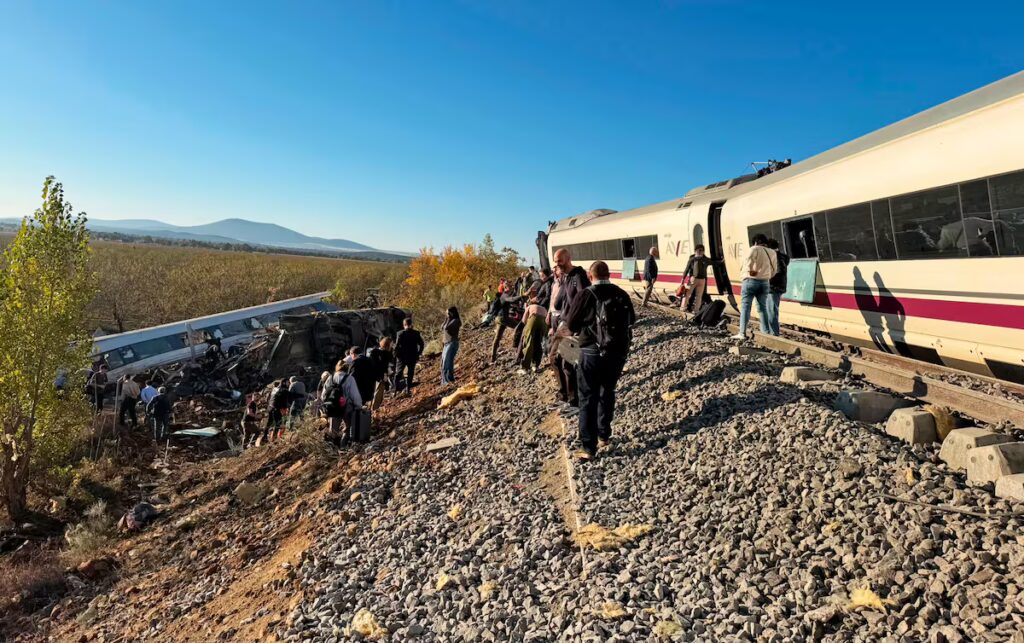
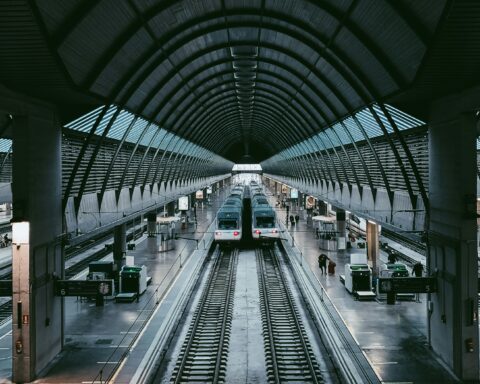
Rail travel to the south is disrupted. The high-speed line between Madrid and Andalusia remains closed after the Urda crash, and Renfe has stopped selling tickets on the route until 13 December. Anyone travelling to Seville, Córdoba or Málaga should check their booking: changes and cancellations are free, and a replacement service is running.
Expect delays at airports. Since 10 April the EU’s Entry/Exit System (EES) has recorded the fingerprints and facial images of non-EU travellers, causing long queues at some airports. The separate ETIAS travel authorisation has still not launched and may slip to 2027. There is some relief on one front: in October Spain and Italy agreed to lift the border checks on flights and ferries they had imposed after the Ceuta crisis.
Immigration rules may shift. The application window for the extraordinary regularisation closed on 30 June, but decisions are still being issued; those approved must apply for a foreigner’s identity card (TIE) within a month. Immigration, asylum and citizenship are campaign issues, and a change of government could alter the rules as early as 2027.
Politics: a referendum on Sánchez
The conservatives enter the race as favourites, though they are unlikely to win an outright majority on their own. The campaign runs from 13 to 27 November; Saturday 28 November is a “day of reflection”, on which campaigning is banned.
Sánchez has cast the vote as a stark choice: his progressive coalition, or a PP government dependent on Vox. Whether that framing holds is the central question of the autumn.
The parties at a glance
For readers less familiar with Spain’s alphabet soup of acronyms:
- PP (Partido Popular) – the mainstream centre-right conservative party and the main opposition force. Its leader, Alberto Núñez Feijóo, a former regional president of Galicia, leads the polls.
- PSOE (Partido Socialista Obrero Español) – the centre-left Socialists, in government since 2018 and led by the prime minister, Pedro Sánchez.
- Vox – a nationalist party of the hard right, widely described as far right, with a tough line on immigration and scepticism towards regional autonomy. Under Santiago Abascal it has become the third force and is the PP’s most likely partner.
- Frente Amplio – a new leftwing alliance to the left of the PSOE, made up of Movimiento Sumar, Izquierda Unida, Más Madrid and the Catalan Comuns. Its predecessor, Sumar, is the junior partner in government; its candidate is Ada Colau, the former mayor of Barcelona. Many polls still list it as “Sumar”.
- Podemos – the leftwing party that broke away from the Sumar bloc and is standing alone.
- ERC (Esquerra Republicana de Catalunya) – Catalan pro-independence left, again led by Gabriel Rufián, this time in a strategic pact with Podemos.
- Junts (Junts per Catalunya) – the centre-right Catalan separatists founded by Carles Puigdemont, represented in Madrid by Míriam Nogueras.
- EH Bildu – the Basque pro-independence left, led for the first time by Oskar Matute.
- UPN (Unión del Pueblo Navarro) – Navarre’s conservative regional party, which runs there jointly with the PP.
What the polls say
An average of 15 polls puts the PP on 31.0%, the PSOE on 27.3%, Vox on 18.9%, the Sumar bloc on 6.3% and Podemos on 2.9%. Sigma Dos translates that into 136 seats for the PP, between 101 and 106 for the PSOE and 65 for Vox. Together, the PP and Vox would hold 201 seats – comfortably above the 176 needed for a majority.
The race is not over, however. The latest survey, by Sondaxe, shows the gap narrowing: PP 29.2%, PSOE 26.9%, Vox 19.2%. It was conducted before the political fallout from Urda became clear.
The battle for the Senate
The upper house is also in play. The PP and Vox have coordinated their candidacies in 23 constituencies; in Las Palmas, Santa Cruz de Tenerife, Cádiz, Valencia, Castellón and the Balearic Islands, Vox is not fielding its own list and instead places independents on the PP’s slate. The left has responded with a joint front of the PSOE, Frente Amplio and regional partners.
What hangs over the campaign
- The Urda tragedy. On 28 October a Renfe AVE high-speed train ran into the back of a stationary train operated by the private company Iryo near the town of Urda, in the province of Toledo. More than 68 people were killed. Parties suspended campaign events, and nine months after the Adamuz crash, the safety of Spain’s railways is once again under scrutiny.
- The Morocco question. Only on 12 October did Sánchez acknowledge that Moroccan warships had entered Spanish waters off Ceuta at the end of July, during the mass arrival of migrants. Spain’s national court is investigating.
- The televised debates. The only confirmed head-to-head is Sánchez v Feijóo on Monday 16 November on Mediaset. laSexta postponed its first debate to 10 November out of respect for the victims; RTVE plans a debate between parliamentary spokespeople on 23 November, and a four-way debate is pencilled in for 26 November, though the broadcaster is still disputed.
Postal voting
Those entitled to vote can request a postal ballot from Correos, in person or online, until 19 November, and must return it by 25 November. Anyone who requests one can no longer vote in person.
The economy: a high cost of living and a housing squeeze
Rising prices are the quiet companion to this campaign. According to the national statistics office’s flash estimate, consumer prices rose 4.9% in October, unchanged from September; core inflation stands at 3.1%. Gas, heating oil and package holidays are the main drivers.
The final figure, due in mid-November, will have consequences at the pump: it determines whether the 20 cents-a-litre tax cut on petrol and diesel continues into December. It remains in force throughout November. In mid-October a litre of unleaded cost €1.79 on average, and diesel €1.89.
October unemployment figures are published early in the month – traditionally a weak month, as seasonal tourism jobs come to an end. But housing remains the most pressing issue. Rents hit a record €15.30 a square metre in June, and it was a dispute over housing policy that brought down the government.
At the end of the month the shops roll out their discounts: Black Friday falls on 27 November and Cyber Monday on 30 November, with “Black Week” starting on the 23rd – squarely in the closing days of the campaign.
Strikes: a day of standstill
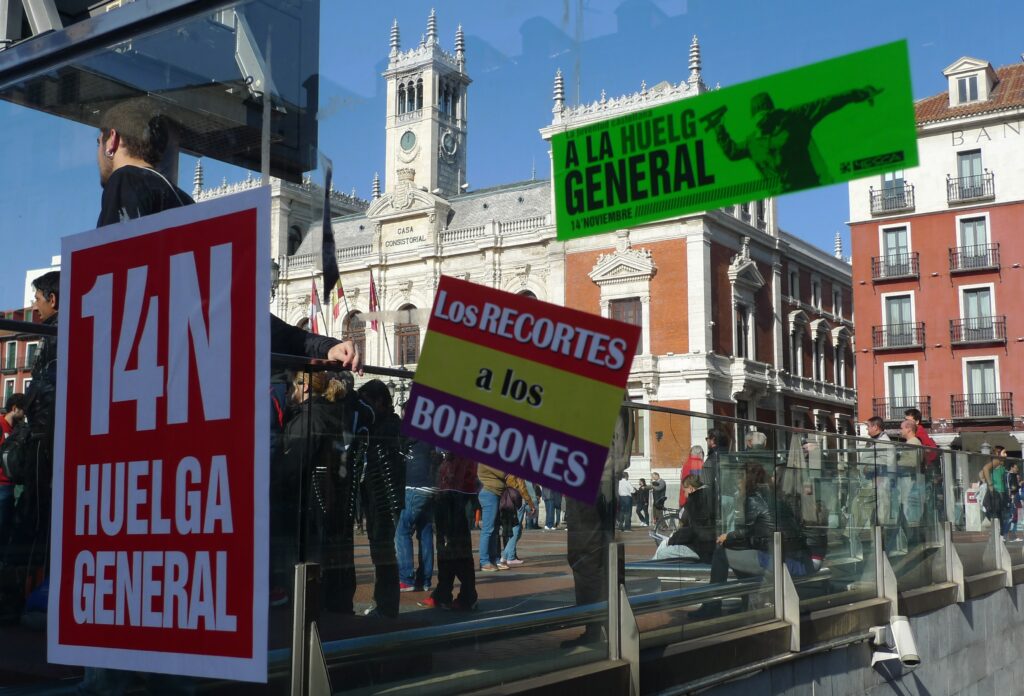
On Wednesday 11 November Spain faces a 24-hour general strike. It has been called by the two main unions, CCOO and UGT, backed by CGT, CNT, other unions and the tenants’ movement, over affordable housing, wages and the cost of living. It is the first joint general strike by the two union federations since 2012, and it falls just two days before the campaign begins.
In practice, trains, metro and buses will run only minimum services, to be announced a few days beforehand, and schools and public offices may operate at reduced capacity. Those who can should avoid travelling that day. It will be a difficult week for rail passengers in any case: the train drivers’ union Semaf has called additional strikes at Renfe on 10 and 12 November, in protest at the safety failings exposed by Urda.
Weather: an autumn that will not end
The summer of 2026 was the hottest since at least 1869 and one of the three driest on record. No real cooling is in sight: the state meteorological agency, AEMET, puts the probability that October, November and December will be warmer than usual across most of the country at 70%.
The outlook for rainfall is less certain. Across much of the north, centre and west of the peninsula – particularly southern Galicia and Extremadura – there is a 50% chance of a wetter than average quarter. What the weather will be like on polling day, of course, only that week’s forecast can say.
Society, culture and sport
Film lovers should head to Seville this month. From 6 to 14 November the Seville European Film Festival (SEFF) screens the year’s best European arthouse cinema at the Cine Cervantes, the Teatro Alameda and the Odeon Plaza de Armas, with tickets at around €3.50. In Madrid, LesGaiCineMad, the capital’s international LGBTQ+ film festival, runs from 10 to 26 November.
On 5 November a new national television channel, La Séptima, led by the journalist Javier Ruiz, goes on air – a launch timed in the thick of the political season.
In sport, all eyes turn to Bologna, where Spain’s tennis team, captained by David Ferrer, contests the Davis Cup Finals from 24 to 29 November; their first opponents are Austria on Thursday 26 November. Should Spain reach the final, it will fall on election day.
For music, Duran Duran play Madrid on 6 November, and the Lion Rock festival takes place in León the following day.
And then, towards the end of the month, the lights go on. Vigo traditionally leads the way; its mayor, Abel Caballero, guards the date like a state secret, though it is expected around mid-month – last year it was 15 November. Madrid plans its switch-on for 28 November, and Málaga, with its celebrated light show on Calle Larios, for the 29th – election night. Barcelona, this year’s European Capital of Christmas, has yet to set a date; in 2025 the Passeig de Gràcia lit up on 22 November, with Seville following on the 29th.