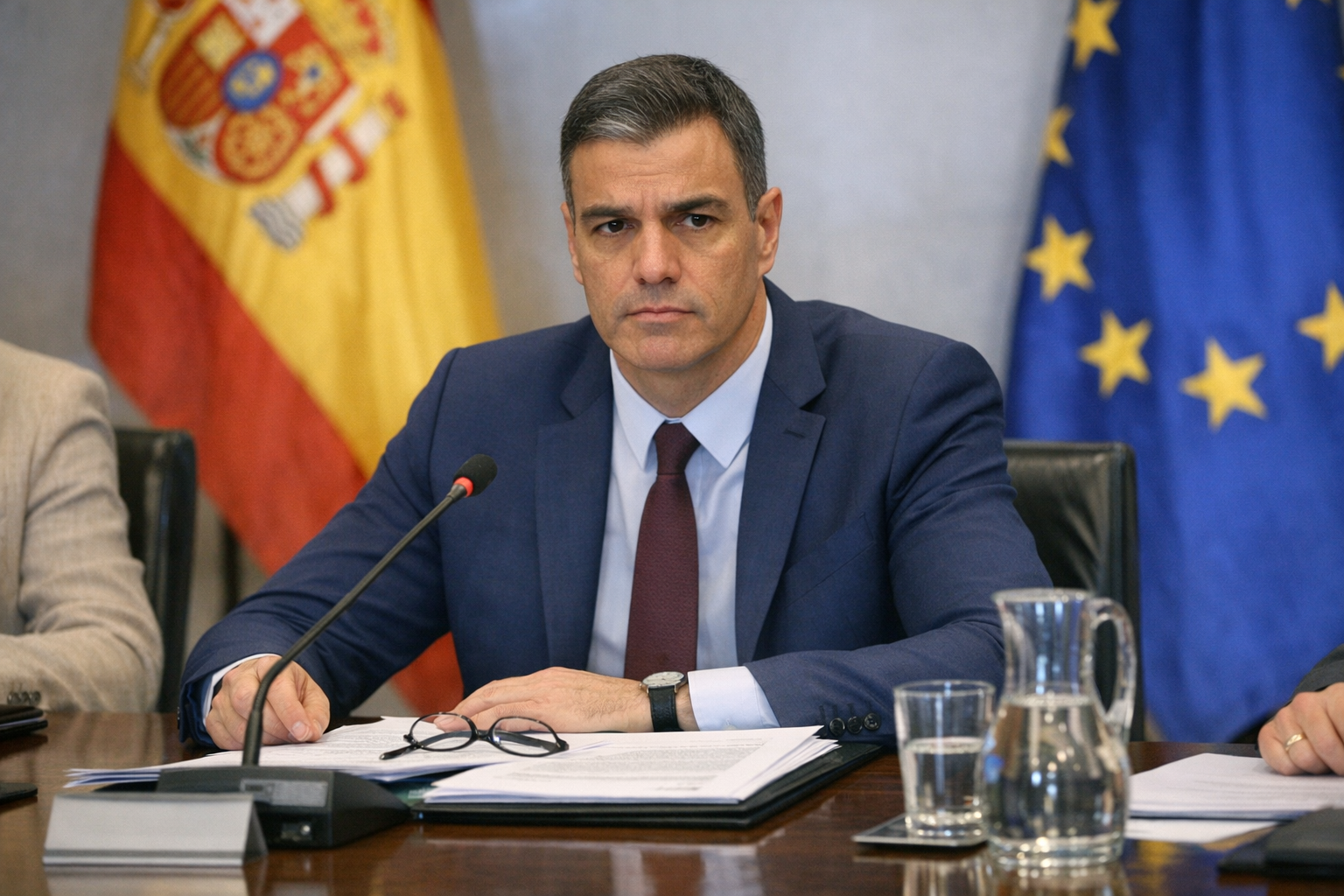

The Spanish government has unveiled an ambitious new investment programme designed to bring lasting change to everyday life across the country. Prime Minister Pedro Sánchez announced a comprehensive €9 billion plan aimed at modernising both the energy efficiency of residential buildings and public transport. The goal is to further advance Spain’s energy transition while also addressing social inequalities in its implementation.
Spain Expat Press Editorial Team
by Marlon Gallego Bosbach
The plan is considered one of the largest national initiatives to date in the field of climate policy and is set to be closely aligned with European funding programmes.
Billion-euro drive for more energy-efficient homes
A key component of the programme is the large-scale energy renovation of residential buildings. Millions of households in Spain are expected to benefit in the future from improved insulation standards, more modern heating systems, and significantly reduced energy consumption.
Particular focus is being placed on older buildings, which are currently considered energy inefficient. The government plans to provide financial support, especially for lower-income households, to ensure that energy-efficient renovations are not only accessible to more affluent families.
The measures are intended not only to reduce CO₂ emissions, but also to lower monthly energy bills – an issue that has become increasingly important in recent years due to rising energy prices.
Sustainable transport as a second pillar
In addition to the housing sector, public transport is also set to undergo extensive modernisation. The plan includes investments in low-emission and energy-efficient transport, including the renewal of bus fleets and improvements to regional and urban public transport networks.
Another key focus is improving connectivity in rural areas, where public transport has often been limited. The aim is to make mobility across Spain more sustainable while also increasing accessibility.
Financial relief for certain population groups in public transport is also being considered in order to make climate-friendly mobility more attractive.
EU funding and political framework integration
A significant part of the funding is expected to come from European funds. The plan is part of the broader EU strategy to reduce emissions and promote sustainable infrastructure across its member states.
The Spanish government plans to submit the project for approval in Brussels in the coming months. This also places the initiative within the context of Europe’s climate goals, which aim to achieve broad climate neutrality by the middle of the century.
Sánchez bets on a “social energy transition”
Prime Minister Sánchez emphasised during the presentation of the plan that the energy transition must be designed not only ecologically, but also in a socially fair way. Climate protection should not become a question of income, but must be accessible to all citizens.
The €9 billion plan is therefore intended to specifically prevent certain groups of the population from being excluded from the transition. Instead, the modernisation of the country is to be carried out as broadly and evenly as possible.
Spain as a pioneer of transformation
In recent years, Spain has already invested heavily in renewable energy and significantly transformed its energy mix. The share of wind and solar power has risen sharply, while economic growth targets have continued to be pursued at the same time.
With the new programme, the government aims to further accelerate this course and position Spain in the long term as one of Europe’s leading countries in sustainable energy and transport policy.
The path to implementation
Whether the ambitious plan can achieve its full impact will depend primarily on its implementation and approval at European level. However, one thing is already clear: the coming years could bring a profound modernisation of Spain’s cities, households, and transport networks.
For many citizens, this will ultimately mean one thing – lower energy costs, more modern infrastructure, and a step towards a more climate-friendly everyday life.