What Foreigners Really Need to Know Before Moving to Spain
Spain Expat Press Editorial Team
INTRODUCTION
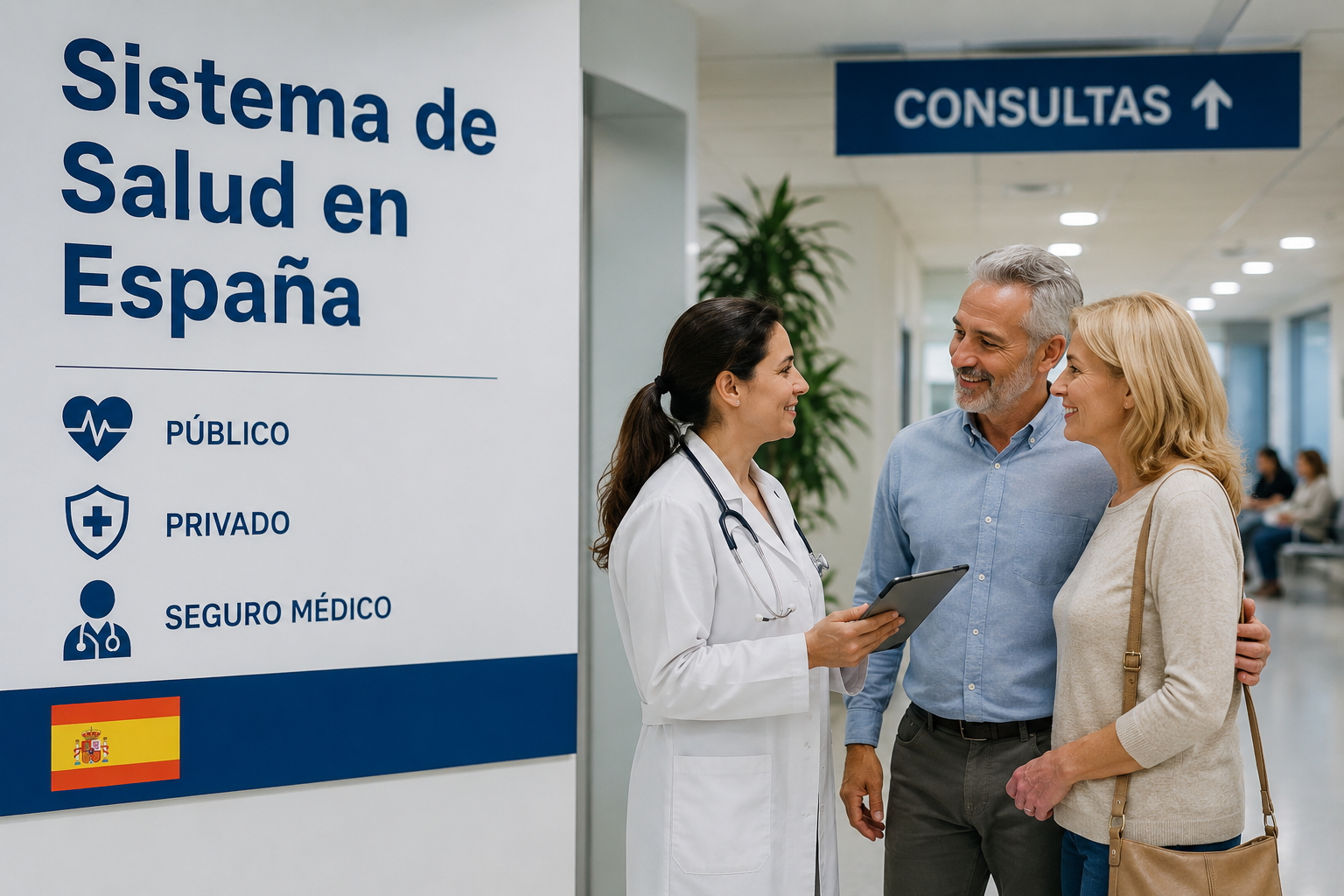
Spain has one of the most respected healthcare systems in Europe — and for many foreigners, this is one of the main reasons why they choose to move there.
What surprises many newcomers, however, is this: Spain does not simply have “one” healthcare system.
In reality, there are several different layers: the public healthcare system, private health insurance and exclusive private clinics that operate entirely outside traditional insurance schemes.
Understanding these differences before moving can save a great deal of stress, confusion, and unexpected costs later on.
THE PUBLIC HEALTHCARE SYSTEM IN SPAIN
Spain’s public healthcare system (“Sanidad Pública”) is mainly funded through taxes and social security contributions.
People who legally live and work in Spain — or who qualify through certain residency or pension arrangements — may gain access to the public healthcare system.
The public system includes: hospitals, emergency care, general practitioners, specialists, surgeries, and long-term medical treatment.
And in fact: the quality of medical care is considered very high in many areas. Spain has an excellent international reputation for: emergency medicine, surgery, transplant medicine, and general healthcare services.
WHO HAS ACCESS TO THE PUBLIC HEALTHCARE SYSTEM?
One of the biggest misunderstandings among foreigners is the belief that medical care automatically becomes free upon arrival in Spain.
That is not always the case. Access usually depends on a person’s legal and personal situation in Spain.
In general, the following groups may qualify:
People legally working in Spain
Anyone who: is employed by a Spanish company, works as self-employed (“autónomo”), or contributes to the Spanish social security system, will normally gain access to public healthcare.
Pensioners from certain countries
Some pensioners from EU countries — as well as countries that have healthcare agreements with Spain — may also qualify.
Many British pensioners, for example, use arrangements connected to their UK pension status.
Family members
In some cases: spouses, children, or dependent family members may also be covered through the main applicant.
Long-term legal residents
Foreigners with permanent legal residency in Spain may also gain access depending on: residency status, contributions, income, and regional regulations.
WHAT ABOUT PEOPLE WITHOUT LEGAL RESIDENCY STATUS?
This is one of the most misunderstood subjects in Spain.
Even foreigners without legal residency status (“undocumented migrants”) may, in certain cases, gain access to parts of the public healthcare system.
Spain generally provides: emergency medical treatment, pregnancy and maternity care, healthcare for minors and in many cases basic medical assistance.
Compared with some other European countries, the Spanish system is considered relatively generous in this area.
However, this does NOT automatically mean the same full access as legally registered residents receive.
In practice, much depends on: regional regulations, local town hall registration (“empadronamiento”), documentation, length of stay and the autonomous region involved.
Some regions are more flexible than others. As a result, many people without legal status also rely on: NGOs, charities, social organisations or medical aid projects.
Many people confuse: access to emergency care with full access to the public healthcare system. These are not the same thing.
THE SPANISH HEALTHCARE CARD
People accepted into the public healthcare system will usually receive a healthcare card (“Tarjeta Sanitaria”).
This card provides access to: public doctors, healthcare centres, hospitals, prescriptions, and medical appointments.
In many regions of Spain, patients also gain access to an official healthcare app.
Through the app, patients can often: book appointments, change appointments, access prescriptions, receive notifications and view parts of their medical records.
Many foreigners are surprised by how digital parts of the Spanish healthcare system have become.
At the same time, however, there is still a remarkable amount of paperwork and bureaucracy.
OWNING PROPERTY DOES NOT AUTOMATICALLY PROVIDE ACCESS TO HEALTHCARE
This comes as a surprise to many newcomers. Buying property in Spain does not automatically grant access to the public healthcare system.
Many second-home owners, digital nomads, non-working residents and pensioners still require private health insurance.
PRIVATE HEALTH INSURANCE IS MANDATORY FOR MANY VISAS
For several Spanish visas, proof of private health insurance is required before approval is granted.
This often applies to: Non-Lucrative Visas, Digital Nomad Visas and certain residence permits.
Spain generally requires very specific insurance conditions to be met.
THE REALITY MANY EXPATS DISCOVER LATER
Many foreigners choose private healthcare after arriving in Spain.
Private healthcare in Spain is generally considered: faster, more flexible and easier for international residents to access.
Appointments are often available much more quickly, and many clinics in expat areas speak: English, German, Dutch, Scandinavian languages or French.
Many foreigners take out private insurance with companies such as:
Sanitas
Adeslas
DK
Mapfre
Depending on the policy, examinations and treatments may be partially or fully covered.
Important: Not every private clinic accepts every insurance provider!
Many newcomers only realise this after booking an appointment. Not every doctor works with every insurance company.
For this reason, patients should always check beforehand: whether the insurance is accepted, which services are covered and whether prior authorisation is required.
Not checking on this could lead to one of the most common — and expensive — surprises for many expats on the Costa del Sol.
A patient arrives at a modern private clinic, presents their insurance card — and suddenly discovers: the clinic does not accept that insurance, the specialist works exclusively on a private-pay basis or the treatment is not covered.
The result: patients may suddenly have to pay several hundred or even thousands of euros directly.
This happens particularly often with:premium clinics, specialist centres, cosmetic medicine and advanced diagnostic centres.
That is why the rule is simple: Always check BEFORE booking appointments or starting treatment.
Because in Spain, “private healthcare” does not automatically mean: “your insurance will be accepted”.
PREMIUM PRIVATE CLINICS WITHOUT INSURANCE
Particularly in Marbella and along the Costa del Sol, the market for exclusive private medicine has grown rapidly in recent years.
Some of the most prestigious clinics and specialists: operate entirely privately and do not accept standard insurance policies.
Patients pay directly for:consultations, examinations, scans, procedures or specialist treatments.
These clinics are especially popular with: wealthy international residents, luxury travellers, business owners, celebrities and people seeking very rapid access to specialists.
IS HEALTHCARE IN SPAIN EXPENSIVE?
Compared with countries such as the United States, Spain is often considered very affordable.
However, costs vary significantly depending on: whether care is public or private, insurance quality, region, age and clinic type.
Many foreigners underestimate: dental costs, specialist consultation fees, exclusions for pre-existing conditions and the prices charged by exclusive private clinics.
WHAT HAPPENS IN AN EMERGENCY?
Spain generally provides emergency medical treatment regardless of residency status. However, emergency treatment should not be confused with full long-term access to the healthcare system.
This is another reason why good health insurance remains extremely important.
CONCLUSION
Before moving to Spain, people should: research the healthcare system carefully, fully understand their insurance coverage and avoid assuming that all clinics operate in the same way.
Because when you suddenly need a doctor abroad, that is often the moment you realise just how important this knowledge really is.
You may also be interested in
The private clinics with the best patient ratings on the Costa del Sol