Owning a yacht was once one of the ultimate symbols of wealth. But attitudes at the top end of the luxury market are changing. Increasingly, wealthy clients are choosing chartering and flexible access over committing millions to a vessel of their own — a shift that could prove particularly significant for Spain, from Mallorca and Ibiza to Marbella.
Spain Expat Press Editorial Team
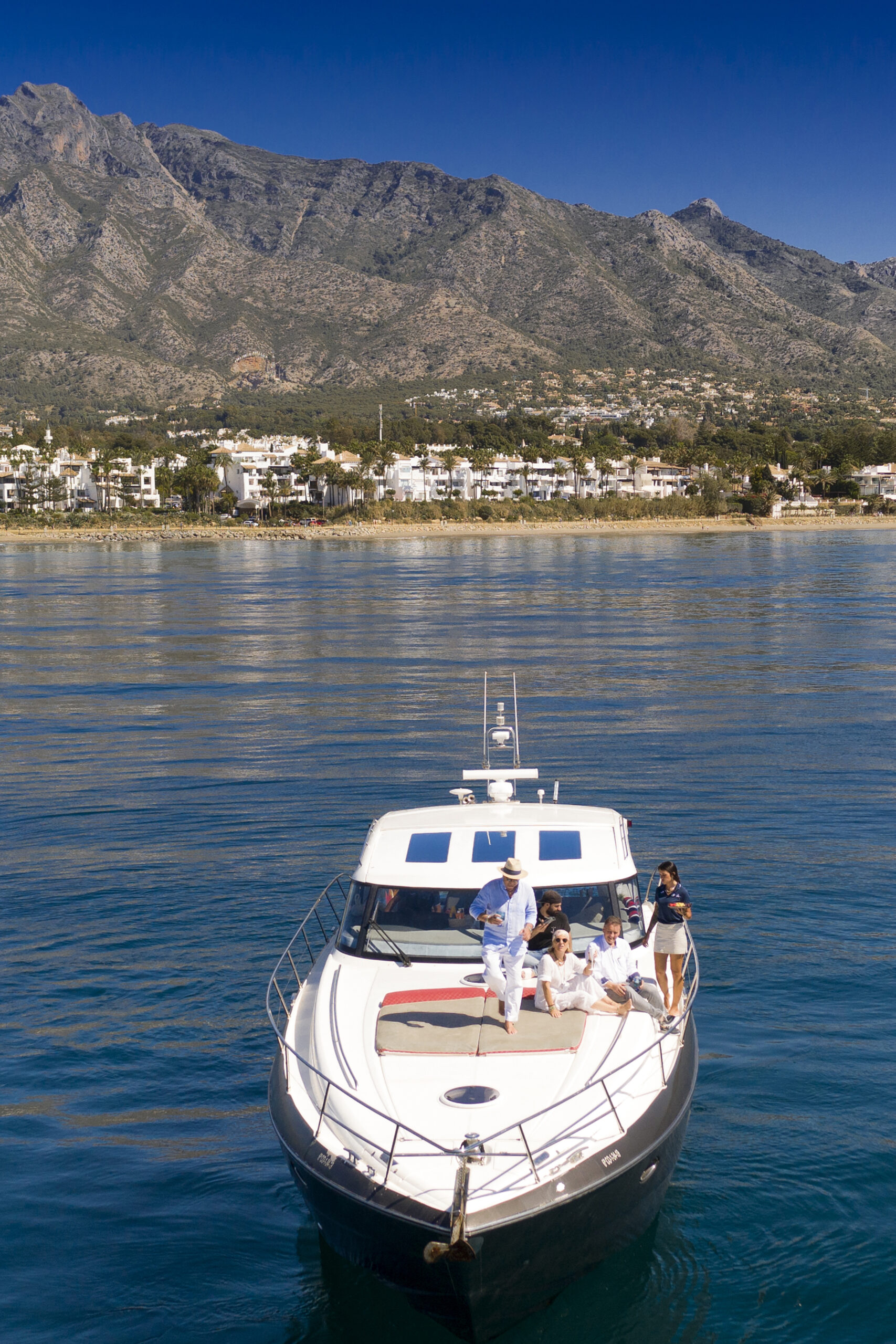
For decades, the image was unmistakable: a private yacht moored in Puerto Banús, Ibiza or Palma de Mallorca, ready whenever its owner wanted to escape into the Mediterranean.
For many wealthy individuals, owning the vessel was as important as using it.
That mindset, however, is beginning to change.
Across the international luxury market, a broader idea is gaining ground: access rather than ownership. High-net-worth clients still want the privacy, freedom and exclusivity of travelling by yacht, but they do not necessarily want the responsibilities that come with owning one.
The alternative is straightforward. Charter a yacht in Mallorca this summer, choose another vessel for a week around Ibiza and Formentera, and opt for a larger superyacht for a later journey through the Mediterranean.
The luxury remains. Much of the commitment disappears.
A Yacht Costs Money Even When Nobody Is On Board
The purchase price of a yacht is only the beginning.
Owners face substantial ongoing costs, including maintenance, insurance, berthing fees, crew salaries, repairs, fuel and management. The larger and more sophisticated the vessel, the more complex — and expensive — its operation becomes.
Yet even extremely wealthy owners may spend only a limited number of weeks aboard their yachts each year.
For some, that calculation is becoming increasingly difficult to justify.
Why tie up millions of euros in an asset that may spend most of the year sitting in a marina when a comparable experience can be chartered whenever it is actually required?
That question is helping reshape attitudes towards yacht ownership.
Why Spain Is Particularly Well Placed
Few European countries are as well positioned to benefit from the growth of luxury yacht charter as Spain.
The Balearic Islands are firmly established on the international yachting map. Ibiza and Formentera attract affluent visitors from across Europe and beyond during the summer, while Mallorca has developed into one of the Mediterranean’s major centres for the yachting industry.
Palma combines large marinas with maintenance facilities, specialist companies and direct international air connections.
On the Costa del Sol, Puerto Banús in Marbella occupies a similarly distinctive position.
The marina has long been associated with international wealth and luxury tourism, combining yachting with high-end property, restaurants, designer shopping, golf and an increasingly international year-round population.
For charter clients, Spain also offers something particularly valuable: variety.
A week sailing between Ibiza and Formentera provides an entirely different experience from cruising around Mallorca and Menorca or exploring the southern Spanish coastline.
Increasingly, the customer is therefore not buying a particular vessel.
They are buying an experience.
When the Yacht Becomes a Service
The shift reflects a broader transformation taking place across the luxury industry.
For some wealthy consumers, ownership alone is no longer the defining expression of luxury. Flexibility, convenience and time are becoming just as important.
Luxury yacht charter fits neatly into that philosophy.
A client can arrive by private jet or commercial flight to find the crew already aboard, provisions prepared, restaurants booked and an itinerary organised.
Within hours, the yacht can leave the marina.
At the end of the holiday, the client simply steps ashore.
Maintenance schedules, repairs, staffing issues and the challenge of securing a berth belong to somebody else.
For individuals whose scarcest resource may be time rather than money, that convenience has considerable value.
Ibiza Today, Marbella Tomorrow
There is another obvious advantage to chartering: clients do not have to use the same yacht for every occasion.
A family holiday might require several cabins, large outdoor spaces and facilities for children. A trip with friends around Ibiza may call for something faster and more entertainment-focused. A corporate event or large gathering may require a considerably bigger superyacht.
Chartering allows the vessel to be selected according to the trip rather than forcing the trip to fit the vessel.
For an international clientele moving regularly between cities such as London, Dubai, Miami, Madrid and Marbella, that flexibility can be more attractive than permanent ownership.
Does This Mean the End of the Private Yacht?
Far from it.
For billionaires and dedicated yachting enthusiasts, owning a yacht remains an intensely personal form of luxury. The world’s largest vessels are often designed and built specifically for their owners, effectively becoming floating private residences.
That segment of the market is unlikely to disappear.
But alongside it is another group: wealthy individuals who could afford to buy a yacht but increasingly see little reason to do so.
It is not because the appeal of spending time aboard a yacht has diminished.
Rather, ownership is no longer necessarily a prerequisite for luxury.
A Potentially Lucrative Shift for Spain
For destinations such as Mallorca, Ibiza and Marbella, the trend could have wider economic implications.
Yacht visitors do not spend money solely on the vessel itself. Their expenditure extends to restaurants, beach clubs, hotels, luxury retailers, chauffeurs, private aviation, property services and other businesses onshore.
The economic value of a yacht visitor therefore reaches well beyond the marina.
Spain already possesses many of the ingredients required to capitalise on this changing market: an extensive coastline, established luxury marinas, international airports, high-end hospitality and some of Europe’s most recognisable Mediterranean destinations.
And perhaps the changing yacht market illustrates the evolution of modern luxury better than almost anything else.
The question used to be:
“What do you own?”
Increasingly, it is becoming:
“What can you access?”