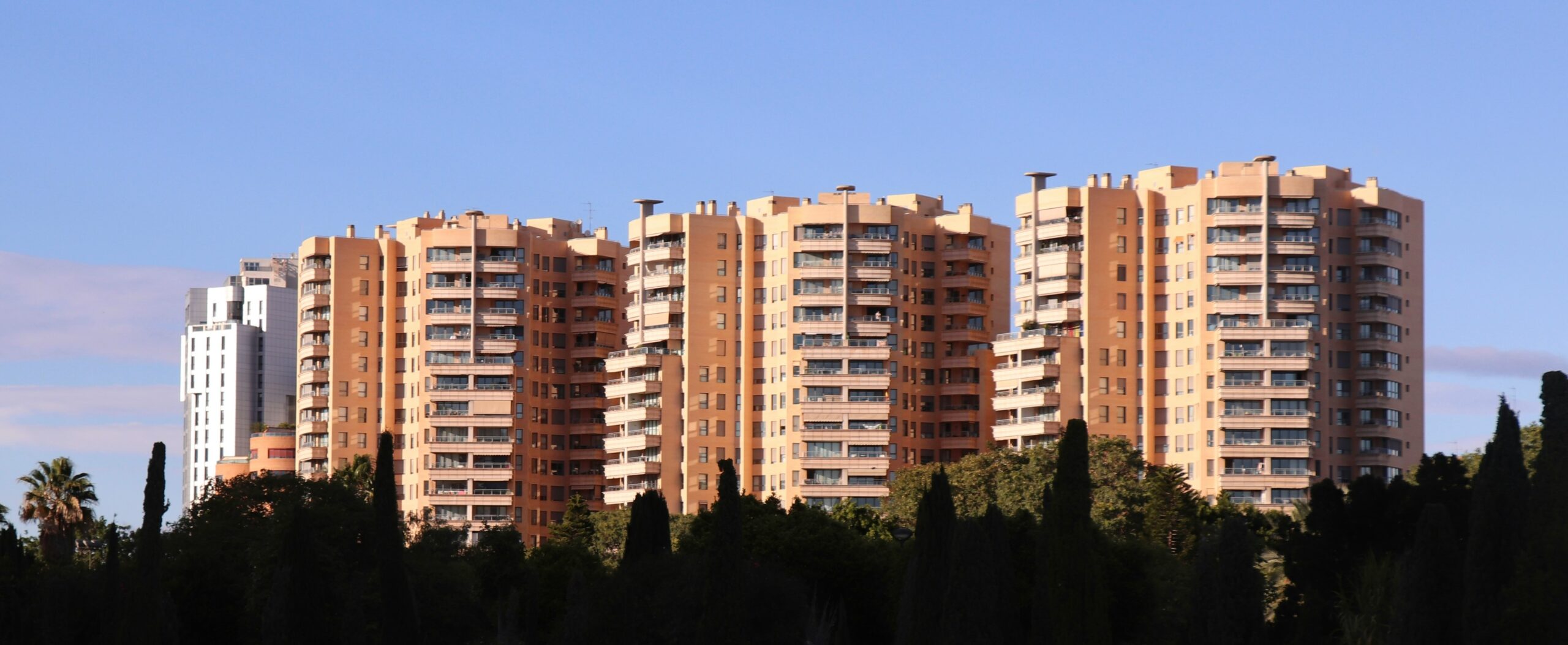
The Generalitat Valenciana is raising the benchmark for the maximum sale price of protected housing to 2,568 euros per square meter of usable area. The new regulation comes into effect on August 15. The move is primarily driven by significantly increased construction costs.
Spain Expat Press Editorial Team
by Marlon Gallego Bosbach
Anyone hoping for government-subsidized housing in the Valencia region will face higher prices in the future. The Generalitat Valenciana has raised the standard value used to calculate maximum sale prices for subsidized housing- applicable for 2026 – by seven percent. This increases the figure from the previous 2,400 euros to 2,568 euros per square meter of usable floor area. The corresponding regulation was published on Friday in the Diari Oficial de la Generalitat Valenciana and comes into effect on Saturday, August 15, 2026.
168 euros more per square meter
The seven percent increase corresponds to an additional 168 euros per square meter of usable area. For a 60-square-meter apartment, the new standard value would mathematically result in a figure of 154,080 euros. Based on the previous value, it would have been 144,000 euros. The difference therefore amounts to 10,080 euros.
However, this does not automatically represent the final maximum price for every protected dwelling in the region. With Decree 180/2024, the Generalitat has introduced a new, dynamic system for calculating maximum sale prices. This system is based on a standard value and an adjusted value that takes into account the objective conditions of the specific municipal area.
The new figure of 2,568 euros per square meter thus forms the basis for further calculations and cannot simply be equated with the maximum selling price of every individual VPP apartment.
Why are sheltered housing units becoming more expensive?
The Generalitat attributes the adjustment primarily to trends in construction costs. According to the regional government, the cost of building housing has risen sharply and persistently in recent years. Cited reasons include the consequences of the coronavirus pandemic, the war in Ukraine, and recent tensions in the Middle East.
Added to this are rising costs for skilled labor and other production factors in the construction sector. According to the Generalitat, the high demand for labor and resources resulting from the reconstruction and repair work following the severe DANA storm of October 2024 places an additional strain on the industry. The combination of these factors has created a structural scenario in which construction costs continue to rise.
The regional government therefore considers it necessary to adjust the existing module in order to maintain the economic conditions for the creation of new sheltered housing units.
Increasing supply as a goal of the Generalitat
According to its own statements, the Generalitat is pursuing this measure primarily to revitalize the construction of new protected housing and increase the supply of affordable housing in the region.
The backdrop to this is a problem that has long affected Valencia’s housing market: if the legally permitted sale price is set too low, construction projects can become economically unattractive for private developers. In such cases, there is a risk that, while affordable housing is mandated by law, the corresponding units are never actually built.
The Generalitat therefore argues that the price must be set in a way that takes into account the actual costs incurred by the construction industry. Only then, it maintains, can public housing policy contribute in the long term to genuinely increasing the supply of subsidized housing.
“Protected housing offers no protection if it isn’t built”
The decision is supported by the Cátedra Observatorio de la Vivienda at the Universitat Politècnica de València (UPV). The university points to its own technical report, according to which construction costs have risen by 57 percent since 2019.
Fernando Cos-Gayón, the director of the Cátedra, described the adjustment as the right decision, noting that the previous benchmark figure had fallen short of the actual costs of constructing new housing. His central argument is that subsidized housing cannot fulfill its social purpose if it is not built at all due to an excessively low price cap.
The evolution of this benchmark figure illustrates just how significantly the underlying conditions have changed. In 2013, the rate in the Valencian Community stood at €1,212.80 per square meter of usable area. It remained unchanged for the next ten years. It was not until 2023 that it was raised to €2,200, followed by a further increase to €2,400 in 2024.
According to the UPV, the long period without adjustments coincided with a time – between 2019 and 2022 – when no new private VPP projects were realized.
Construction costs are rising significantly faster than the new peak level
Despite the recent increase, the UPV points out that the adjustment only partially offsets the actual rise in construction costs. According to the Cátedra’s technical report, construction costs have risen by 17.1 percent since 2023. In contrast, the new maximum price for subsidized housing is increasing by only seven percent.
The so-called Módulo Básico de Edificación (Basic Building Module) from the Instituto Valenciano de la Edificación – which plays a key role in the system’s calculation – has also seen a significant price increase. According to the UPV, this figure rose by 21.79 percent between December 2024 and July 2026. By comparison, the cumulative rise in the Consumer Price Index in the Valencian Community stood at 5.7 percent over the same period.
The increase now decided upon therefore does not represent a full adjustment to the trend in construction costs, but merely a partial correction.
60 square meters remain comparatively affordable for young households
The UPV Chair has also examined the potential impact of the new figure on young buyers. A model calculation assumes a household consisting of two young people, each earning an average gross annual income of 23,131 euros. Together, they thus have a combined gross annual income of 46,262 euros.
The Chair sets 3.5 times the combined gross annual income as the threshold for financial soundness. This results in a theoretical financing capacity of approximately 161,917 euros.
A new 60-square-meter VPP apartment would cost €154,080 based on the new standard value of €2,568 per square meter. This would place the purchase price at 3.33 times the combined annual income, keeping it within the threshold set by the UPV.
According to Cátedra, the difference compared to the open housing market is significant. For a comparable 60-square-meter apartment, she cites a market price of around 318,000 euros, which would amount to 6.88 times the combined annual income.
Not every rent-controlled apartment automatically becomes more expensive
For owners of and prospective buyers interested in existing VPP apartments, one important restriction is crucial. In principle, the new regulation applies to procedures that receive preliminary qualification as protected housing on or after August 15, 2026.
Furthermore, under certain conditions, the new value may also apply to procedures for which preliminary qualification took place prior to the entry into force. The transitional provisions of Decree 180/2024 apply in this regard.
Therefore, the increase does not mean that all existing VPO or VPP apartments in Valencia will automatically become seven percent more expensive on August 15. Instead, for any specific property, it depends on when the apartment was classified, which protection regime applies to it, and whether it is a new build or a subsequent transfer.
A new dynamic system for price calculation
The current adjustment is part of a broader reform of the Valencian system for protected housing. Decree 180/2024 has established a dynamic model for determining maximum sale prices.
The so-called “module” consists of a standard value and an adjusted value. The standard value is derived from the basic building module of the Instituto Valenciano de la Edificación. The adjusted value, on the other hand, is intended to take into account the varying economic and housing market conditions of the individual municipalities.
This is intended to prevent the same price from applying to all municipalities, regardless of their actual market situation. This differentiation plays a crucial role, particularly given the significant differences between the individual municipalities of the Valencian Community.
Further adjustments could follow in 2027
However, the UPV does not view the current increase as a definitive solution. In its assessment, the system needs to respond more quickly to changes in construction costs in the future.
The Chair therefore proposes introducing an automatic adjustment based on consumer price index trends starting in January 2027. In addition, a mechanism for review is to be established in the event of extraordinary economic developments.
The seven percent increase just approved could thus be merely the next step in a series of further adjustments.
What does the decision mean for buyers?
For those wishing to purchase a subsidized home in the Valencia region, it is particularly important to note that the figure of 2,568 euros per square meter cannot simply be equated with the final maximum purchase price.
Factors playing a role in the specific calculation include the apartment’s usable area, the municipality, the applicable protection regime, and the time of classification. Different rules may also apply depending on whether the property is a new build or a subsequent sale.
For instance, anyone offered a 60-square-meter VPP apartment should not judge whether the asking price is permissible based solely on the calculation of 60 times 2,568 euros. The decisive factors are the property’s specific legal classification and the calculation method applicable to it.
Between higher prices and more living space
The Generalitat’s decision thus clearly highlights a conflict between policy objectives. On the one hand, protected housing needs to remain affordable for low- and middle-income households. On the other, maximum allowable prices must evidently be high enough for developers to continue undertaking new projects in light of rising construction costs.
The Generalitat is banking on the increase ultimately leading to a larger supply. The UPV also argues that an artificially low price offers no social benefit if it prevents the construction of new subsidized housing.
For those looking for housing, the decision initially means that the maximum permissible price for new protected housing units will rise. At the same time, the measure aims to ensure – in the long term – that more affordable housing is created in the Valencian Community.
Whether this calculation pays off will therefore not be determined solely by the trend in price-per-square-meter rates. The decisive factor will be how many new protected housing units are actually built following the adjustment and how many households gain access to affordable housing as a result.