Following E. coli contamination in the seawater, swimmers are once again allowed to enter the water at two beaches in Málaga. Four other stretches of coastline, however, remain closed. The contamination was triggered by severe weather that pushed the city’s sewage system to its limits. The situation is particularly significant as it comes in the middle of the Feria de Málaga.
Spain Expat Press Editorial Team
by Marlon Gallego Bosbach
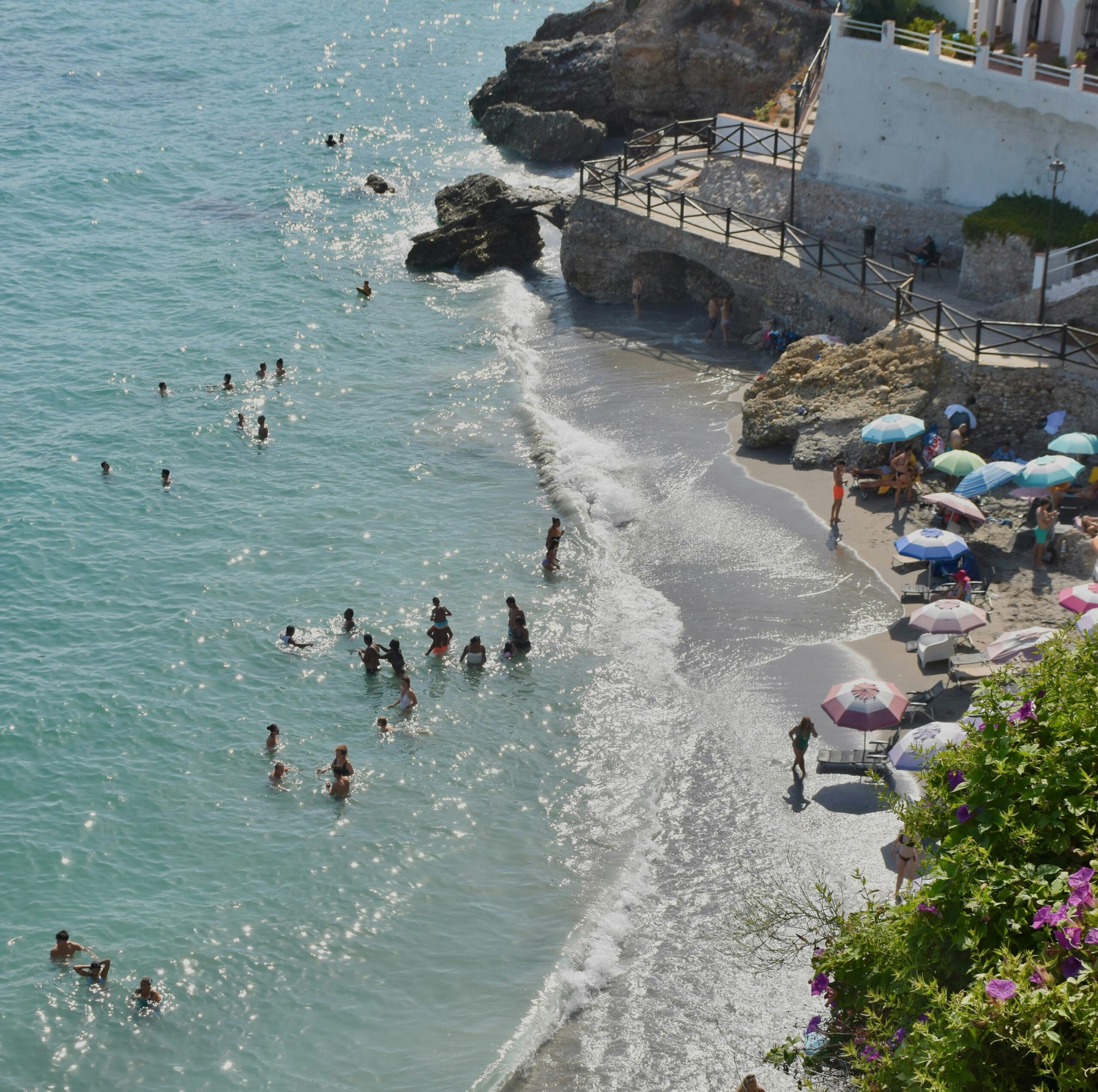
There is cautious relief along the Málaga coast – at least in part. Following the bacteria alert in recent days, two of the six beaches that had been closed have now reopened for swimming. The beaches of Campo de Golf-San Julián near the airport and El Palo in the east of the city were given the green flag again on Tuesday.
However, swimming remains prohibited at four other popular beaches. Although the measured levels of the faecal bacterium Escherichia coli (E. coli) have fallen, they are still above the permitted limit.
Four beaches remain closed
The beaches of Guadalmar, La Misericordia, Sacaba and San Andrés are still subject to the swimming ban. All four are located along Málaga’s western coastline between the airport and the city centre. Further water samples taken in the coming days will determine when these popular stretches of coast can reopen to swimmers.
At the same time, the city has begun cleaning the affected stretches of beach. Water quality continues to be closely monitored.
E. coli detected in seawater
The closures were prompted by water samples showing elevated levels of E. coli. The bacterium is an indicator of faecal contamination and contact with contaminated water can, among other things, lead to gastrointestinal illnesses or infections.
The samples were analysed by the city’s water utility, Emasa. New tests carried out on Monday showed that E. coli levels had fallen at all four beaches that remain closed, but they were still not low enough. For the authorities, that means there is still no green light for swimming.
Heavy rain pushed sewage system to its limits
The contamination was caused by a storm that hit Málaga during the night of 15 August. According to the city, around 14 millimetres of rain fell within an hour, with a total of approximately 18.5 litres per square metre recorded. The volume of water overwhelmed parts of the city’s drainage system.
What makes Málaga’s sewage system particularly vulnerable is that, in parts of the city, rainwater and wastewater are carried through the same pipes. During exceptionally heavy rainfall, this can push the system to its capacity limits.
To prevent flooding across the city, contaminated water was discharged into the sea through so-called overflow points. According to the city, this was necessary to prevent water from backing up in the sewage system and flooding streets and buildings.
More than 2,300 tonnes of wet wipes every year
Another factor is currently fuelling debate. According to the city, more than 2,300 tonnes of wet wipes are removed from Málaga’s sewage system every year.
They can accumulate in the pipes and cause blockages, potentially making the situation even worse during heavy rainfall. The city estimates that clearing these blockages costs almost €2 million a year.
The city authorities therefore do not see the weather as the only problem. According to their assessment, the strain placed on the sewage system by improperly disposed-of wet wipes also plays a role.
Particularly unfortunate timing
The beach closures come at a particularly unfortunate time for Málaga. The city is currently in the midst of the Feria de Málaga, which runs from 15 to 22 August and is one of the biggest events of the year.
For both locals and holidaymakers, access to the sea is an important part of the experience during the peak summer season. The fact that several beaches cannot be used during the city’s biggest festival has therefore attracted additional attention.
Two beaches have now reopened, but the situation along Málaga’s western coastline remains tense.
City plans to separate sewage and rainwater networks
The current problem has also reignited a wider debate about Málaga’s infrastructure. The city is already working to separate rainwater and wastewater more extensively. Under Emasa’s infrastructure plan for 2024 to 2029, the proportion of the network operating as separate systems is set to rise to around 70 per cent.
The aim is to prevent heavy rainfall from overwhelming the system in future and consequently leading to discharges into the sea.
New retention basin planned
In addition, a rainwater retention basin is planned in connection with the historic Carretería wastewater collector. The facility is designed to hold excess water during heavy rainfall, helping to prevent large volumes of contaminated water from flowing directly towards the sea. The project is expected to go out to tender later this year.
The measures show that the problem is not simply a short-term consequence of the storm. Repeated incidents have also raised broader questions about the capacity and resilience of Málaga’s sewage infrastructure.
When will the remaining beaches reopen?
For Guadalmar, La Misericordia, Sacaba and San Andrés, the advice remains the same: do not enter the water. The red flags can only be lifted once water quality readings fall back within the legal limits. Emasa will continue monitoring the water quality over the coming days. It remains unclear whether all four beaches will be fully reopened during the Feria.
Málaga may have received some initial relief, but the bacteria alert is not over yet. Two beaches have reopened, while four remain closed – and the city now faces the challenge of making its sewage system more resilient to extreme rainfall in the long term.