Illegal immigration, deaths, and a possible criminal organization: The events of July 30 and 31 have taken on a new legal dimension. The public prosecutor’s office sees evidence of several serious crimes and suspects that significant parts of the preparation may have taken place in Morocco.
Spain Expat Press Editorial Team
by Marlon Gallego Bosbach
The events at the Spanish-Moroccan border in Ceuta are now also being investigated by the highest levels of the Spanish judiciary. The Public Prosecutor’s Office of the Audiencia Nacional has recommended a comprehensive criminal investigation into the massive influx of irregular migrants at the end of July.
The focus is on possible offenses related to promoting illegal immigration, possible homicides, injuries caused by gross negligence, and the formation of or participation in a criminal organization.
No definitive blame has yet been assigned. A specific person responsible has also not yet been identified. However, Spanish investigators now see sufficient evidence to warrant a much more comprehensive investigation into the case.
More than 70,000 people reached Ceuta
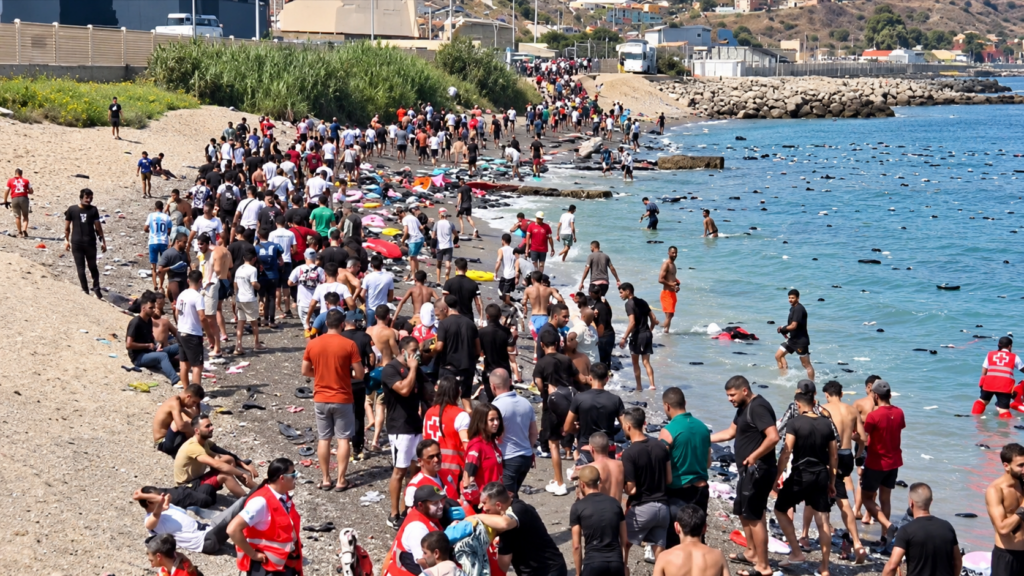
The scale of the events was extraordinary. On July 30th and 31st, a massive influx of people from Morocco into Ceuta took place. According to current investigations, more than 70,000 people entered the Spanish city irregularly.
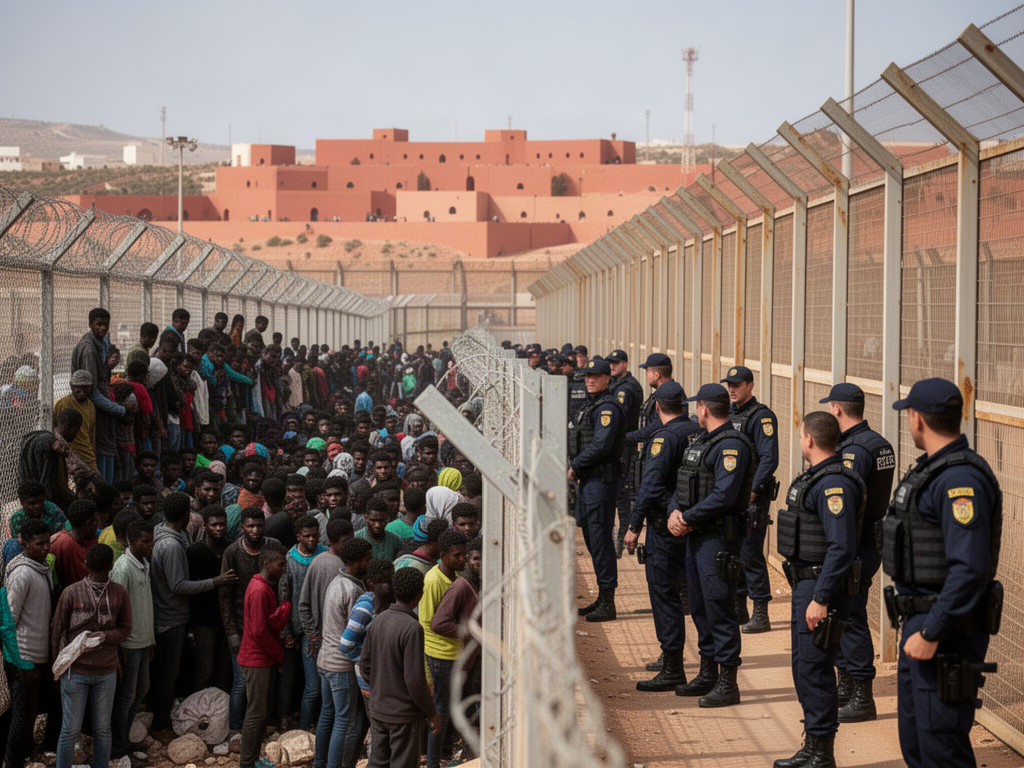
The events pushed border and security structures to their limits. Numerous people attempted to reach Ceuta by water and along the border fortifications. The situation was chaotic and life-threatening at times.
People lost their lives in the incident. These deaths are now among the points that are to be investigated by the criminal justice system.
The public prosecutor’s office sees several possible criminal offenses
The chief prosecutor of the Audiencia Nacional, Jesús Alonso, has informed investigating judge María Tardón that the Audiencia Nacional should be responsible for the investigation. According to the public prosecutor’s office, there is evidence of several possible crimes.
This includes, in particular, the promotion of illegal immigration, possible homicides, injuries caused by gross negligence, and the formation of or participation in a criminal organization. Furthermore, the investigation aims to clarify whether other offenses against public order or against specially protected legal interests, such as peace or the independence of the state, might have occurred.
The justice system is thus going significantly beyond the question of how an exceptionally large migration movement could have occurred.
The crucial clue leads to Morocco
The public prosecutor’s assessment of the possible preparation of the events is particularly explosive. According to the information available so far, a significant part of the planning, mobilization, logistical coordination, and digital dissemination may have taken place on Moroccan territory. The investigation will also focus on the potential strategic leadership of the operation there.
The actual execution of the crime, as well as its most serious consequences, took place on Spanish territory. This connection between the two countries is precisely one of the reasons why the public prosecutor’s office sees jurisdiction with the Audiencia Nacional.
Police are not calling it a spontaneous event
A previous report by the Spanish police had already significantly intensified the political debate in Madrid. The document from the National Center for Migration and Borders concludes that the events cannot simply be explained as a spontaneous migration movement.
Investigators analyzed, among other things, posts and calls to action on social networks, videos, messages, and statements from people involved in the mass arrival. They found evidence of a coordinated mobilization.
The behavior of Moroccan security forces was also examined in detail. According to the police report, there were indications of unusual reluctance on the part of the Moroccan forces. In some cases, officers are even said to have guided people toward the potential crossing points.
Morocco’s direct responsibility has not been proven
This point is crucial. The police report so far does not claim that the Moroccan government officially organized or ordered the entire operation. The Spanish government also points out that there is currently no concrete evidence of state control by Rabat. Prime Minister Pedro Sánchez has already stated that there is no concrete evidence that the Moroccan authorities organized the mass movement.
The investigation aims to clarify precisely these open questions. Was the behavior of individual security personnel independent? Was there a coordinated order? Or was it a situation that was knowingly tolerated? There is still no definitive answer.
Why the Audiencia Nacional should be involved
The public prosecutor’s office sees the case as particularly complex. Part of the alleged preparation may have taken place outside Spain, while the actual execution and its consequences occurred in Spain. Added to this are the large number of people involved, the deaths, the possible use of digital networks, and the suspicion of organized structures.
Therefore, the Audiencia Nacional is to take over the investigation or confirm its jurisdiction over the case. Judge María Tardón must now decide on the further course of the proceedings. The public prosecutor’s office has also requested that parts of the investigation be kept secret for the time being due to exceptional circumstances.
The warnings about the mass arrival are also being investigated
Alongside the question of a possible organization, the Spanish judiciary is grappling with a second major problem: Did the authorities know beforehand what might happen?
The Guardia Civil has since submitted a further report to the judge regarding communications prior to the events. This report indicates that there were contacts and exchanges of information between various government agencies before July 31. However, according to current knowledge, these indications did not predict the actual scale of the subsequent mass arrival.
The National Police had already issued two warnings from the National Center for Immigration and Borders on July 28 and 29. These warnings indicated a high probability of irregular entries by sea. This very point is now causing considerable political controversy.
Government under pressure
The question of advance warnings has thus developed into a political conflict. Interior Minister Fernando Grande-Marlaska maintains that there was no concrete warning of a mass movement of this magnitude. Other members of the government, including Defense Minister Margarita Robles, have pointed out, however, that there were indeed warnings and indications.
This means that the focus is not only on the possible organization of the events. The question of whether Spain was adequately prepared is also likely to become part of the political and possibly legal investigation.
What happened to the people after they entered the country?
Investigators are also trying to get as accurate a picture as possible of how the events unfolded. The Guardia Civil has been asked, among other things, to gather information about rescue operations, fatalities, survivors, and the personal circumstances of those affected.
For the legal assessment, it is crucial to understand how the deaths and injuries occurred. The investigation will examine whether certain actions or omissions may have had criminal consequences.
A case with international implications
The investigation could extend far beyond Spanish domestic politics. Ceuta is a Spanish city on the North African coast and, due to its location, possesses particular strategic importance. What happened there at the end of July therefore touches upon more than just migration issues.
The issues at stake also include border security, cooperation between Spain and Morocco, and the question of whether a large-scale migration was deliberately instigated or at least consciously facilitated. At the same time, the judiciary must distinguish between established facts, statements from those involved, and mere suspicions.
Still no answers to the crucial questions
The Spanish public prosecutor’s office has taken the investigation to a new level with this move. However, none of the central questions have yet been definitively answered. Who organized the mobilization? Who disseminated the calls to action? Was there coordinated leadership? What role did Moroccan security forces play? Were the Spanish authorities given sufficient advance warning? And is anyone potentially criminally responsible for the deaths?
The Audiencia Nacional investigation is expected to provide answers to these questions. So far, only one thing is certain: the mass arrival in Ceuta is no longer viewed by the Spanish judiciary merely as an exceptional migration crisis. It is now the subject of a possible criminal investigation for serious offenses.
And the further back investigators delve into the events of July 30th and 31st, the more the crucial question comes into focus: Was what happened actually an uncontrolled migration movement – or was there an organized operation behind it?
The answer to this could not only change the legal assessment of the events, but also have a lasting negative impact on the political relationship between Spain and Morocco.