Amnesty International accuses Spanish soldiers of mistreating, humiliating, and potentially torturing migrants. The human rights organization states that it has collected 22 firsthand accounts. The Ministry of Defence has since forwarded the report to the public prosecutor’s office and the duty court in Ceuta.
Spain Expat Press Editorial Team
by Marlon Gallego Bosbach
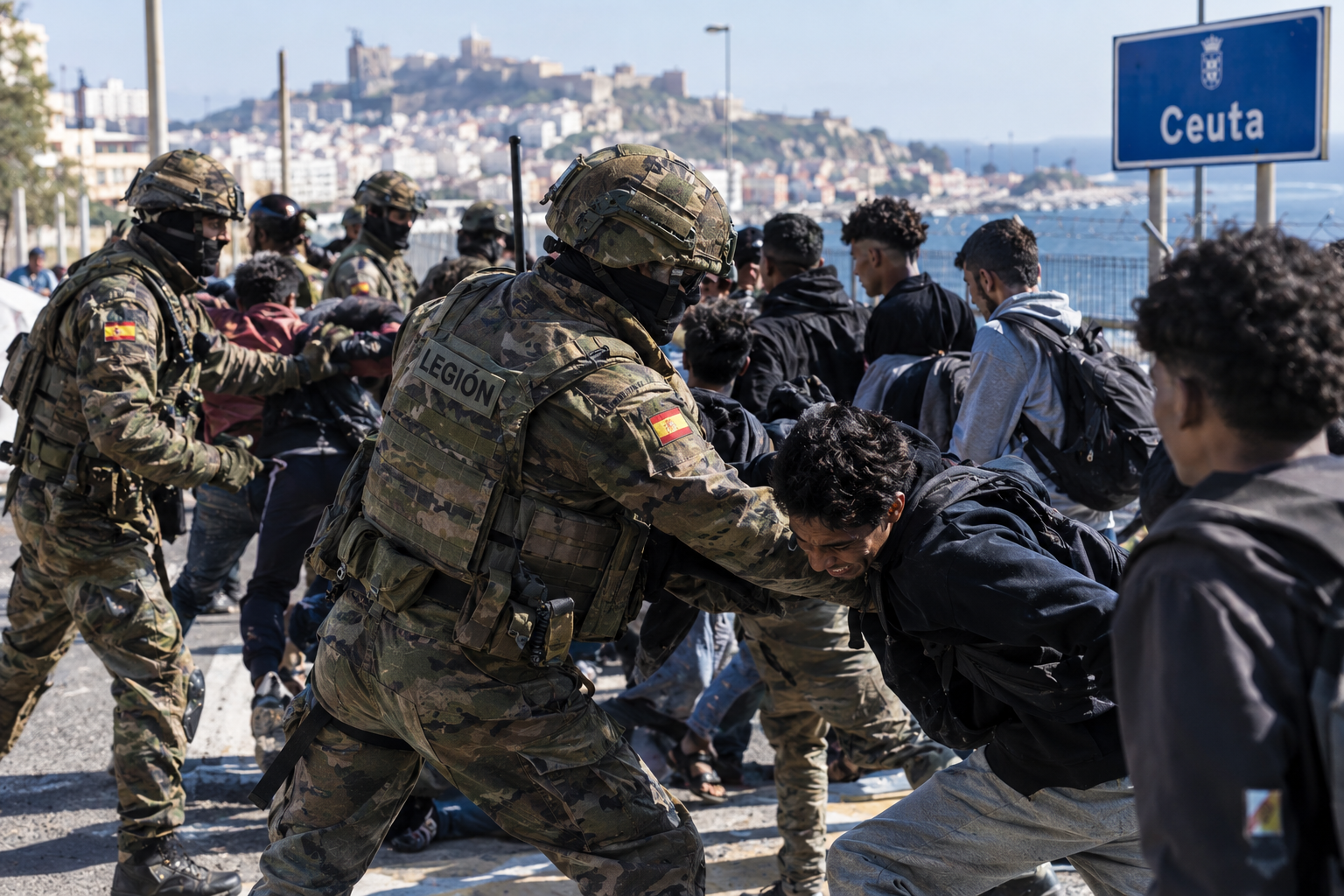
In Ceuta, serious allegations against members of the Spanish armed forces are causing a stir. Amnesty International reports instances of beatings, threats, humiliation, and other forms of abuse directed at migrants and asylum seekers. According to the organization, some of the reported cases could amount to torture or other cruel, inhuman, or degrading treatment.
The human rights organization visited the Spanish enclave between September 10 and 15. According to its own statements, it spoke with more than 65 migrants and asylum seekers and collected 22 firsthand accounts. Those interviewed included 31 minors aged 13 to 17 and 26 women, among them two pregnant women. Twelve individuals stated that they had already applied for asylum or intended to do so.
Accusations against the Regulares and the Legion
According to Amnesty, the allegations are directed in particular at members of the Spanish *Regulares* units and the Legion. The organization speaks of a possible pattern of violence, intimidation, and
The accounts documented by Amnesty range from beatings with batons and fists, threats, and verbal abuse to the confiscation or destruction of mobile phones and the seizure of money. Migrants also report being prevented from sleeping at night and from moving freely around the city during the day.
According to its own statements, Amnesty also documented injuries consistent with blows from batons. Injuries to the head, among others, were reportedly found on two young Moroccans.
According to the organization, a particularly serious case involves a young Moroccan man who was allegedly first bound with cable ties by soldiers. He stated that he was placed in the trunk of a vehicle, later gagged, and pressed against a tree. Subsequently, he was reportedly beaten with batons and fists and thrown down a slope. Amnesty was able to identify corresponding marks on his wrists.
Another young Moroccan reported being unable to walk for 25 days following an incident. He was allegedly pushed from a significant height by a member of the military after a group of soldiers woke and harassed him and other migrants while they were sleeping near the Ermita de San Antonio.
Humiliations and religious degradations
The testimonies collected by Amnesty include allegations of a particularly humiliating nature. For instance, migrants were reportedly forced, among other things, to kneel before a Christian cross and kiss it. Some of those affected were Muslims.
In addition, respondents report having been told they had to shave their heads. In other cases, food was allegedly withheld when migrants refused to follow instructions. According to Amnesty, women also report insults and sexually charged humiliations.
According to the organization, minors are also particularly affected. Amnesty emphasizes that children and young people are exposed to a particular risk under the current conditions in Ceuta.
Allegations against masked soldiers
Even more serious are the reports regarding operations carried out at night. According to Amnesty, several people stated that military personnel appeared – in some cases with their faces covered – and allegedly resorted to beatings and the use of irritant spray.
Subsequently, individual migrants were reportedly returned to Morocco via the Tarajal border area. Amnesty views these statements, together with available videos, as indications of possible unlawful pushbacks.
The organization also emphasizes that some of those affected did not file official complaints for fear of consequences.
“We have a mandate to ensure they don’t feel comfortable”
Amnesty also reports a recurring pattern of action against people perceived by soldiers as migrants based on their appearance or clothing.
According to the organization, its staff personally witnessed a situation in which soldiers checked people sitting on a bench near the city center and ordered them to leave the area. When asked for the reason, a soldier reportedly replied: “Tenemos órdenes para que no se sientan cómodos.” This translates to: “We have orders to ensure they do not feel comfortable.”
In this context, Amnesty speaks of a possible pattern of racism, xenophobia, and Islamophobia.
Difficult humanitarian situation in Ceuta
The allegations emerge amidst a situation in the Spanish enclave that remains tense. According to Amnesty, more than 80,000 people had reached Ceuta by the end of July. Even two months later, the organization reports that numerous migrants are still living on the streets under difficult conditions.
According to the report, many people lack adequate access to food, water, and medical care. Amnesty states that some migrants sleep in tents, under plastic tarps, or out in the open. Existing aid provisions are also said to be insufficient.
The human rights organization also criticizes the treatment of migrants in the vicinity of the Ceuta university hospital. It reports cases in which people had to wait a long time for medical assistance despite having sustained injuries.
Ministry of Defense involves the judiciary
The Spanish Ministry of Defence has since responded to the allegations. The report published by Amnesty has been forwarded to the public prosecutor’s office and the duty court in Ceuta.
At the same time, the Mando de Operaciones (MOPS) was tasked with conducting an internal investigation. The aim is to clarify potential individual accountability. The ministry stated that this move was also intended to safeguard proper procedure and the reputation of the Spanish armed forces.
As a result, the incidents described by Amnesty are now the subject of an official review. The allegations themselves have not yet been legally established; they consist of witness statements and cases documented by Amnesty, and the potential criminal and disciplinary consequences are now to be investigated.
Amnesty calls for an independent investigation
Amnesty International calls on the Spanish government to conduct a comprehensive and independent investigation into the allegations. Should any of the accusations be substantiated, those responsible would need to be held accountable through both criminal and disciplinary proceedings.
Furthermore, the organization calls for better humanitarian provision in Ceuta, adequate access to medical care, and special protection for women and minors. For unaccompanied minors, Amnesty also demands appropriate accommodation and, where necessary, their transfer to the Spanish mainland.
Further investigation by the Spanish authorities is now likely to be decisive in determining which of the allegations documented by Amnesty can actually be substantiated.