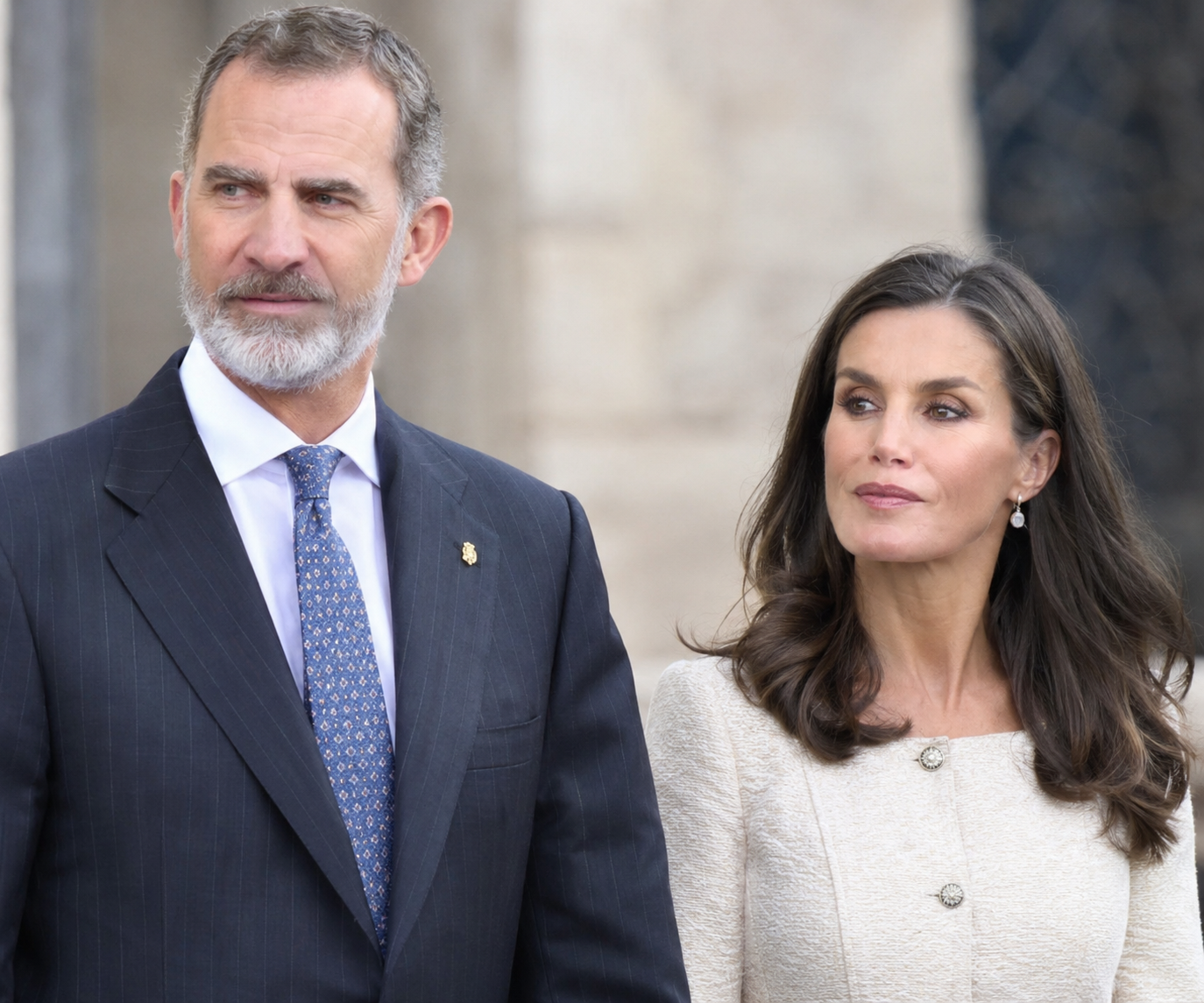
Melilla welcomed King Felipe VI and Queen Letizia with a grand public reception this Wednesday. Hundreds of residents gathered at the Plaza de España to welcome the monarchs on their first official visit to the autonomous city in nearly 19 years. The day’s proceedings focused on Melilla’s ties to Spain, calls for increased state support, and the aftermath of last July’s migration crisis.
Spain Expat Press Editorial Team
by Marlon Gallego Bosbach
The President of the autonomous city, Juan José Imbroda of the conservative Partido Popular (PP), presented the Golden Keys of the city to Felipe VI at the Palacio de la Asamblea. In his speech, he described the visit as the start of a new chapter for Melilla and called for greater involvement by the central government in the development and security of the North African enclave. The royal couple’s trip was scheduled to conclude in the afternoon with a visit to a public school and a meeting with representatives of Melilla’s society.
Enthusiastic welcome at the Plaza de España
Felipe VI and Letizia landed at Melilla Airport at 11:44 a.m. on Wednesday. They had arrived that morning by helicopter from Ceuta, where they had spent the night. Afterward, they proceeded to the Plaza de España, the central square in front of the Palacio de la Asamblea.
Numerous people were already waiting there for the royal couple. Many were carrying Spanish flags or had them draped around their shoulders. Flags and images of the monarchs were displayed between the buildings. The visitors greeted Felipe VI and Letizia with shouts such as “¡Viva España!” and “¡Viva el Rey!”, as well as the chant “Yo soy español, español, español.” The phrase “De Ceuta y de Melilla no nos moverán” could also be heard.
The royal couple spent a considerable amount of time with the local people. Felipe VI and Letizia shook hands, posed for photos and selfies, and struck up conversations with those waiting. Among other things, the King signed Spanish flags. The reception was reminiscent of the warm welcome the monarchs had received in Ceuta the previous day.
For many residents, the arrival was more than just a formal engagement. The visit was seen as a sign of the Spanish Crown’s attention and support. The last visit by a Spanish monarch to Melilla had taken place in 2007, when Juan Carlos I and Queen Sofía visited the city. Almost 19 years had passed since then.
Imbroda presents the Golden Keys to the City
After the reception in the central square, Felipe VI and Letizia proceeded to the Palacio de la Asamblea. There, they were welcomed by City President Juan José Imbroda, Government Delegate Sabrina Moh Abdelkader, and representatives of local institutions and security forces.
During a working meeting, the monarchs conferred with representatives of the city government and other civil and military officials. An official reception subsequently took place in the Salón Dorado. Imbroda presented Felipe VI. with the Golden Keys of Melilla and the city’s symbolic ceremonial staff. The King also signed the guestbook.
The handing over of the keys is considered a special institutional gesture towards high-ranking visitors. Imbroda also used the ceremony to highlight the visit’s significance for the population. He described the trip as a long-cherished wish and explained that it was intended to convey trust, security, and hope for the future.
Imbroda reaffirms Melilla’s status as part of Spain
In his address, Imbroda underscored that Melilla is an integral part of Spain. “Melilla is Spain,” the city’s president emphasized, highlighting that the city is also part of the European Union. With this statement, he reaffirmed Spanish sovereignty over the North African exclave.
These statements are linked to Morocco’s long-standing territorial claims to Melilla and Ceuta. Spain regards both cities as autonomous parts of its national territory and of the European Union. The visit by the royal couple is intended to underscore the institutional presence of the Crown in the two North African enclaves.
Imbroda thanked Felipe VI for his support and referred to the King’s statements made the previous day in Ceuta. There, the monarch had described Spanish sovereignty and territorial integrity as non-negotiable. Imbroda stated that the residents of both cities felt strengthened by this stance.
Mayor calls for a stronger state presence
A significant part of Imbroda’s speech was addressed to the Spanish central government. The President of Melilla called for a stronger state presence in the city – in terms of finance and legislation, as well as regarding security forces and the armed forces.
According to his account, Melilla requires additional support to advance its socio-economic development and to better keep pace with other parts of Spain in terms of living conditions. At the same time, the security of the city and its inhabitants must be ensured.
Imbroda coupled his demand with the hope that the royal couple’s visit might mark a turning point. The city, he argued, needed not only symbolic support but also concrete measures to strengthen its development and its position within Spain.
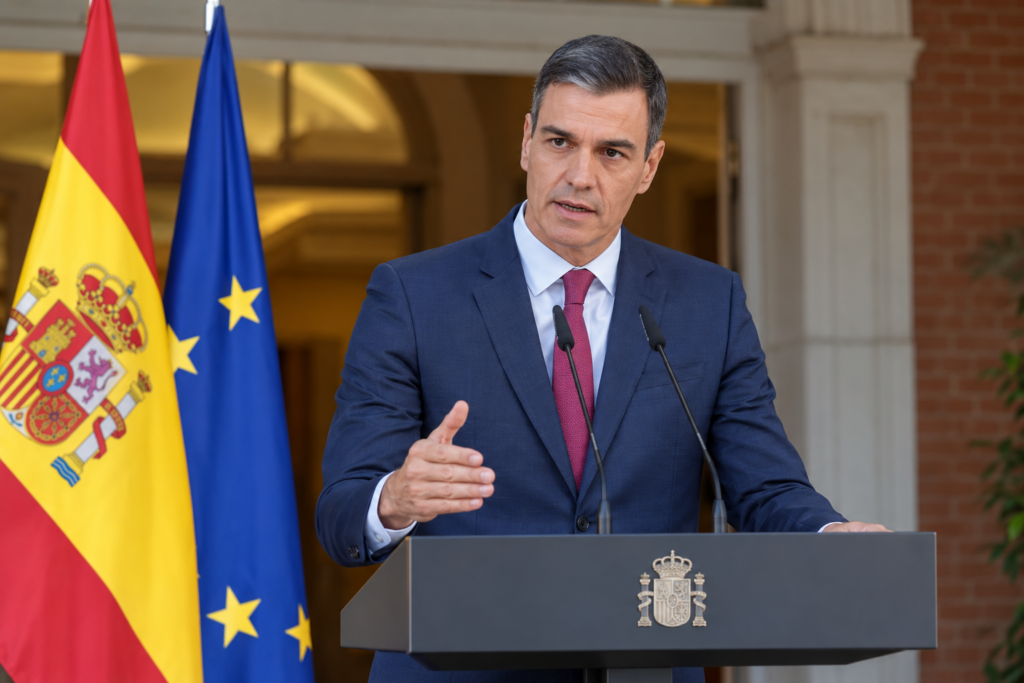
In doing so, he also indirectly directed his demands at the government of Prime Minister Pedro Sánchez. The presence of the King and Queen gave him an opportunity to raise the profile of Melilla’s concerns at the national level.
Migration crisis in Ceuta remains an issue
Although Wednesday’s visit focused entirely on Melilla, the migration crisis of late July also played a significant role in the day’s speeches. Imbroda addressed the events in the neighboring city of Ceuta, where, on July 30 and 31, large numbers of people from Morocco had crossed the border or otherwise entered Spanish territory.
The mayor described the events of that time as a violation of national sovereignty. He declared that no one should be allowed to violate Spain’s territorial integrity without facing consequences. At the same time, he criticized the fact that, in his view, those responsible had not reacted swiftly and decisively enough.
Imbroda acknowledged that the situation is no longer comparable to the dramatic days of late July. However, in his view, the situation has not been fully resolved. He therefore called for lessons to be drawn from these events and for state structures in the North African enclaves to be strengthened.
The migration crisis had hit Ceuta particularly hard. According to sources close to the trip, the royal couple’s visit to both cities is intended to underscore the Crown’s bond with the residents. On Tuesday, in Ceuta, Felipe VI emphasized the importance of Spanish sovereignty while also advocating for respectful relations with Morocco.
Attendance at a school with more than 900 students
A visit to the Colegio Público Pintor Eduardo Morillas was on the agenda for the afternoon. The school is located in a densely populated residential area of Melilla and, according to published figures, has more than 900 students and 79 teachers.
The center is considered an example of the city’s cultural diversity. It has operated bilingually for around 25 years and, in addition to regular classes, offers a special project to support children on the autism spectrum. Felipe VI and Letizia visited several classrooms and gained insight into daily school life.
The engagement also held social significance: in addition to visiting political institutions, the royal couple was to be introduced to a facility where the diversity of Melilla’s population was visible in everyday life.
Meeting with representatives of the community in the evening
The visit is set to conclude on Wednesday evening with a reception at the Hotel Melilla Puerto. A meeting with representatives of Melilla’s society is scheduled for the late afternoon; attendees are expected to include representatives from religious communities, institutions, and various civic organizations.
Felipe VI. is expected to deliver another speech on this occasion. The event offers the King an opportunity to bring together the key messages of the visit: Melilla’s status as part of Spain, the importance of social cohesion, and the Crown’s support for the population.
At this stage, the final speech is yet to be delivered. It is therefore not yet possible to definitively assess the specific statements the King will make.
A historic visit after nearly two decades
With their visit to Melilla, Felipe VI and Letizia are concluding their two-day tour of the two Spanish enclaves in North Africa. The last joint visit to Ceuta and Melilla by a Spanish monarch took place in 2007. This trip also marks Felipe VI’s first official visit to both cities since his accession to the throne.
The trip comes at a politically sensitive time. Morocco continues to lay claim to the two cities, while Spain reaffirms its sovereignty. The migration crisis in late July has further intensified the debate over border security and cooperation with Rabat.
In Melilla, however, the relationship between the Crown and the local population took center stage this Wednesday. The reception at the Plaza de España, the presentation of the Golden Keys, and Imbroda’s call for greater state support defined the day. The city’s president hopes the visit will bring Melilla increased political and economic attention – and usher in a new phase in the autonomous city’s development.