With nine days to go until the general election, millions of Spaniards are preparing to vote. Yet many do not realise that they do not choose their prime minister directly, that a vote in Soria carries more weight than one in Madrid, or why Spain has no run-off. We explain.
Spain Expat Press Editorial Team
A young democracy
Spanish democracy is not yet 50 years old. After almost four decades of dictatorship under Franco, Spain held its first free elections since the Second Republic on 15 June 1977. A year later, on 6 December 1978, Spaniards approved the Constitution in a referendum. It remains in force today and underpins the entire system, which is why 6 December is a national holiday.
What kind of democracy?
Like the United Kingdom, Spain is a parliamentary monarchy. King Felipe VI is head of state but does not govern: his role is ceremonial and that of an arbiter. Political power lies with Parliament, known as the Cortes Generales, which has two chambers:
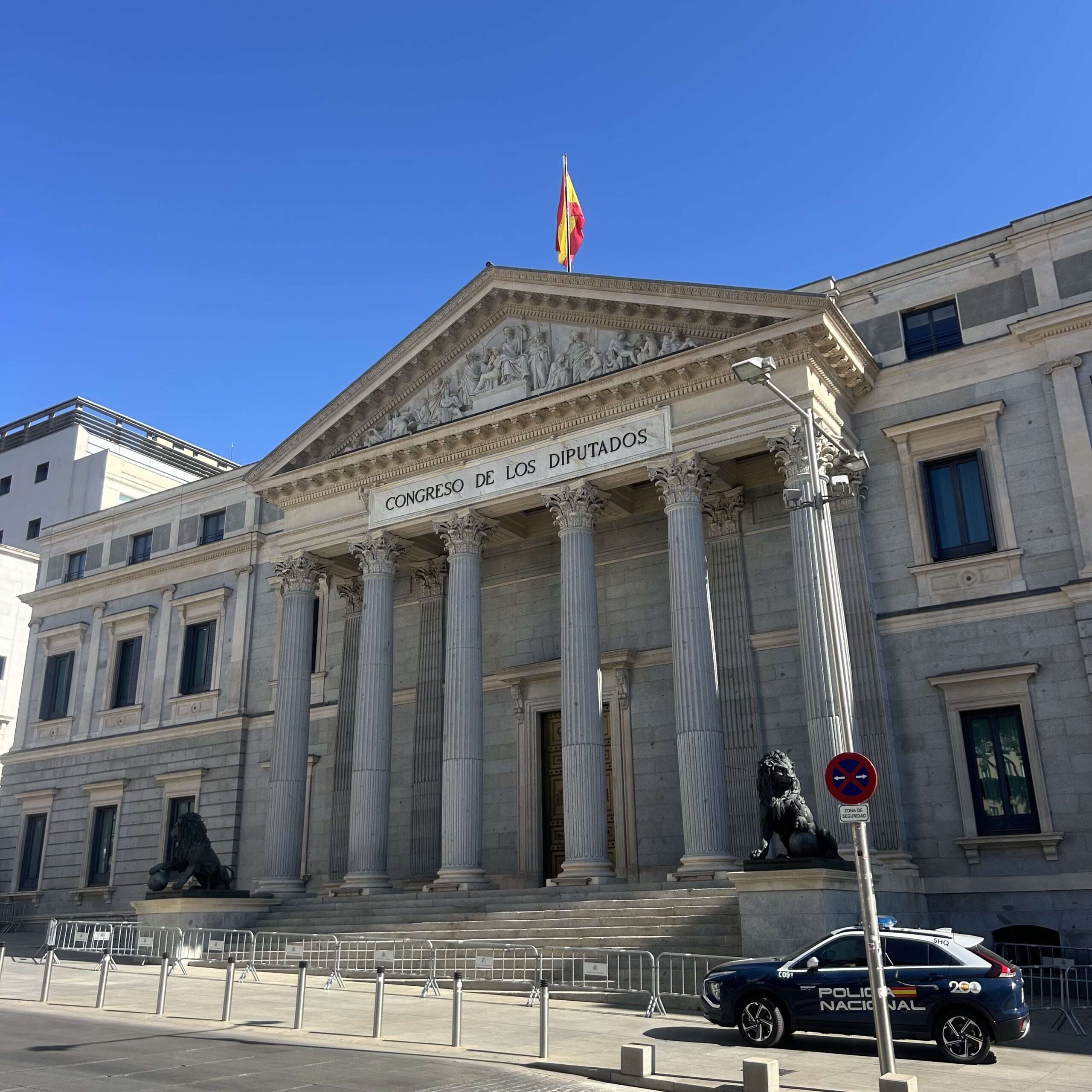
- The Congress of Deputies, with 350 seats. This is the chamber that matters: it elects the prime minister, passes legislation and can bring down the government through a motion of no confidence.
- The Senate, which represents the regions and has far less power. It can veto or amend bills, but Congress has the final say.
Direct or indirect vote?
This is one of the biggest misconceptions. Spaniards do not elect their prime minister directly. As in Britain, voters choose members of parliament, and the head of government emerges from parliament. Unlike in Britain, however, Spaniards do not vote for an individual candidate in a constituency. They vote for a party’s closed list in their province, and cannot pick or reorder the names on it.
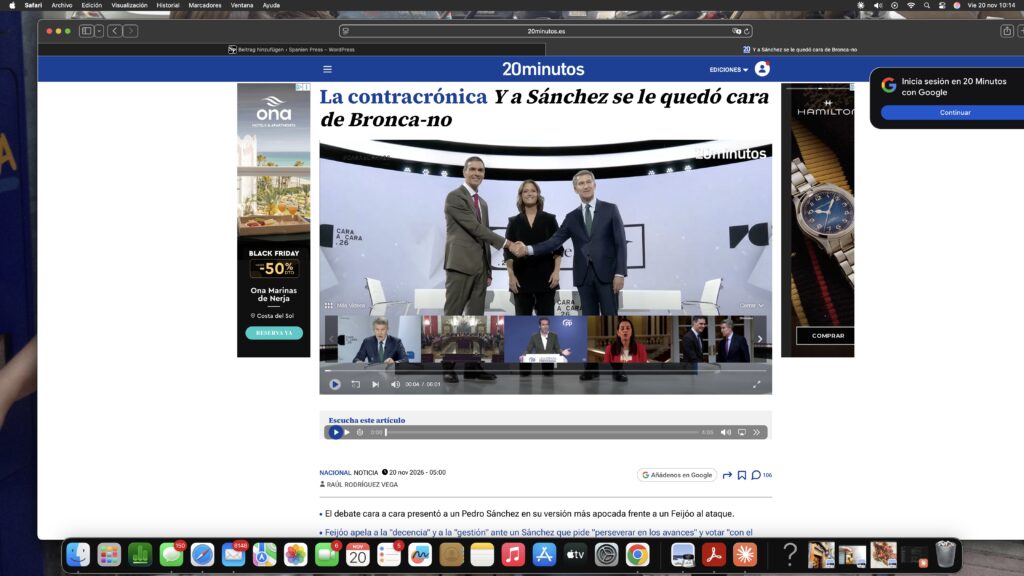
Congress then holds an investiture vote. The candidate needs an absolute majority (176 votes) in the first round, or a simple majority in the second. Winning the election therefore does not guarantee power: what counts is securing enough support in Congress. That is exactly what happened in 2023. Feijóo’s conservative People’s Party (PP) won the most votes, but the Socialist Pedro Sánchez was returned to office with the backing of the left-wing alliance Sumar and Basque and Catalan nationalist parties.
The Senate works differently. In most provinces, voters can tick up to three candidates from any party, so here they really do vote for individuals.
The State of the Autonomies
Spain is neither a federal state nor a centralised one. The Constitution created the “State of the Autonomies”: 17 autonomous communities, including Andalusia, Catalonia, Madrid, Galicia and the Basque Country, plus the two autonomous cities of Ceuta and Melilla on the North African coast. Each region has its own parliament and government, with wide powers over health and education and, in some cases, policing. In practice this goes further than devolution in Scotland or Wales. The Basque Country and Navarre even collect their own taxes. As a result, Spain holds regional elections as well as local and European ones.
Why do some votes count for more than others?
This is the million-dollar question. The electoral constituency is not Spain as a whole but each individual province. Every province is guaranteed at least two deputies (Ceuta and Melilla have one each), and the remaining seats are shared out according to population.
The result: Soria, the least populated province, elects two deputies, while Madrid, the most populated, elects 37. A seat in Madrid costs around 100,000 votes; in Teruel or Soria it can be won with fewer than 20,000. In other words, the allocation of seats favours sparsely populated areas.
On top of this comes the D’Hondt method, the formula devised by the Belgian jurist Victor d’Hondt in the 19th century to convert votes into seats. It is often blamed for everything, but experts point out that the size of the constituencies does far more to distort proportionality. In provinces with only a handful of seats, only the two or three largest parties stand a realistic chance. Parties must also win at least 3 per cent of the vote in a province to qualify for seats there.
Why was it designed this way? In 1977 the aim was twofold: stable governments after the dictatorship, and a voice for rural Spain alongside the big cities. As a result, the system favours large parties and small provinces, as well as nationalist parties whose support is concentrated in a few provinces, such as the Basque Nationalist Party (PNV) and the Catalan Republican Left (ERC). Parties with support spread thinly across the country, but which come first nowhere, lose out. The classic example is the United Left (Izquierda Unida), which at some elections needed almost half a million votes per seat.
Changing the system is not easy. The province as constituency is enshrined in the Constitution itself, so reform would require a constitutional amendment backed by broad majorities.
Why does the PP want to change the rules?
Feijóo has argued for years that the party with the most votes should govern. In June he proposed electoral reform to give the winning party “a bonus of deputies”, along Italian and Greek lines, in order to “make stability easier”. At local level, he wants the head of the most-voted list always to become mayor. Feijóo himself admitted that the PP failed to carry out such a reform in 2011, when it had an absolute majority.
The left rejects the idea. The Socialists (PSOE) accuse the PP of championing it only when it suits them, arguing that in a parliamentary democracy power goes to whoever can command a majority in Congress, not necessarily to whoever comes first.
And why is there no run-off, as in France?
Because Spain does not have a presidential system. In France, voters elect the president directly and, if no one wins more than 50 per cent, the top two face each other in a second round. In Spain, as in Britain, voters elect a parliament, and it is that parliament which forms a government.
The idea has nonetheless surfaced in Spanish politics. Isabel Díaz Ayuso, the PP president of the Madrid region, has floated a run-off between the two leading parties. Political scientists are sceptical. Marc Guinjoan, a professor at the Open University of Catalonia, argues that a second round makes little sense in a proportional system such as Spain’s and could at most serve to choose the prime minister.
There is one curious exception: town halls. If no coalition can muster an absolute majority, the head of the most-voted list automatically becomes mayor.
29 November at a glance
On 29 November, Spaniards will elect 350 deputies across 52 constituencies. The prime minister will not emerge directly from the ballot box but from the arithmetic in Congress. So beyond who wins, the key question will be: who can put together a majority?