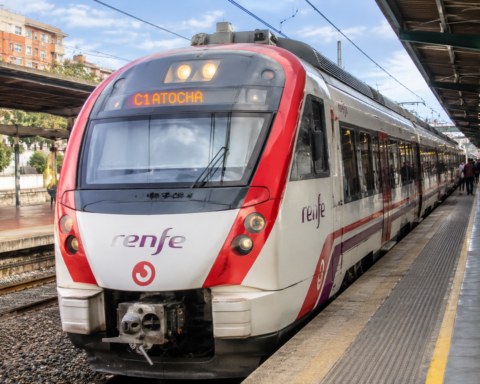
How a government discovered urgency just as the polling stations were being set up – told with the kind permission of the Central Electoral Board.
Elsa Ibanez Editor-in-Chief Spanien Press/ Spain Expat Press · Analysis
Readers of Spain Expat Press will already know the list: we have reported on each of these laws individually over recent weeks. What is new is not the content but the overall picture – and the astonishment it has provoked.
Many Spaniards are rubbing their eyes in disbelief. What apparently could not be done for eight years is suddenly being done week after week. Switch on the radio in the morning and there is a new leave entitlement; by lunchtime, a tax cut; by the evening, a cap on interest rates. Some wonder whether they slept through the election and are already living under a new government – or whether the old one has only just discovered that it governs. In the bars between Madrid and Málaga, the royal decree has not yet displaced football as a talking point, but it is catching up.
Urgency arrives with the election calendar
On 5 October Spain’s Council of Ministers approved the decree calling a snap general election for Sunday 29 November. It came after the conservative Partido Popular (PP), the hard-right Vox and the Catalan separatists of Junts voted down the government’s housing decrees in Congress. One might have expected the dissolution of parliament to bring a period of calm. Far from it.
The government not only kept its regular cabinet meetings but added two extraordinary ones, on 13 and 20 November, which happened to coincide with the start and the midpoint of the campaign. According to a count by the newspaper The Objective, the cabinet has issued 44 decree-laws (reales decretos-ley, emergency legislation that takes effect immediately) so far in 2026, 17 of them since the election was called – just short of the record of 48 set in 1978. Since 2018 Pedro Sánchez has issued 214, more than any other prime minister of the democratic era. The record could fall in the very week of the vote.
On Tuesday 24 November, five days before polling day, the last cabinet meeting before the election took place – and the government emptied its drawers. The official gazette, the BOE, has been kept busy.
The autumn catalogue
An overview of the main decisions since the election was called; the list is not exhaustive.
| Date | Measures |
|---|---|
| 6 Oct | The two failed housing decrees return. A second chance with mixed results: the Standing Committee of Congress approved one and rejected the one extending rental contracts. |
| 10 Nov | Long-term care; protection for single-parent families and low-income large families; rail safety; damage caused by Storm Adam (dana). |
| 17 Nov | Reform of the Workers’ Statute; pay rise for public-sector employees; changes to the taxation of the minimum wage. |
| 20 Nov | Scientific and technological sovereignty; energy sustainability; data centres; electricity grid planning to 2030. |
| 24 Nov | Birth leave of 20 weeks per parent (34 for single parents); bereavement leave of 10 working days; extension of the bank levy (around €1.4bn, earmarked by law for housing); public transport discounts extended throughout 2027 (€1.213bn); nursery staffing ratios halved (no more than four babies per carer, phased in from the 2027/28 school year); protection against over-indebtedness, with a 22% cap on interest for consumer loans and revolving credit cards; one day’s leave to accompany a relative through assisted dying, and support for carers of relatives in palliative care; contracts worth €19bn with the rail infrastructure operator Adif for 2026–2030. A proposed tax on fortunes above €100m did not go through cabinet: it is a manifesto pledge, with no rate and no formula. To balance things out, a Treasury decree-law for the self-employed: an income-tax cut of €465m for 2.6 million autónomos(the deduction for hard-to-document expenses rises from 5% to 10%, capped at €3,000) and a single annual VAT return instead of four for those with a turnover below €85,000. On top of that: new rules on information for women seeking an abortion, a constitutional challenge to the Madrid region’s “conceived but unborn” law and a report on regional inequalities in access to abortion. |
Also announced: the fourth Strategic Plan for Gender Equality (more than 750 measures), new support for parents caring for children with cancer or other serious illnesses, two new forms of sick leave (for incapacitating menopause symptoms and for victims of gender-based violence) and €201m for affordable rental housing.
The question nobody answers: where is the money coming from?
Amid such generosity, one rather basic question has been absent from every press conference: who is actually paying for all this? Anyone going through the documents finds remarkably few price tags.
| Measure | Cost | Funding |
|---|---|---|
| Public transport discounts 2027 | €1.213bn | State budget; no source specified |
| Tax cut for the self-employed | €465m in lost revenue | No offsetting measure specified |
| Bank levy 2027 | around €1.4bn in revenue | Earmarked for housing |
| Tax on fortunes above €100m | estimated at around €2bn | Does not yet exist: a manifesto pledge with no rate |
| Parental leave, bereavement leave, nursery ratios | not costed | Figures expected only in the impact assessment (memoria económica) |
A country without a budget. The measures arrive in a country that has not passed a new state budget since 2023. In 2026 the 2023 budget has been rolled over for the third year running, and the parliament is ending its term without passing a single budget – a first in Spain’s democratic history. Committing to new spending for 2027 before a new parliament has even been elected means writing part of the next budget in advance – by decree.
The deficit will not wait. Spain’s independent fiscal watchdog, AIReF, raised its deficit forecast for 2026 to 2.8% of GDP in early November because of energy support measures, and warned that spending is already set to exceed the room allowed under EU fiscal rules this year. The election-season decrees come on top of that.
Part of the bill goes to business. In Spain, paid leave such as bereavement leave is borne by the employer, while parental leave is paid by social security. The employers’ federation CEOE rejected an earlier Labour Ministry proposal on precisely those grounds, arguing that it shifted the cost of care onto companies.
The counter-argument. Supporters point to the revenue side: according to government figures, the bank levy raised around €5.7bn between 2023 and 2026, and AIReF has recently raised its growth forecast, which supports tax receipts. Whether that will be enough cannot be judged without the cost assessments that are still outstanding.
In short: the measures are already in force, but the bill is still open. It will be picked up by the next government, by business and by taxpayers.
Is it legal? Yes, within narrow limits
Dissolving parliament does not switch off the lights. Calling an election does not turn the government into a caretaker administration: it keeps its full powers until polling day, including the power to issue decree-laws. It becomes a caretaker government only after the vote.
Scrutiny exists, if in reduced form. A decree-law takes effect on publication in the official gazette but must be ratified by parliament within 30 days. With both chambers dissolved, that task falls to the Standing Committee of Congress (Diputación Permanente, Article 78 of the Constitution). This is no mere formality: it has already struck down the rental decree. It will vote on the decrees of 24 November only after polling day, by which time the government will be in caretaker mode; any not ratified in time will lapse.
Urgency, an elastic concept. Article 86 of the Constitution permits decree-laws only in cases of “extraordinary and urgent need”. It is striking how measures that have been on the agenda for years become urgent in election week. Critics see the election calendar rather than an emergency at work. Whether the urgency test is met, however, is for parliament to decide when it ratifies the decrees and, if anyone challenges them, for the Constitutional Court – not for commentators.
Passing laws, yes; taking credit, with care. Spain’s electoral law (LOREG, Article 50) bans institutional campaigns that extol the government’s achievements during the election period. The Central Electoral Board (Junta Electoral Central) has been busy: it opened proceedings against the prime minister for calling for “a more resounding majority” at a press conference at the Moncloa Palace on 6 October, and this week against ministers Félix Bolaños and Pablo Bustinduy over their remarks about the opposition after cabinet meetings. These are open proceedings, not final sanctions. The board does not forbid governing; it forbids turning the Moncloa press room into a campaign stage. The open cases show how fine that line is.
Is it immoral? The arguments on both sides
This is no longer a matter for the official gazette but for each voter’s conscience. Here, set out with equal generosity, is the case on each side.
The case against
- “Eight years for this”. The government has been in office since June 2018. If parental leave, the bank levy or protection for families were so indispensable, it is hard to see why they were remembered in the very week the ballot papers are handed out.
- The official gazette as an election poster. Visible, popular measures that take effect before the polls open give the governing party an advantage the opposition lacks: it can act, while the others can only promise.
- Parliament sidelined. Decrees bypass the debate and amendments of the ordinary legislative process, and with the chambers dissolved, ratification rests with a slimmed-down body.
- The next government picks up the tab. New spending, taxes and entitlements that the winner will have to administer, ratify or reverse – bearing the political cost of “taking something away”.
- The record as a symptom. For the opposition, the record number of decrees reflects not an emergency but a style: government by decree.
The case for
- Governing until the last day is the job. The government has full powers, and sitting on its hands for two months would also invite criticism. Government spokeswoman Elma Saiz puts it simply: the executive is using the legislative tools at its disposal.
- Much had been stuck. In a fragmented parliament, several initiatives had stalled; the housing decrees that triggered the election are the prime example. Some measures, such as longer parental leave, had been agreed with coalition partner Sumar; others, such as storm relief, respond to recent events.
- There are brakes. The Standing Committee can strike decrees down (and has done so), the Constitutional Court can annul them and the next government can repeal them.
- Voters are not fools. If this is electioneering, they can punish it on Sunday – or they can judge the measures on their merits rather than on their timing.
Déjà vu
None of this is new. In 2019, ahead of the April election, Sánchez popularised “social Fridays” (viernes sociales): cabinet meetings devoted to approving social decrees. The PP and Ciudadanos asked the electoral board to suspend the press conferences that followed; it refused, and the six decrees were ratified with the support of the parties that had backed the no-confidence motion against Mariano Rajoy. The difference in 2026 is one of scale: social Fridays have become an entire social autumn – electoral board proceedings included.
Is it campaigning?
That a government wants to face the voters with achievements to show for itself is about as surprising as the opposition wanting to face them with grievances. Everyone plays the cards they hold; only one of them also gets to deal. A calendar with extraordinary cabinet meetings at the start and midpoint of the campaign leaves little room for innocence. But campaigning and governing are not mutually exclusive, and the interesting question is not whether there is electoral calculation (there always is) but where the line lies.
The final cabinet meeting sums it up neatly: on the same morning, taxes on the banks, leave for families and tax relief for the self-employed. There is something for almost every group of voters. From the outside, it looks very much like a race against the clock to win back voters who have drifted away: a gesture for every constituency, guaranteed delivery before Sunday. Supporters will reply that easing the tax and paperwork burden on the self-employed is good policy whenever it comes; critics, that this is precisely why it is hard to understand why it has come only now.
To draw that line without depending on the colour of one’s spectacles, four questions help – and they apply to this government as to any other:Was there genuine urgency, or could the measure have been passed earlier or introduced as an ordinary bill? Was the ordinary route tried and blocked, or did the measure never reach parliament? Is it presented as government action or as a party’s achievement, from the Moncloa press room? (This is exactly what the electoral board is examining.) Who pays for it, and who will have to sustain it after 29 November?
Conclusion
Legal? Yes: full powers, ratification by the Standing Committee and an electoral board that steps in when a press conference turns into a rally. Elegant? That depends on each reader’s yardstick, and there are serious arguments on both sides. The good news is that there is an infallible instrument for passing judgement on all of this, and it requires neither decree nor ratification. It will be used on Sunday, and it is called the ballot box. Before then, only one question remains, and in five days nobody has answered it: who is going to pay the bill?