The Spanish government has once again expanded paid leave following the birth of a child. On Tuesday, the Council of Ministers approved an extension of leave for the birth and care of a child, increasing it from the previous 19 weeks to 20 weeks per parent. This provision applies individually to each parent, is non-transferable, and is fully compensated through the Spanish social security system.
Spain Expat Press Editorial Team
by Marlon Gallego Bosbach
For single-parent families, the extension is even greater. Their entitlement increases from the current 32 weeks to 34 weeks. Furthermore, a portion of this time can be used flexibly up until the child’s eighth birthday.
20 weeks for each parent
Under the reform, both parents will each receive 20 weeks of paid leave. These weeks cannot be transferred between the parents. This is intended to ensure that both parents have an individual entitlement to care for their child.
The benefit is covered 100 percent by social security, based on the corresponding salary. This provision applies not only to biological parents but also in cases involving adoption, guardianship, or the fostering and care of a child.
The first six weeks must still be taken immediately following the birth or, in cases of adoption or placement, following the relevant court or official decision. This period is intended to be mandatory.
Three weeks can be used up until the eighth birthday
The additional options for flexible use are an important component of the new regulation. Of the total 20 weeks, 17 weeks are to be used within the child’s first year of life. The remaining three weeks can be taken any time up until the child’s eighth birthday.
The government had initially announced a different arrangement. It has since been clarified that the additional week does not extend the period that can be used immediately during the first year of a child’s life; instead, it is added to the flexible portion of the leave. This increases that flexible portion from two weeks to three. As a result, parents can choose to use a part of their paid leave at a later time – for instance, if their childcare situation changes or if their needs regarding the balance between family and professional life shift.
Single parents receive 34 weeks
The entitlement is being significantly expanded for single-parent families. For parents raising a child on their own, the duration increases from the current 32 weeks to 34 weeks. In this case, too, a portion of the entitlement can be saved for use until the child’s eighth birthday. According to social security authorities, nearly 80 percent of single-parent families are headed by women.
The government justifies this further expansion by arguing that a single parent should not have less time to care for their child than two parents who are able to share the caregiving responsibilities.
Spain continues to expand family benefits
The current reform is the latest stage in a process through which Spain has gradually brought the leave entitlements for both parents into alignment. As recently as 2018, mothers were generally entitled to 16 weeks, while fathers were granted only five weeks. In 2019, paternity leave was initially extended to eight weeks, followed by a further extension to twelve weeks in 2020.
Since 2021, both parents have, in principle, had an equal entitlement. At that time, the duration was increased to 16 weeks for each parent. Simultaneously, the principle was established that the benefit should be individual, non-transferable, and fully paid.
In 2025, there was a further extension to 19 weeks. It was already planned at that time to eventually expand the entitlement to 20 weeks. With this current decision, the government is implementing that plan.
Government speaks of greater equality
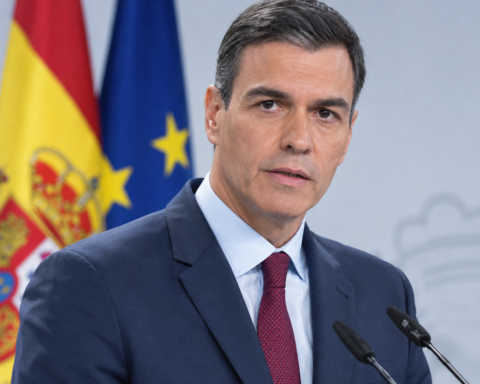
Prime Minister Pedro Sánchez described the expansion as the fulfillment of a pre-existing government pledge. Labor Minister Yolanda Díaz also highlighted the significance of the measure for gender equality.
The government believes that an even division of parental leave should prevent women, in particular, from facing professional disadvantages due to the birth of a child. By allowing both parents to take an equal amount of time off work, the traditional division of roles in childcare is also expected to shift.
In this regard, the government points to the coalition agreement between the PSOE and Sumar, in which an extension to 20 weeks had already been agreed upon. The corresponding legislative decree for 2025 also provided for a subsequent extension to 20 weeks.
Entry into force is still pending
Although the Council of Ministers has approved the reform, it is not yet immediately applicable to all families. The new regulation must first be published in the Spanish Official State Gazette (BOE).
The new entitlement only takes effect once the regulations come into force. The provision is intended to apply to children who are born, adopted, or taken into care on or after the date the new rules come into effect. Furthermore, the legislative decree still requires confirmation by the relevant Diputación Permanente (Standing Committee).
For parents, this means: the Council of Ministers’ decision establishes the new entitlement, but its actual implementation still depends on the subsequent procedure and publication in the BOE.
Decision shortly before the election
In political terms, the reform comes at a notable moment. The Council of Ministers approved the expansion on the final regularly scheduled meeting day before the Spanish parliamentary elections on November 29.
The government emphasizes, however, that the 20-week period is not a short-term, election-driven measure. The extension was already part of the coalition agreement and had been set out as a future objective in a previous legislative decree. In doing so, the government is implementing a family-policy measure – one that had already been announced – just days before the election.
Paid leave and parental leave are not the same thing
In addition to the 20-week birth and childcare leave, Spain also offers parental leave of up to eight weeks, which can be taken at any time until the child’s eighth birthday. This should not be confused with the new 20-week leave: the standard birth and childcare entitlement is 100 percent compensated through the social security system, whereas this additional parental leave is generally unpaid.
With this new policy, Spain is further expanding its paid parental leave. For families, this will mean 20 weeks per parent, while single parents may be entitled to up to 34 weeks. Furthermore, a portion of this leave can be used flexibly until the child’s eighth birthday.