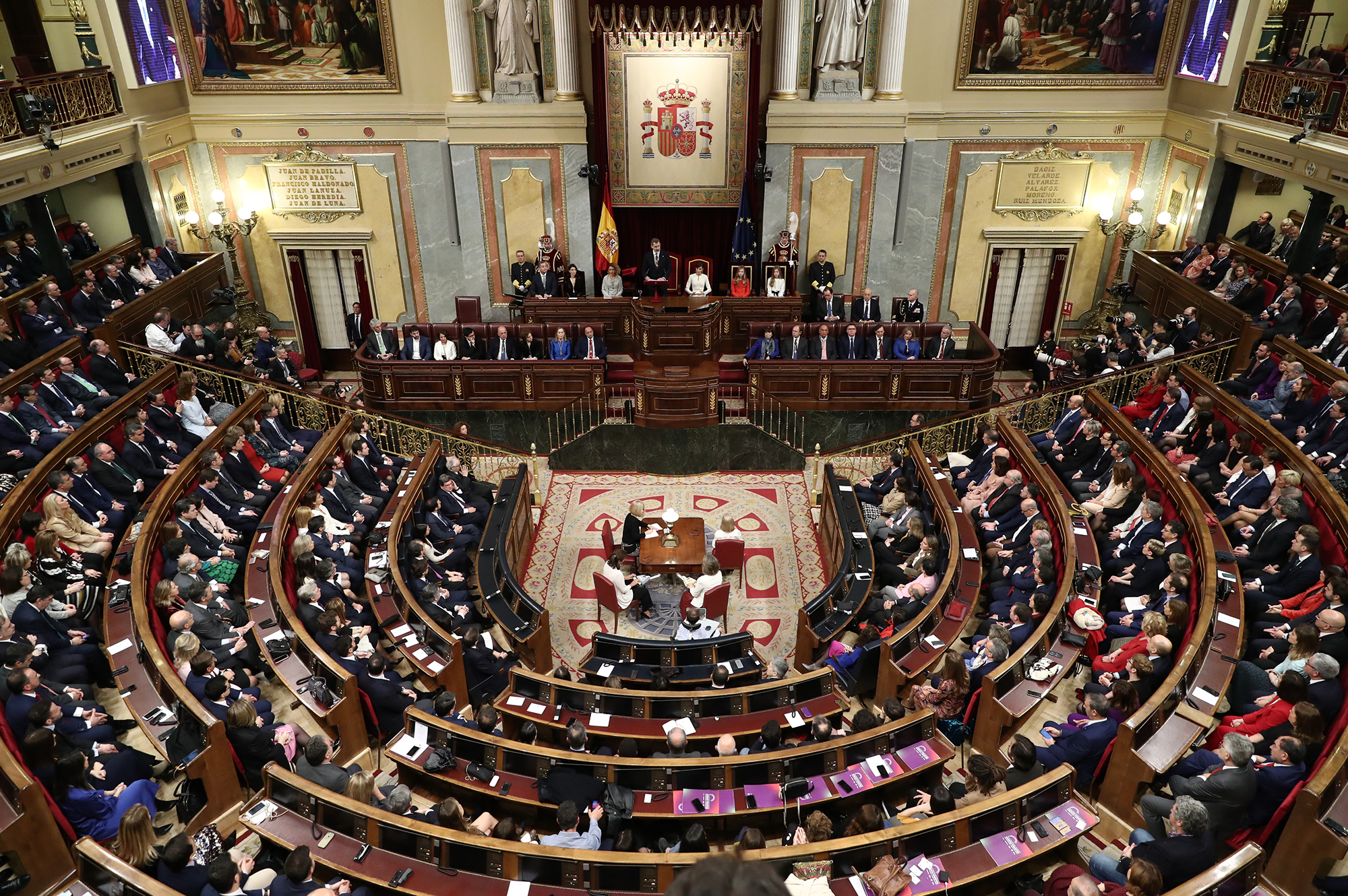
Spain’s migration policy has once again moved to the centre of political debate. Following a vote in the Congreso de los Diputados, a parliamentary majority has approved an initiative opposing a large-scale legalisation of migrants without residence status and instead calling for a stricter implementation of return orders.
This initiative was mainly driven by conservative and right-wing parties such as the Partido Popular and Vox, which have long advocated for a tougher migration policy.
This decision stands in clear contrast to the position of the government led by Pedro Sánchez, headed by the Partido Socialista Obrero Español (PSOE) and supported in parliament by Sumar.
Spain Press Editorial Team
A political clash over migration policy
The approved initiative is not legally binding, but it carries significant political weight. The supporting parties are urging the government to abandon any large-scale legalisation process and instead focus on the strict enforcement of existing immigration laws.
Specifically, they call for:
-
The rejection of any broad regularisation
-
A stronger implementation of return procedures
-
A more restrictive and controlled migration policy
This position is particularly represented by the Partido Popular and Vox, which warn of a potential “pull factor” and call for tighter border control.
The government’s approach: integration instead of a shadow economy
In contrast, the government’s strategy is to use regularisation as a tool for integration. This approach is mainly supported by the ruling Partido Socialista Obrero Español (PSOE) and Sumar.
The aim is to bring migrants who are already living and working in Spain out of the shadow economy.
The proposed criteria include:
-
Proof of social or labour integration (arraigo)
-
Several years of residence in Spain
-
No criminal record
The government argues that such a measure would not only strengthen social integration but also increase tax revenues and economic transparency.
What does the vote actually change?
Despite the clear positioning of parliament, it must be noted that the initiative is political, not legally binding. The government’s plans are therefore not automatically halted.
Instead, what emerges is a clear tension between two fundamentally different approaches:
-
A policy of integration and legalisation (PSOE, Sumar)
-
A policy of control, restriction and returns (PP, Vox)
A European issue with particular relevance for Spain
The debate forms part of a broader European discussion on migration, labour markets and social cohesion. Spain holds a particularly relevant position as a southern gateway to Europe and as a country with a strong demand for labour in certain sectors.
Sectors such as agriculture, hospitality and care services rely heavily on foreign workers.
An open outcome
The political confrontation is far from over. While the government maintains its proposal, parliament has sent a clear opposing signal.
The question of which direction Spain will take in migration policy remains open — and is likely to shape the country’s political agenda in the coming months.