Asturias – As the intensity of Semana Santa fades and normality slowly returns across Spain, many travellers begin to look ahead. The question is no longer about processions or traditions, but about where to go next. Away from crowded coasts and busy cities, there are still places that offer something increasingly rare: authenticity.
Spain Expat Press Editorial Team
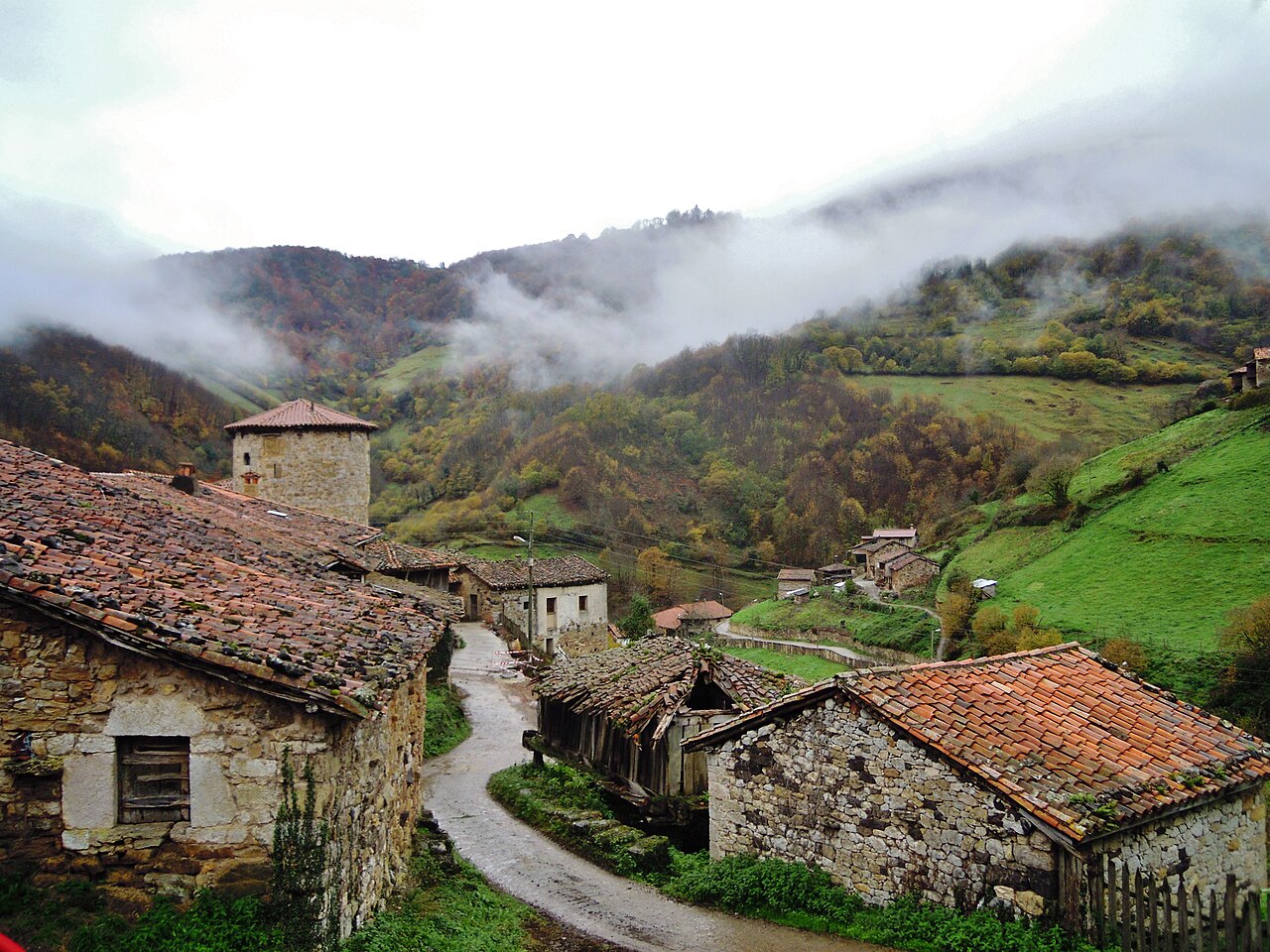
One of them is Bandujo. Perched high in the mountains of northern Spain, this tiny village appears untouched by modern life. It is not a reconstruction or a curated heritage site, but a real place where history has simply endured.
Isolation that preserved the past
Bandujo forms part of the municipality of Proaza, within the protected landscape of the Parque Natural de Ubiñas-La Mesa. With fewer than 40 residents, it remains one of the smallest inhabited settlements in the region.
Its remarkable state of preservation is largely due to its isolation. A road connection only arrived in the 20th century, while electricity and running water were introduced as late as the 1980s.
What might once have been considered a disadvantage has ultimately become its defining strength.
A walk through another century
Strolling through Bandujo is less about sightseeing and more about stepping into a different era.
Narrow stone lanes, traditional raised granaries known as hórreos, and centuries-old houses create a setting that feels frozen in time. There is no traffic, no noise, and no attempt to modernise what has survived.
The village was officially declared a site of cultural interest in 2009 and is widely regarded as one of the best-preserved medieval settlements in northern Spain.
A small village with a significant heritage
Despite its size, Bandujo offers several noteworthy historical landmarks:
– Iglesia de Santa María de Bandujo, with origins dating back to the 10th century and its current structure from the 12th century
– Torre de Bandujo, once used for defence and later as a prison
These structures hint at a time when the village held greater regional importance.
Traditions that have endured
Bandujo has not only preserved its architecture, but also its customs.
Its cemetery operates under a communal system, with no individual ownership of burial plots. Instead, space is reused over time, with new burials taking place where the oldest graves are located.
On All Saints’ Day, residents continue to honour the dead by covering graves with earth and flowers, maintaining a tradition that has survived for generations.
A destination for a different kind of traveller
Bandujo is not a conventional tourist destination. There are no large hotels, no nightlife and little in the way of modern infrastructure.
Yet this is precisely its appeal.
For those seeking to slow down after Semana Santa and experience a quieter, more authentic side of Spain, the village offers a rare combination of history, landscape and silence.
Bandujo represents a version of Spain that has largely disappeared elsewhere. Not reconstructed, not adapted, but preserved through circumstance.
For travellers willing to step off the beaten path, it offers something increasingly difficult to find: a genuine connection to the past.