When people think of Spain, they often picture sunshine, beaches and vibrant cities. But beyond these familiar images, there is another Spain — quieter, more authentic and deeply rooted in centuries-old traditions that are now making an unexpected comeback.
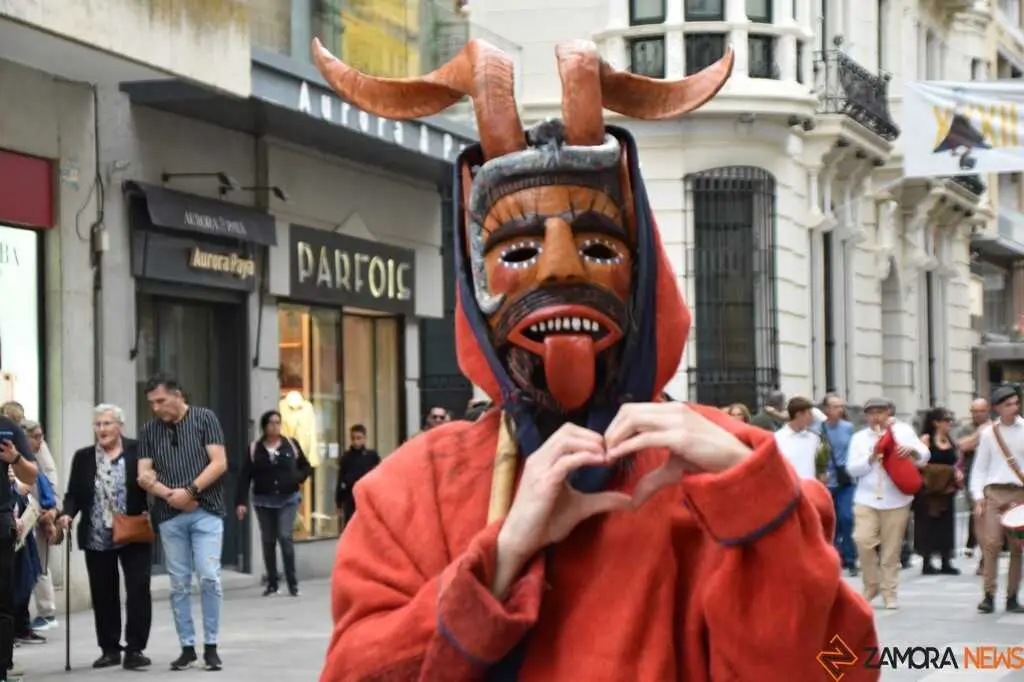
In remote villages across Castile and León, figures suddenly reappear that seem to belong to another era: masked, loud and sometimes unsettling. These are the so-called winter masquerades — rituals that nearly disappeared and are now being revived by a new generation.
Spain Expat Press Editorial Team
Between myth and history
The exact origins of these traditions remain unclear to this day. What is certain, however, is that their roots go back to a time long before Christianity.
Many historians link them to ancient rituals connected to nature’s cycles — harvests, livestock and the transition from winter to spring. In particular, the period around the winter solstice was considered crucial.
The masks themselves tell these stories: some appear demonic, others resemble animals or mythical creatures. They symbolise protection, fertility or a connection to ancestors.
When the whole village becomes a stage
These celebrations follow no strict script. They are loud, chaotic and full of improvisation.
Participants move through the streets, interacting with locals, playing pranks or startling passers-by. Small offerings are often demanded — a remnant of older customs. In the end, everything leads to a shared celebration.
What stands out is that there is hardly any distinction between performers and spectators. Everyone present becomes part of it.
A cultural heritage under pressure
Today, around 50 of these masquerades still exist in Castile and León, many of them in the province of Zamora. In recent years, they have been officially recognised as part of Spain’s cultural heritage.
However, their future remains uncertain.
Many of these areas face depopulation and ageing populations. Entire villages are losing residents — and with them, the foundation for keeping such traditions alive.
At the same time, a different trend is emerging. Local associations and committed residents are actively working to preserve these celebrations. Dates are being adjusted, events reorganised and lost rituals reconstructed.
A second chance after decades of decline
During the Franco era, many of these traditions disappeared or were suppressed. In the decades that followed, they gradually faded from memory.
Only through the efforts of local communities did they begin to return. Costumes were recreated, roles reinterpreted and stories brought back to life.
Today, it is becoming clear that this work is paying off.
A new generation takes the lead
Perhaps the most surprising aspect is who is driving this revival.
It is not the older generations, but increasingly young people who are taking the initiative. Many of them no longer live permanently in these villages — yet they return for these special celebrations.
For them, these masquerades are more than folklore. They represent belonging, roots and identity.
Modern influences also play a role. Social media and a new wave of artists incorporating traditional elements have helped bring renewed attention to these customs.
More than nostalgia
The return of these masquerades is no coincidence.
In a time marked by speed, individualism and digital distance, many people are searching for something more authentic — community, tradition and continuity.
This is exactly what these celebrations offer.
They are not tourist spectacles or staged performances. They are a living expression of cultural identity — and perhaps a reminder that sometimes the future can be found in the past.