Morocco’s justice minister says Rabat maintains a “historical and geographical right” over the two Spanish cities and calls for formal talks with Madrid over their future
Spain Expat Press Editorial Team
Summer may be drawing to a close, but the political temperature could be about to rise sharply for the Spanish government. At a time when the recent migration crisis in Ceuta has once again tested relations between Madrid and Rabat, a senior member of the Moroccan government has revived one of the most sensitive issues between the two countries: Ceuta and Melilla.
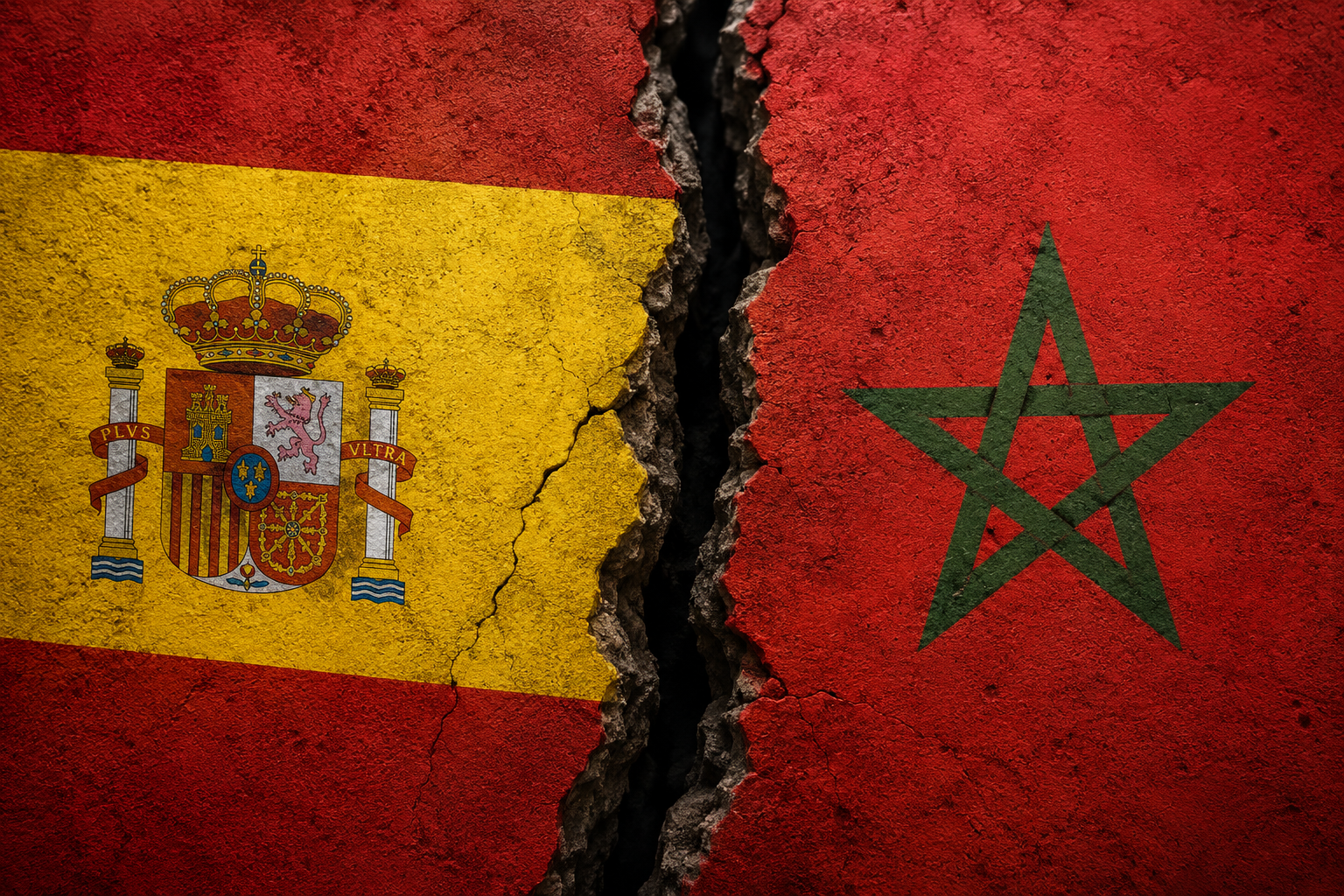
Morocco’s Justice Minister, Abdellatif Ouahbi, has publicly reaffirmed his country’s claim to the two Spanish autonomous cities. Speaking in an interview with Moroccan state television channel 2M, he described Ceuta and Melilla as a matter of Morocco’s “historical and geographical right”.
Ouahbi went further, calling for a definitive solution to the current situation so that the two cities could, in his words, “return to the homeland” – a reference to Morocco.
For Madrid, such remarks touch upon one of the most politically sensitive aspects of its relationship with its southern neighbour.
Rabat calls for dialogue with Spain
Ouahbi did not simply restate Morocco’s longstanding position. He also proposed establishing a formal mechanism for discussions between Madrid and Rabat.
The minister suggested that a dialogue commission could be created to address the future of Ceuta and Melilla.
“The question of Ceuta and Melilla will continue to be a subject of dialogue between us and Spain,” Ouahbi said, adding that Morocco would maintain what it regards as its historical and geographical rights.
He argued that the issue should remain on the agenda and should not be ignored.
His comments once again bring into public view a territorial dispute that has remained a persistent point of disagreement between Spain and Morocco for decades.
Spain’s position remains unequivocal
Ouahbi’s remarks reflect Morocco’s territorial claim. Spain rejects that claim and considers Ceuta and Melilla an integral part of Spanish sovereign territory.
Both are Spanish autonomous cities, and Madrid does not regard their sovereignty as an open territorial question to be negotiated with Rabat.
Morocco, however, has maintained its claim over both cities since gaining independence in 1956.
The late Moroccan King Hassan II previously urged Spain to establish a joint mechanism to consider the future of the two territories, but Madrid did not take up the proposal.
The timing makes the comments particularly sensitive
Such statements would be politically significant at any time, but their timing adds an extra layer of sensitivity.
Ceuta experienced renewed migration pressure at the end of July. The situation reached a particularly difficult point on 30 and 31 July, when significant numbers of people attempted to enter the Spanish city from Morocco.
Among them were unaccompanied Moroccan minors.
Ouahbi also addressed the issue during his interview, renewing his call for Spain to return Moroccan minors who entered Ceuta during those days.
He said Rabat was prepared to receive them once their identities had been verified.
The remarks therefore bring together several politically charged issues at once: migration, unaccompanied minors, Spain’s cooperation with Morocco and the sovereignty of Ceuta and Melilla.
A difficult balancing act for Madrid
Relations between Spain and Morocco have improved considerably following serious diplomatic tensions in previous years. Cooperation with its southern neighbour is strategically important for Spain, particularly when it comes to migration, border security, counter-terrorism and trade.
That dependence on close cooperation also makes the relationship unusually delicate.
Madrid needs a functioning partnership with Rabat. At the same time, there is virtually no political room for manoeuvre in Spain when it comes to the sovereignty of Ceuta and Melilla.
The fact that a serving Moroccan minister has now publicly spoken of the cities “returning” to Morocco, while also calling for an official dialogue over their future, will therefore be closely watched in Madrid.
The key question is whether Ouahbi’s comments amount simply to another restatement of Morocco’s longstanding position or whether they signal an intention by Rabat to push the issue higher up the political agenda.
An unsettled autumn could lie ahead
For the Spanish government, the renewed debate comes at an awkward moment.
Migration pressure along Spain’s southern borders remains a sensitive political issue, cooperation with Morocco is crucial, and one of the most contentious questions in relations between the two countries has now been placed firmly back in the spotlight.
The meteorological summer may be approaching its end.
Between Madrid and Rabat, however, the political heat could only just be beginning.