The unprecedented migration crisis in Ceuta is entering a new and potentially even more complicated phase. After tens of thousands of migrants crossed into the Spanish enclave within a matter of hours, and the vast majority subsequently returned or were sent back to Morocco, hundreds of unaccompanied minors remain on Spanish territory.
Their situation now presents Spain with a significant legal, humanitarian and political challenge.
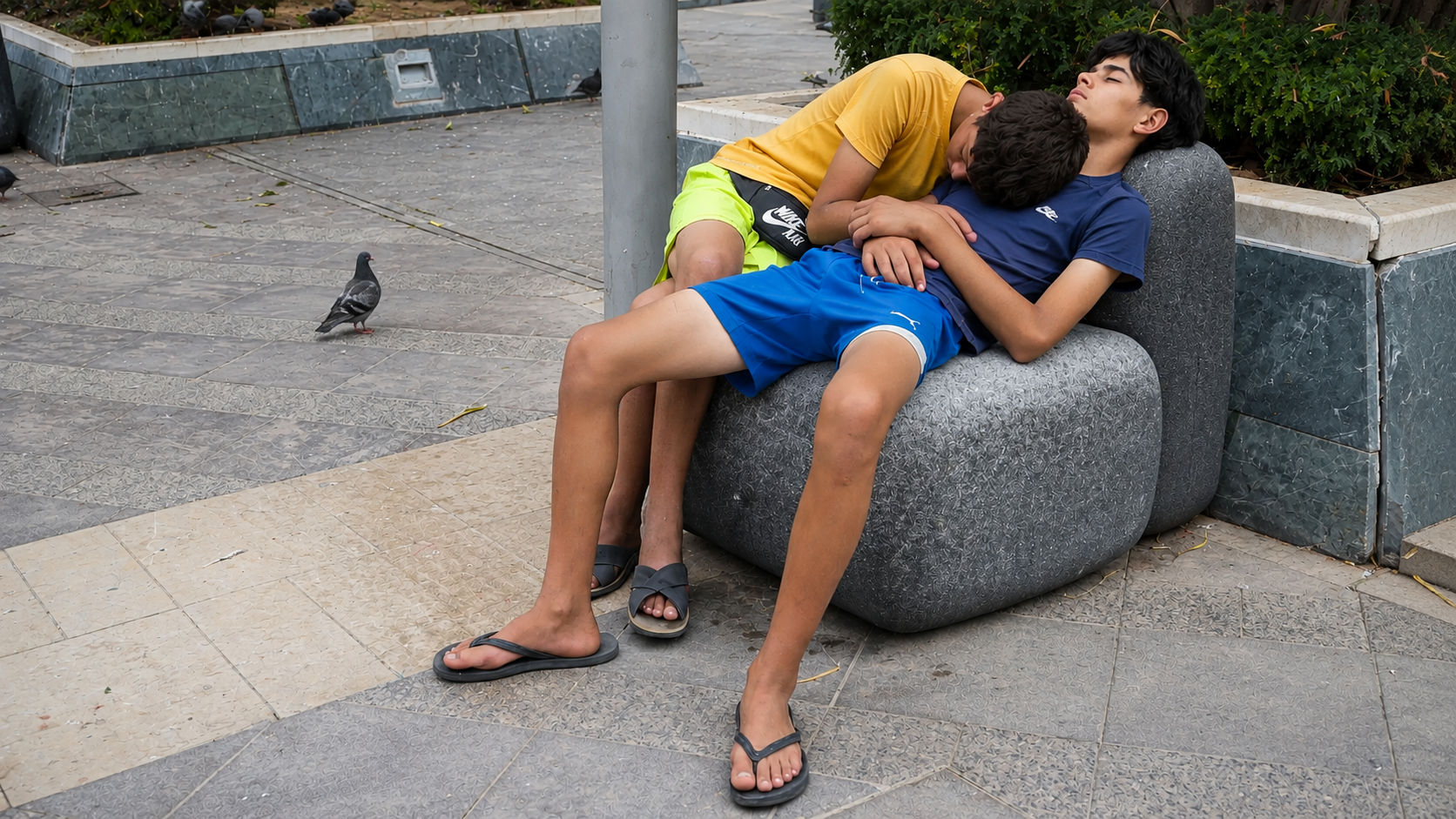
According to the latest figures from the authorities, hundreds of migrant children and teenagers are currently being accommodated in Ceuta’s protection system and emergency facilities. The precise number has fluctuated as identification and registration procedures have continued.
Unlike adults, however, unaccompanied minors are subject to a very different legal framework once they are on Spanish soil
Spain Expat Press Editorial Team
Unaccompanied minors cannot simply be treated in the same way as adults
Under Spanish and European child-protection rules, authorities have specific obligations towards children who arrive without a parent or legal guardian.
Once an individual is identified as an unaccompanied minor, the authorities must establish their age and identity, examine their personal and family circumstances and ensure that decisions are taken with the child’s best interests as a primary consideration.
This does not mean that minors can never be returned to their country of origin. However, any return is subject to considerably stricter safeguards than those applying to adult migrants.
As a result, while large numbers of adults who crossed into Ceuta have already returned to Morocco, many minors remain in Spain and have entered the country’s child-protection system.
There is no sufficient evidence to claim that all of these young people crossed the border — or chose to remain — specifically because they were aware of Spanish legislation protecting minors.
What is clear is that their status as children fundamentally changes the way Spain is legally required to deal with them.
And that is where the next major problem begins.
Ceuta is struggling to cope
With a population of only around 80,000, Ceuta has limited capacity to accommodate such a sudden influx of unaccompanied children and teenagers.
Emergency accommodation has had to be opened, with additional buildings and facilities brought into use as the existing reception system comes under increasing pressure.
And providing a bed is only the beginning.
The minors require food, healthcare, social workers, interpreters, legal assistance, education and, in some cases, psychological support. Each child’s individual legal and family circumstances must also be assessed.
The consequences are therefore both financially and logistically significant for the autonomous city.
Madrid calls for ‘solidarity’ from Spain’s regions
The Spanish government is now calling on the country’s autonomous communities to help relieve the pressure on Ceuta by accepting some of the unaccompanied minors.
Deputy Prime Minister and Economy Minister Carlos Cuerpo has appealed for “solidarity” from regional governments and stressed that Spain’s regions will have to comply with the legal framework governing the distribution of migrant minors.
But the issue is already becoming politically contentious.
Several regional governments have expressed reservations about the distribution system, while the central government has linked some of the opposition to regional political arrangements involving the conservative Partido Popular and Vox.
What began as an emergency concentrated on Spain’s North African border is therefore developing into a much broader domestic political dispute.
Disagreement over the scale of the crisis
There also remains considerable controversy over the total number of people who crossed into Ceuta.
Interior Minister Fernando Grande-Marlaska has put the figure at approximately 72,000, saying that around 70,000 have already returned or been sent back to Morocco.
Those figures do not fully correspond with estimates issued by the authorities in Ceuta, illustrating how difficult it remains to establish an exact picture of an extraordinary and rapidly developing situation.
Thousands of people were believed to have remained in the city in the immediate aftermath of the crossings, including migrants sleeping outdoors or relying on charitable assistance.
Guardia Civil calls for 200 additional officers
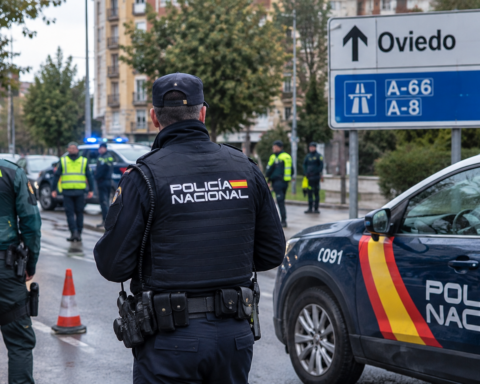
Pressure is also mounting on Spain’s security forces.
The Unified Association of Civil Guards (AUGC) has called for an additional 200 Guardia Civil officers to be deployed in Ceuta, alongside improvements to border surveillance systems.
The association says the city is already suffering from a shortage of personnel and that officers have been working under enormous pressure with insufficient resources.
Authorities are also concerned about messages circulating on social media reportedly calling for another mass attempt to cross into Ceuta around 15 August.
Following the events of recent days, any such mobilisation is likely to be closely monitored by the Spanish authorities.
The images may disappear, but the consequences will remain
The dramatic scenes at the border have dominated headlines in Spain and beyond. But even if the immediate emergency subsides, the consequences of the crisis are far from over.
The situation of the unaccompanied minors in particular could remain an issue for Spain for months — and potentially much longer.
While adults can, under certain circumstances, be returned relatively quickly, children and teenagers are protected by a much more extensive set of legal safeguards.
Spain must therefore now answer a difficult question: how will hundreds of unaccompanied minors be accommodated and cared for in the longer term, and how will that responsibility be shared between Ceuta and the country’s other autonomous communities?
The mass crossings may have stopped for now.
But the political, financial and humanitarian task of dealing with their consequences has only just begun.