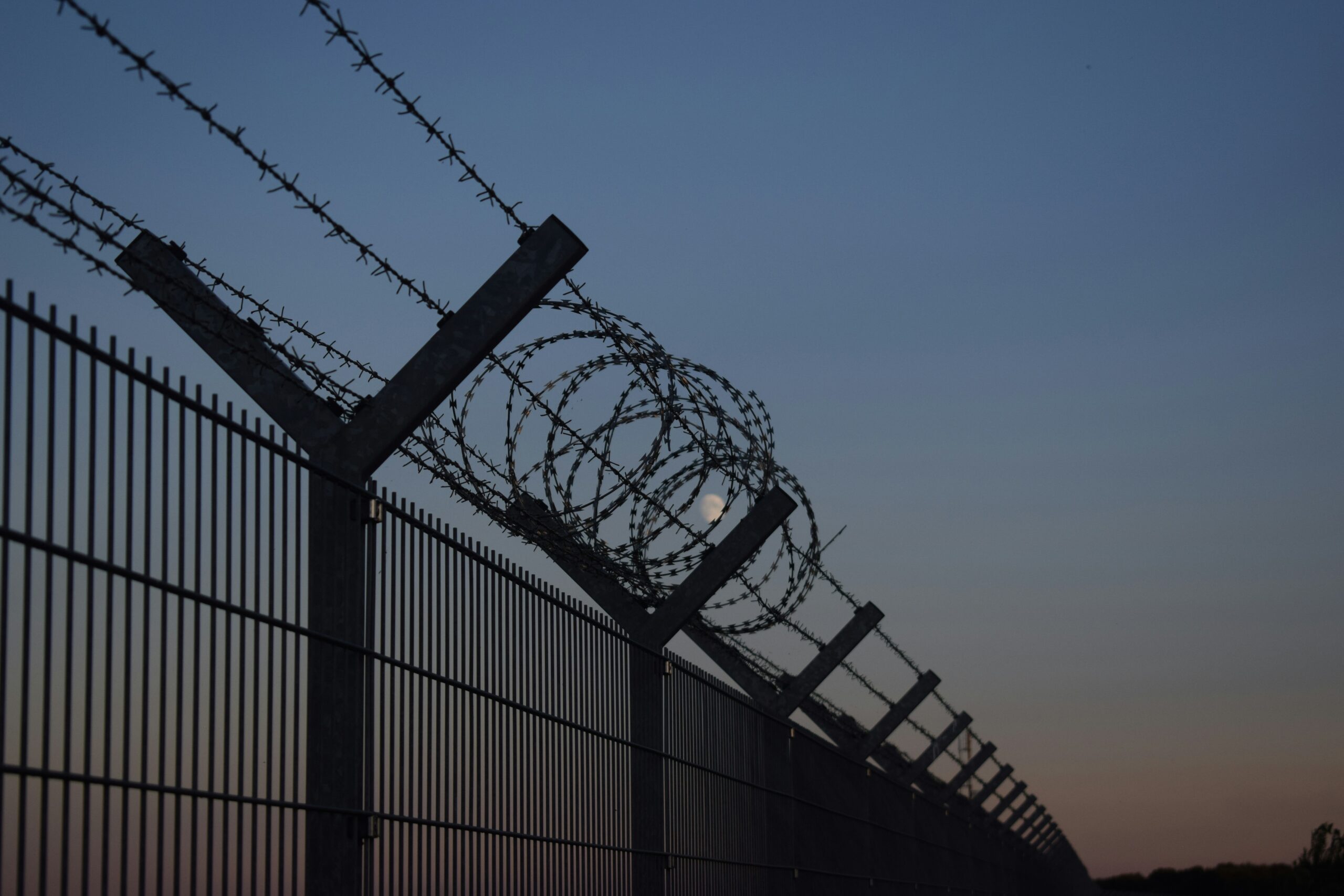
The situation in Ceuta remains tense following the extraordinary migration movement at the end of July. The head of the Spanish enclave, Juan Jesús Vivas, is now calling on the central government to establish a dedicated centre where migrants can be accommodated until their deportation procedures have been completed. He is also demanding additional staff, a central command structure and tighter border security. According to the Spanish government, around 80,000 people have reached Ceuta in connection with the migration movement.
Spain Expat Press Editorial Team
by Marlon Gallego Bosbach
In Ceuta, the debate over how to deal with the migrants who remain in the city is intensifying. The president of the autonomous city, Juan Jesús Vivas, called on the Spanish central government on Monday to implement a comprehensive action plan.
At the heart of his demands is the establishment of a temporary detention centre for migrants who are believed to have entered Ceuta irregularly from Morocco at the end of July and who remain there. Under Vivas’s proposal, those affected would be accommodated there while their deportation procedures are being processed.
Vivas estimates that between 8,000 and 11,000 migrants remain in Ceuta. At the same time, the central government has raised its estimate of the total number of people who reached Ceuta during the extraordinary migration movement on 30 and 31 July to around 80,000.
Vivas calls for a centre with restricted freedom of movement
Following a meeting with Spain’s Minister for Territorial Policy, Ángel Víctor Torres, Vivas said that Ceuta urgently needed a facility to accommodate those who remain in the city while also speeding up procedures for their potential deportation.
His proposal goes beyond a conventional reception facility. Vivas is calling for a centre where the migrants concerned could remain while their cases are being processed, with their freedom of movement restricted in accordance with the applicable legal requirements.
From his perspective, the proposal is intended to address both a humanitarian and a public-order issue: people would no longer have to move around the city without accommodation, while the authorities would have more time to process each individual case.
It is important to note that no such centre has been approved so far. The proposal is a demand made by the president of Ceuta to the central government.
Thousands of people remain in the city
The current situation is a consequence of the extraordinary events of 30 and 31 July. According to the latest figures from the Spanish government, tens of thousands of people made their way towards Ceuta from Morocco over those two days.
The figure of around 80,000 refers to the total number of people who, according to the government, reached Ceuta in connection with the incident. A large number subsequently returned to Morocco.
By contrast, it is much more difficult to determine how many people have remained in Ceuta. Vivas estimates that between 8,000 and 11,000 people are still in the city.
The situation is placing an exceptional strain on Ceuta. The Spanish enclave has a very limited area and significantly lower reception and administrative capacity than Spain’s larger regions.
The situation is particularly challenging when it comes to minors
One of the biggest challenges concerns unaccompanied minors. According to Minister Ángel Víctor Torres, around 1,400 minors have now been registered in Ceuta. At the same time, the minister stressed that the figure is not yet final, as further people are still being identified and registered.
This group is subject to special protection measures. Minors cannot simply be treated in the same way as adult migrants or placed in deportation proceedings.
The Spanish government is therefore initially focusing on identifying and supporting these minors, as well as exploring possible family reunification. Torres said that the priority was to reunite minors with their families wherever possible. This would involve taking into account, among other factors, the position of the country of origin, the wishes of the minors and their families, as well as legal advice.
In some cases, relatives are already living in Spain. The authorities are also exploring suitable accommodation options elsewhere in the country.
Ceuta calls for more staff
For Vivas, the current situation is not simply a matter of accommodation. He also believes that the city’s administrative and security structures are increasingly reaching their limits. He is therefore calling for additional staff and resources for the immigration authorities, the courts, the public prosecutor’s office and the police. He also says that greater support is needed in the healthcare sector.
According to the president of Ceuta, the procedures need to be processed much more quickly in order to bring the extraordinary situation back to normal as soon as possible. At the same time, healthcare services are also under pressure. Vivas specifically pointed to the additional strain on the prevention and treatment of potential infectious diseases.
Call for a “mando único”
Alongside the detention centre, Vivas is calling for another key measure: a “mando único”, or a unified command and coordination structure for the entire crisis. Under his proposal, this body would coordinate the various authorities involved, direct the response and oversee its implementation. Several ministries within the central government, as well as the government of Ceuta, would be involved.
The background is the wide range of tasks that need to be managed simultaneously: border protection, policing, immigration law, the judiciary, healthcare, accommodation and the care of minors.
The border with Morocco is also a key focus of the debate
Vivas’s demands are not limited to those already in Ceuta. He is also calling for a clear political commitment to securing the border.
The president of the enclave said it was essential for the Spanish government to make clear that the border was secure. In his view, the events of 30 July must not be allowed to happen again.
This also turns the current crisis into a matter of Spanish foreign and security policy. Ceuta lies directly on the border with Morocco and, together with Melilla, is one of Spain’s two cities on the African continent.
Madrid takes a different approach when it comes to minors
The central government is currently taking a different approach from Vivas. Following his visit to Ceuta, Minister Torres said that family reunification should initially be the priority for minors. Only once it has been established whether returning them to their families is possible and compatible with their best interests should further steps be taken.
The Spanish authorities must assess each minor’s individual circumstances. Not every minor can automatically be returned to their country of origin. At the same time, Madrid is seeking additional accommodation options and working to ease the pressure on the city.
The number of minors continues to rise
The registration of minors is not yet complete. Torres therefore made it clear that the current figure of 1,400 cases does not represent a final total.
This makes planning even more difficult. The authorities must first establish who is a minor, who arrived unaccompanied, whether relatives are present and what legal options are available in each individual case.
Only then can the authorities decide whether family reunification, accommodation in another Spanish region or another legal solution is appropriate.
Between accommodation and repatriation
The political debate in Ceuta is increasingly focused on how to deal with the adults who remain in the city following the migration movement. Vivas wants to speed up procedures for possible deportations while also preventing thousands of people from remaining in Ceuta without adequate accommodation and support.
His proposed centre would therefore serve two functions: providing accommodation while preparing for further legal proceedings. Whether such a model can be implemented, however, depends on the Spanish government and the applicable legal framework.
No detention centre has been approved
For the current reporting, an important distinction must therefore be made: the central government has so far made no decision to establish a new detention centre in Ceuta. The proposal comes from Vivas and was made public following his meeting with Minister Torres.
The figures must also be distinguished between different categories. The approximately 80,000 people refer to the total number of people who, according to the government, reached Ceuta in connection with the wave of arrivals. By contrast, the 8,000 to 11,000 figure cited by Vivas is his estimate of those who are still in the city.
An exceptional strain on Ceuta
For the small autonomous city, the situation represents an enormous challenge. Within just a few days, circumstances arose that go far beyond the normal capacity of the local authorities. At the same time, different groups have to be distinguished, including adults, families, unaccompanied minors and people who may have different legal entitlements.
Minors are subject to different protection mechanisms from adults. This means that calls for rapid repatriation cannot be applied equally to everyone affected. This is one of the biggest challenges facing the Spanish authorities.
What could happen next
In the coming days, the situation is likely to develop on three main fronts.
First, the registration and identification of those still in Ceuta will have to continue.
Second, solutions must be found for the approximately 1,400 minors registered so far, with family reunification and the possible relocation of some minors to other parts of Spain likely to play an important role.
Third, Madrid must decide how to proceed with the adult migrants who remain in Ceuta. The key issue here is Vivas’s proposal for a dedicated centre.
At the same time, border security is to be strengthened and cooperation between the various authorities improved.
Ceuta calls for a swift response from Madrid
The demands made by Juan Jesús Vivas highlight the extent of the pressure now facing the autonomous city. He is calling not only for additional short-term accommodation, but for a comprehensive government plan bringing together security, administration, healthcare and migration policy.
Madrid therefore faces a difficult task: on the one hand, the situation in Ceuta needs to be stabilised quickly; on the other, the individual rights of migrants, particularly those of minors, must be taken into account.
One thing is already clear: the consequences of the migration movement of 30 and 31 July will continue to affect Ceuta for some time to come.
Whether a new detention centre will ultimately be established remains an open question. What is clear, however, is that the city is calling for significantly greater support from the Spanish state – and that how Spain deals with the migrants who remain in Ceuta has become one of the country’s most important migration policy issues.