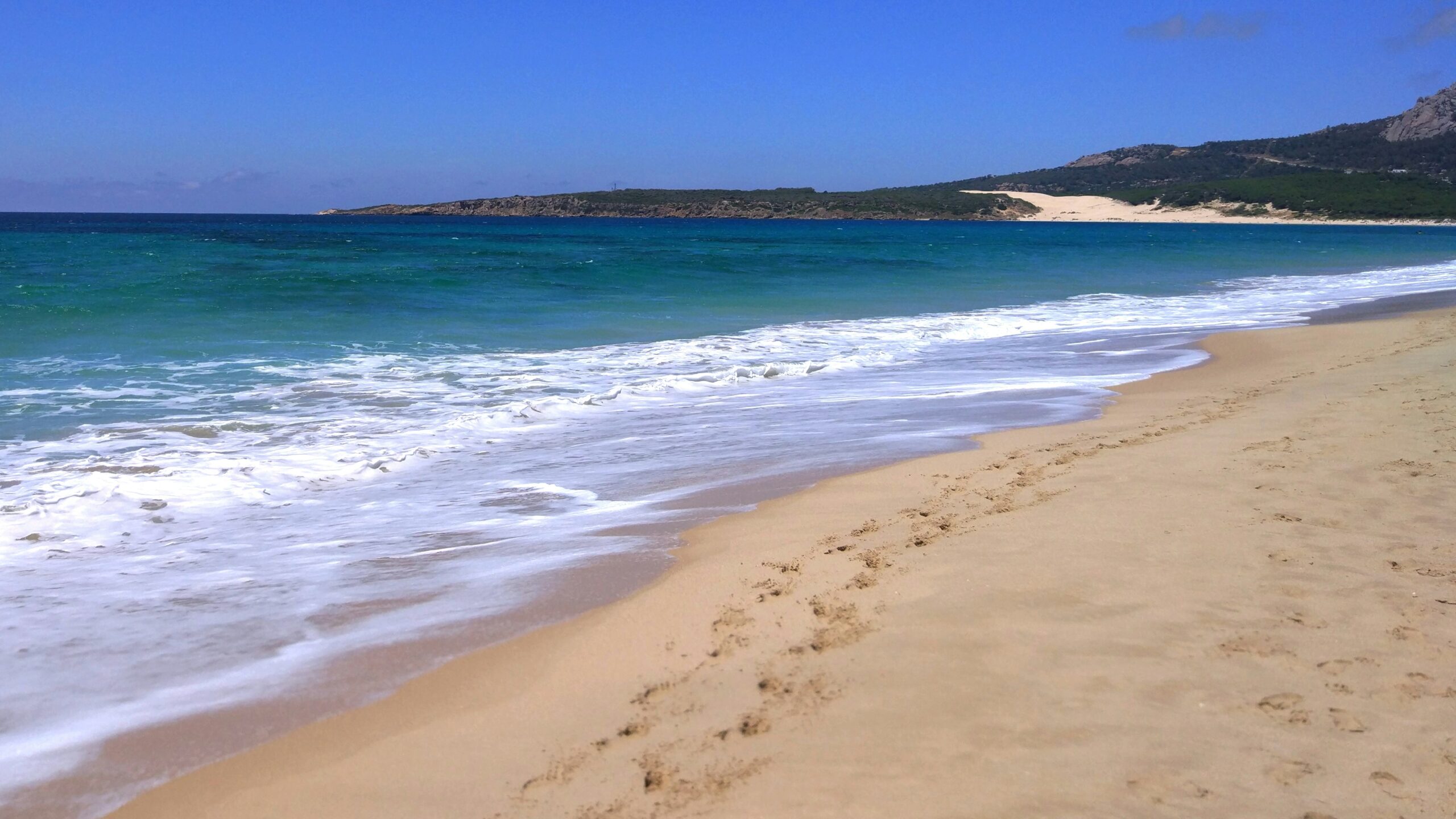
While the beaches of southern Spain are often busy in the summer, there is still a place on the Costa de la Luz that even surprises many locals. Near Tarifa, just a few kilometres from the well-known Bolonia Beach, natural rock pools are hidden that form at low tide and have developed into a real hidden gem for visitors seeking peace and quiet.
Spain Expat Press Editorial Team
by Marlon Gallego Bosbach
Between the Atlantic Ocean, sand dunes and ancient ruins, this is a natural spot that combines swimming, history and seclusion in an unusual way.
Natural pools form between rocks and the tides
The so-called natural pools form along the rocky coastline near the Roman archaeological site of Baelo Claudia. When the sea recedes at low tide, depressions in the rocks are left behind, which fill with crystal-clear Atlantic water. This creates small, natural basins that resemble a kind of “open-air whirlpool” – but without any technology, noise or infrastructure.
What makes it special is the tranquillity: while just a few hundred metres away the open Atlantic crashes with powerful waves onto Bolonia Beach, the pools lie sheltered among the rocks and offer a much gentler bathing experience.
A swim between Roman history and nature
The location makes the place even more unique. Directly above the coastline lie the well-preserved ruins of Baelo Claudia, an ancient Roman city dating back to the 2nd century. Visitors can literally switch between history and nature here: strolling through a Roman archaeological site in the morning and then bathing in natural seawater pools afterwards.
This unusual combination of culture and nature is one of the reasons why the site is increasingly appearing as a hidden gem in travel guides, without having lost its original character.
Natural “spa” with clay from the rocks
Another aspect that makes the pools special is the natural clay found there. Many visitors use the fine, mineral-rich mud directly from the rocks and apply it to their skin and face. On site, the effect is often compared to a free spa treatment.
The combination of sun, seawater and clay creates an experience that many describe as relaxing and beneficial for the skin – all without any tourist facilities or wellness centres.
The journey is part of the experience
The pools are not directly accessible by car. Access is via an approximately 50-minute hike along the coast, starting from the Bolonia Beach car park and heading east.
The path leads along unpaved trails, passing through dune landscapes and rocky sections. It is precisely this remoteness that helps the area remain relatively quiet even in the high season. However, visitors should bring sturdy footwear, sufficient water and sun protection, as there is little shade or facilities along the way.
A place far from mass tourism
Compared to many other coastal regions in Andalusia, this stretch of the Costa de la Luz feels almost untouched. There are no beach bars, no rows of sun loungers, and no tourist developments directly at the pools.
It is precisely this simplicity that creates the appeal: the combination of Atlantic waves, rocky landscapes and wide horizons creates an atmosphere that is clearly different from typical holiday destinations.
Caution despite the idyllic setting
As idyllic as the natural pools may appear, they remain part of a wild coastal landscape. There are no lifeguards, no designated swimming areas, and no tourist infrastructure. Particular attention should be paid to the tides, as conditions can change throughout the day.
The rocks can also become slippery when wet, so caution is advised when entering and exiting the water.