The start of 2026 brings a series of changes in Spain that will affect daily life for residents, workers, the self-employed and visitors alike. From new traffic regulations and tax rules to public transport reforms and long-standing traditions, January is set to be a busy and eventful month.
Spa.in Press
New rules on the roads and in cities
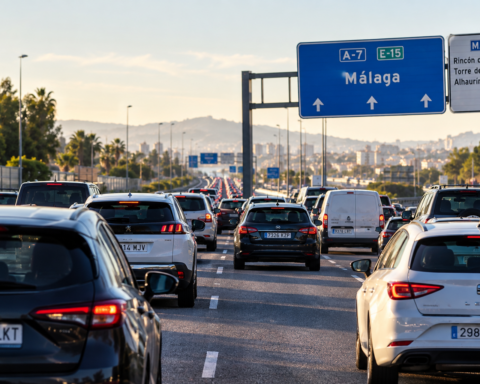
From 1 January 2026, a significant change comes into force for drivers: the V-16 emergency light becomes mandatory, officially replacing warning triangles. The LED beacon can be placed on the roof of the vehicle without leaving it and, in many models, includes built-in geolocation that automatically alerts traffic authorities in the event of a breakdown or accident. Drivers without an approved V-16 light risk fines of between €80 and €200, although Spain’s traffic authority (DGT) has announced a short grace period at the beginning of the year to allow motorists to adapt to the new rule.
At the same time, liability insurance will become compulsory for e-scooters and other personal mobility vehicles, including hoverboards, electric skateboards and Segways. The measure forms part of a reform of Spain’s motor insurance legislation and is designed to offer greater protection to third parties following the rapid growth in the use of these vehicles in urban areas.
January also marks the end of the transition period for the introduction of low-emission zones (ZBEs). Cities with more than 50,000 residents, as well as all Spanish islands, must have these zones in place. While the specific access restrictions will vary from city to city, the overall aim is to reduce urban air pollution and help Spain meet its long-term climate commitments.
Work, taxes and income in focus
For the self-employed, the year begins with an important deadline. Fourth-quarter tax returns for 2025 must be filed by 20 January 2026, including income tax advance payments and VAT declarations. Those working with a gestor or accountant are advised to submit their documentation well in advance, as January is traditionally one of the busiest months for tax offices.
From January, Spain’s Tax Agency will also tighten its monitoring of bank transfers. Until now, only transactions of €3,000 or more were reported, but under the new rules all financial movements by the self-employed and small businesses must be declared, regardless of amount. This includes transfers made via digital payment platforms such as Bizum and is intended to combat tax evasion and undeclared economic activity.
A decision on the minimum wage (SMI) is expected during January. A panel of experts has recommended an increase of between 3.1 and 4.7 per cent. If approved, this would raise the minimum wage to around €1,240 gross per month, paid in 14 instalments, which is standard practice in Spain. The final figure had not yet been confirmed at the start of the year.
Any rise in the minimum wage would also affect the income requirement for Spain’s digital nomad visa, which is linked to the SMI. Applicants must prove earnings equivalent to 200 per cent of the minimum wage. Based on the proposed increase, this threshold would rise to around €2,890 per month, roughly €130 more than at present.
Transport and healthcare services
One of the most anticipated changes is the introduction of a nationwide public transport pass. From January 2026, users will be able to travel without limits on commuter and mid-distance trains, as well as state-run bus services, across all 17 autonomous regions. The pass will cost €60 per month for adults and €30 for under-26s. High-speed AVE trains and private bus operators are excluded from the scheme.
In contrast, Spain’s healthcare system may face disruption. Doctors have confirmed strike action on 14 and 15 January 2026 following ongoing disputes over working conditions. Their demands include a 35-hour working week, the gradual elimination of 24-hour on-call shifts and more flexible retirement options. As a result, non-urgent appointments and procedures may be postponed or rescheduled.
Festivals, traditions and culture at the start of the year
Despite the regulatory changes, January remains a month deeply rooted in tradition. In Spain, Christmas does not truly end on New Year’s Eve but with Three Kings’ Day on 5 and 6 January. On the evening of the 5th, elaborate parades take place across the country, and during the night the Three Kings deliver gifts, which are opened on the morning of the 6th — for many families, the true highlight of the festive season.
The same day also sees the draw of the El Niño Lottery, often described as the younger sibling of the famous Christmas lottery El Gordo. While the prizes are smaller, the total prize fund still exceeds €700 million each year.
After Three Kings’ Day, Spain’s winter sales officially begin. From mid-January onwards, discounts of up to 70 per centare common, making it one of the busiest shopping periods of the year.
January also marks the start of a new cycle of local festivals. Events such as La Vijanera in Cantabria, the Fiesta de la Vaquilla in the Madrid region and La Tamborrada in San Sebastián — a 24-hour drumming celebration — underline that, even after Christmas, Spain’s festive calendar is far from over.