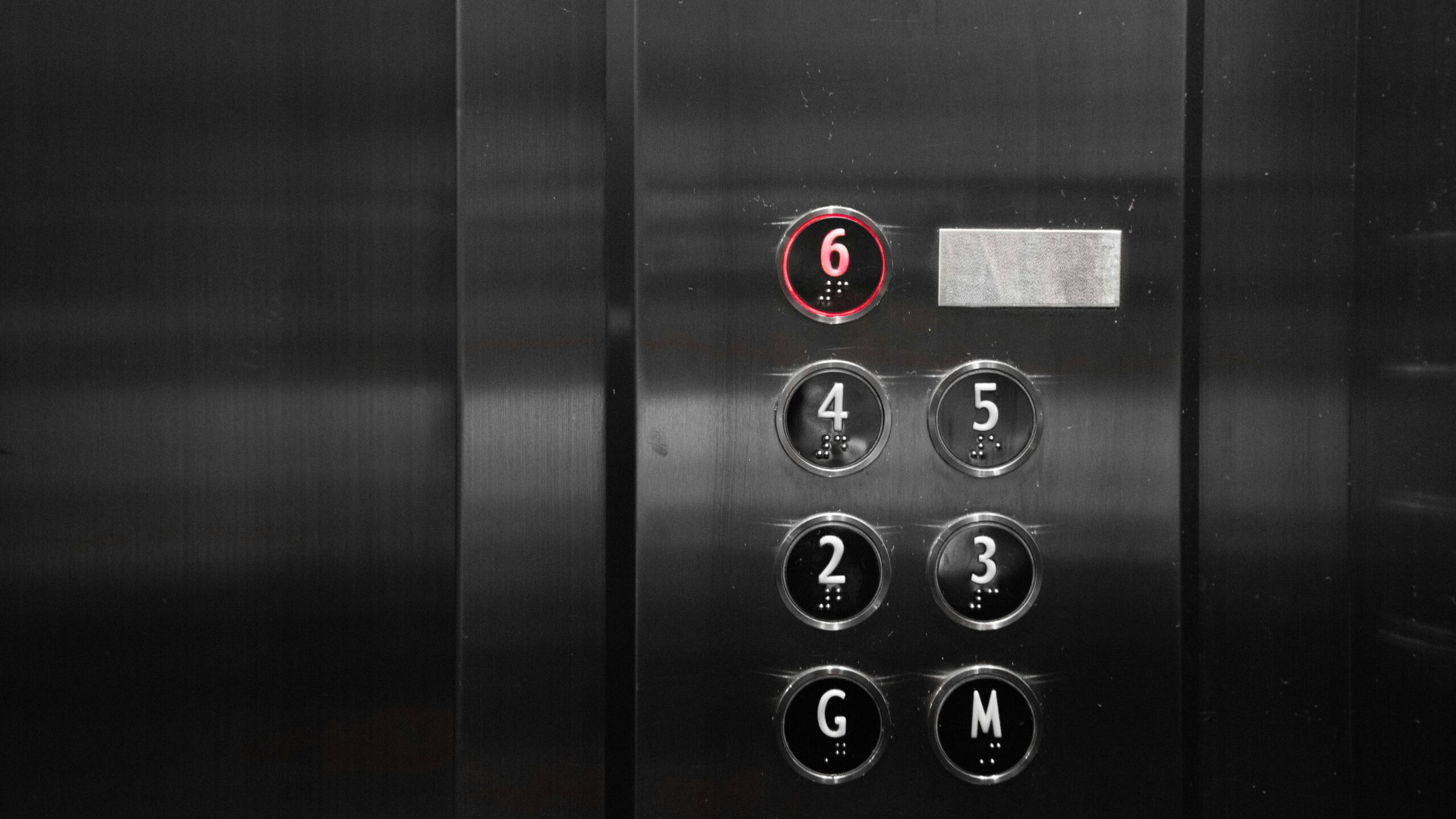
For owners of flats in Spain’s older apartment blocks, the absence of a lift may not be a permanent feature. Under Spanish property law, communities of owners can, in certain circumstances, be required to install a lift or make other accessibility improvements – without the proposal first being approved at a residents’ meeting.
Spain Expat Press Editorial Team
They are a familiar sight across Spain: attractive older apartment buildings, sometimes four or five storeys high, with one significant drawback – no lift.
For prospective buyers, that can mean a cheaper property. But it can also carry a financial implication that is easily overlooked.
Under Spain’s Horizontal Property Law (Ley de Propiedad Horizontal), certain accessibility works can become compulsory for the community of owners. In some cases, no prior vote is required.
The provision is particularly relevant to buildings where elderly people or people with disabilities live.
When can a lift become compulsory?
Article 10.1.b of Spain’s Horizontal Property Law establishes circumstances in which accessibility works are mandatory.
The provision can apply when the works are requested by an owner and are required to allow the appropriate use of communal areas by a person with a disability or someone aged over 70 who lives, works or provides voluntary services in the property.
And it is not limited to conventional lifts.
The legislation also covers ramps and other mechanical or electronic devices intended to improve accessibility.
Can neighbours simply vote against it?
This is where the law becomes particularly important.
When the conditions established by the legislation are met, the works are mandatory and do not require prior approval by the community of owners.
In other words, it is not necessarily enough for a majority of neighbours to oppose the project.
That does not, however, mean that anyone over 70 can automatically demand an expensive new lift regardless of its cost. The legislation contains important financial limits and conditions.
The 12-month rule
One of the key considerations is the cost of the project.
Broadly speaking, the accessibility work is compulsory under Article 10.1.b when the annual amount charged to owners – after any public grants or subsidies have been deducted – does not exceed the equivalent of 12 ordinary monthly community fees.
This distinction matters.
The law is not simply referring to 12 monthly repayments on a loan taken out to finance the lift. The calculation is linked to the owners’ ordinary community contributions under the statutory rules.
Public subsidies can therefore make a significant difference to whether the legal threshold is met.
What if the lift costs more?
A project exceeding that threshold is not necessarily ruled out.
Spanish law provides for circumstances in which the work may still proceed, including where the person requesting the accessibility measure agrees to cover the amount exceeding the statutory limit. Public financial assistance can also affect the calculation.
There is also a separate route.
A community of owners can approve the installation of a lift through the normal voting procedure. Spanish law provides specific voting rules for accessibility improvements and the installation of lifts.
Where the necessary majority is obtained, owners can be required to contribute even when the cost exceeds the equivalent of 12 ordinary monthly community payments.
Why buyers of older Spanish properties should pay attention
The issue is particularly relevant in Spain’s historic centres and in apartment blocks built during the rapid urban expansion of the 1960s, 70s and 80s.
Thousands of these buildings were constructed without lifts.
For buyers, therefore, the question should not simply be: “Does the building have a lift?”
It should also be: “Could the community be required to install one in the future?”
A flat on an upper floor without a lift may appear attractively priced, but an accessibility project could later result in a substantial bill for individual owners.
Before buying in an older block, purchasers would be wise to examine the minutes of recent community meetings and establish whether a lift, accessibility improvements, technical reports or requests from residents have already been discussed.
Because in Spain, a building without a lift today will not necessarily remain one without a lift tomorrow.