The planned 2030 FIFA World Cup has sparked a new political debate in Spain. The left-wing government party Sumar has submitted an initiative to the Spanish Parliament calling for a review of the joint organisation of the tournament with Morocco. The move comes amid recent tensions between Spain and Morocco linked to the situation in the Spanish enclave of Ceuta.
Spain Expat Press Editorial Team
by Marlon Gallego Bosbach
The party is calling for Spain not to appear as a joint host of the World Cup with Morocco until certain political and human rights issues have been resolved. The move has sparked debate over the relationship between sport, international diplomacy and political relations.
Sumar questions World Cup partnership with Morocco
According to the party, the Spanish government should examine whether cooperation with Morocco for the 2030 World Cup should continue. Sumar argues that an international event of such significance as the FIFA World Cup cannot be viewed separately from the political situation.
The initiative is primarily aimed at Morocco’s role as a joint host. Sumar is calling for a reassessment of the agreement, highlighting Spain’s responsibility to link international events to certain democratic and human rights standards.
However, the motion does not automatically mean that Spain will withdraw from the World Cup. The final decision regarding the organisation of the tournament lies with FIFA and the participating football associations. Instead, the initiative is intended to put political pressure on the government.
New tensions following developments in Ceuta
The move was triggered by the latest developments surrounding Ceuta. The Spanish enclave on the North African coast has been at the centre of migration and border policy between Spain and Morocco for years.
The new crisis has once again sparked debate over relations between Madrid and Rabat. Sumar has particularly criticised the handling of migration and sees the events as an example of how political tensions can also affect international cooperation.
The party argues that Morocco cannot separate its role as a strategic partner of Spain from political conflicts and that the 2030 World Cup must not be used to overshadow existing problems.
The 2030 World Cup was intended to become a symbol of cooperation
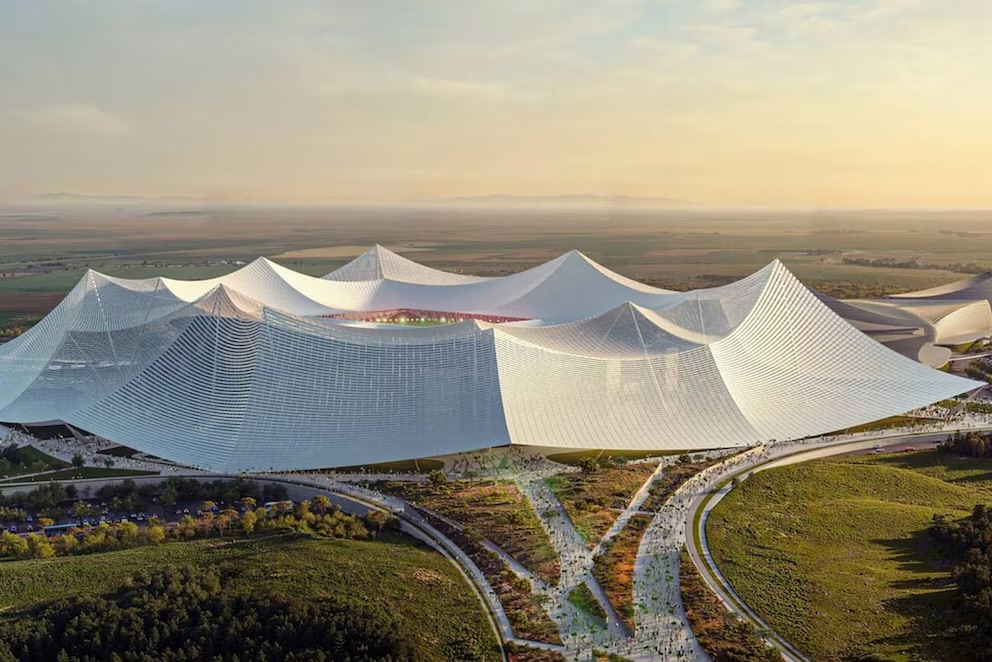
The joint bid by Spain, Portugal and Morocco was originally intended as a symbol of cooperation between Europe and North Africa. The 2030 World Cup also carries special historical significance, as it marks the 100th anniversary of the first FIFA World Cup.
In addition to matches being held in Spain, Portugal and Morocco, fixtures are also planned in South America to honour the tournament’s historical origins and its connection to the history of the competition.
For Spain, the World Cup represents a major economic and sporting opportunity. Numerous stadiums and infrastructure projects are being prepared, while cities and regions are hoping for additional revenue from tourism and international visitors.
Criticism of political interference in sport
However, Sumar’s move has also faced criticism. Opponents of the initiative warn against using sporting events as a political tool of pressure. They argue that international tournaments can actually help to improve relations between countries.
Supporters of a reassessment, however, argue that there is a risk that major sporting events could be used to push political issues into the background.
The debate is reminiscent of previous discussions over awarding major international sporting events to countries with controversial human rights records.
Spanish football federation remains committed to World Cup plans
The Spanish football federation remains committed to the joint organisation of the World Cup for the time being. A withdrawal from cooperation with Morocco is not currently being considered. For Spanish football officials, the project remains a historic event that aims to strengthen connections between different regions and cultures.
The question of the venue for the World Cup final is already attracting attention. Both Spain and Morocco have expressed interest in hosting the tournament’s most important match.
Decision on the future of the World Cup remains open
Whether Sumar’s political move will have any concrete impact on preparations for the 2030 World Cup remains unclear. However, the initiative highlights how closely sport and international politics are intertwined.
What was originally planned as a shared symbol of cooperation between Spain, Portugal and Morocco is increasingly becoming a political point of dispute. The coming months will show whether the debate remains merely a domestic political issue or whether it will actually have an impact on the organisation of the 2030 World Cup.