Anyone moving to Spain will quickly notice that the country has several police forces, each with different responsibilities. Add to that a range of specialised units whose names regularly appear in the headlines, and the system can seem confusing at first.
For expats, foreign residents and long-term visitors, understanding who is responsible for what can make everyday life much easier. Spain Expat Press takes a closer look at Spain’s main law enforcement agencies and explains when you should contact each one.
Spain Expat Press
Guardia Civil: Spain’s Green Police Force
The Guardia Civil is one of Spain’s oldest and most respected security forces. Officers are easily recognised by their green uniforms and are primarily responsible for policing rural areas and the country’s road network.
Their duties include:
• Traffic enforcement on highways and rural roads
• Responding to traffic accidents outside urban areas
• Public safety in rural communities
• Border and coastal security
• Firearms and explosives control
• Mountain rescue operations
If you have an accident on a motorway or need assistance in a rural area, the Guardia Civil will often be the first authority to respond.
UCO: The Investigators Behind Spain’s Biggest Scandals
One of the most well-known divisions within the Guardia Civil is the Unidad Central Operativa (UCO).
This elite investigative unit handles:
• Corruption cases
• Money laundering investigations
• Financial and economic crime
• Tax fraud
• Organised crime
• International drug trafficking networks
Whenever major political scandals or high-profile corruption cases dominate Spanish news, UCO is often involved.

SEPRONA: Spain’s Environmental and Animal Protection Police
Another specialised branch of the Guardia Civil is SEPRONA (Servicio de Protección de la Naturaleza).
Its responsibilities include:
• Animal welfare and protection
• Investigating animal abuse
• Environmental crime
• Illegal waste dumping
• Anti-poaching operations
• Protection of natural parks and endangered species
In a country with vast protected natural areas, SEPRONA plays a crucial role in safeguarding Spain’s environment.
GAR: The Guardia Civil’s Elite Rapid Action Unit
The Grupo de Acción Rápida (GAR) is a highly trained unit deployed in particularly dangerous situations.
Its missions include:
• Counter-terrorism operations
• Combating organised crime
• Drug trafficking investigations
• High-risk arrests
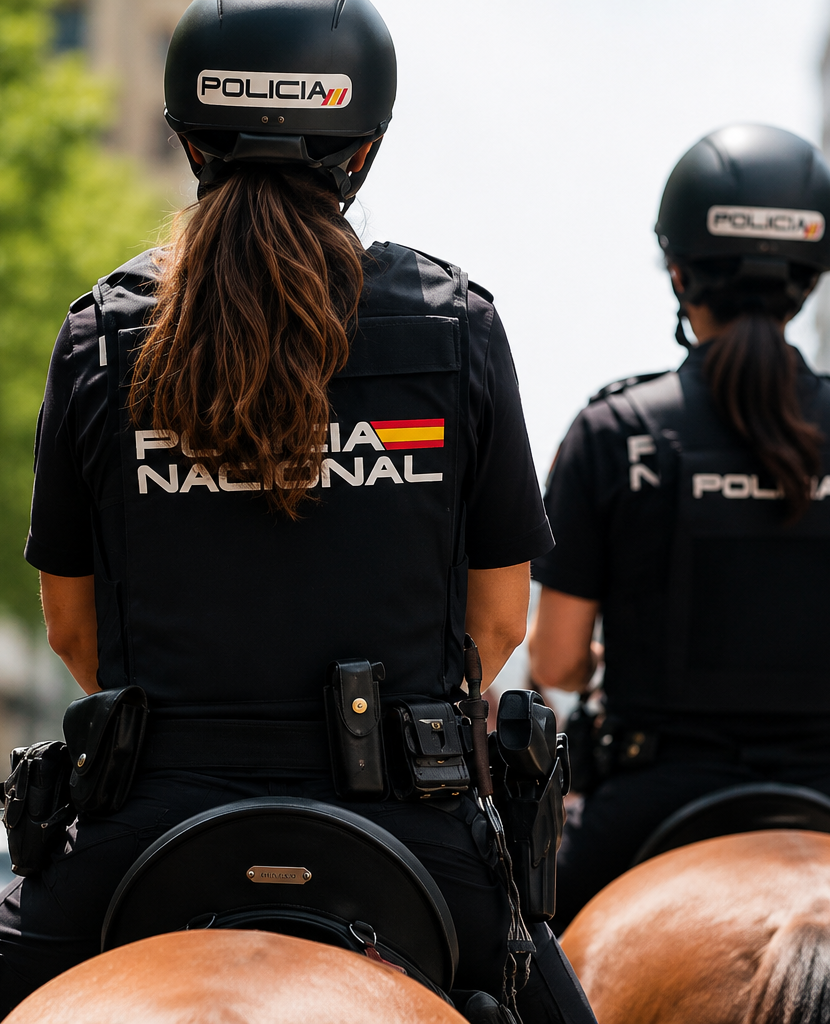
National Police: The Most Important Force for Foreign Residents
For most expats and foreign residents, the National Police (Policía Nacional) is the authority they will deal with most frequently.
Its responsibilities include:
• NIE numbers
• Residency permits
• Identity cards and passports
• Border control at airports
• Criminal investigations in urban areas
Anyone relocating to Spain or applying for official documentation will eventually need to visit a National Police office.
GEO: Spain’s Elite Tactical Unit
The Grupo Especial de Operaciones (GEO) is widely regarded as one of Europe’s leading special operations units.
It is deployed in situations such as:
• Hostage rescues
• Counter-terrorism operations
• High-risk tactical interventions
• Arrests of dangerous suspects
GEO is often compared to Germany’s GSG 9 or Britain’s SAS support units.
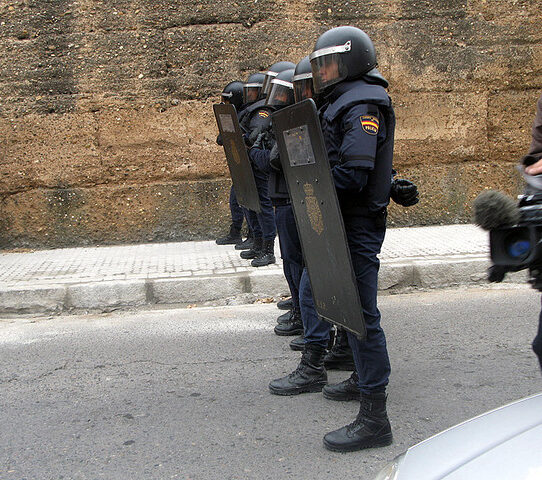
UIP: Spain’s Riot Police
The Unidad de Intervención Policial (UIP) is the National Police’s riot and public order unit.
Its officers are commonly deployed at:
• Demonstrations and protests
• Major public events
• Football matches
• Civil disturbances
They are the units most often seen managing large crowds and public security operations.
UPR: Rapid Response in Spanish Cities
The Unidad de Prevención y Reacción (UPR) supports regular police patrols in urban areas and responds quickly to incidents that require an enhanced police presence.
Local Police: Your First Point of Contact in Town
Every municipality in Spain operates its own Local Police force (Policía Local).
Their responsibilities typically include:
• Urban traffic control
• Parking enforcement
• Noise complaints
• Municipal regulations
• Local markets and public events
• Minor public safety issues
For neighbourhood disputes, noise problems or parking issues, the Local Police are usually the appropriate authority to contact.
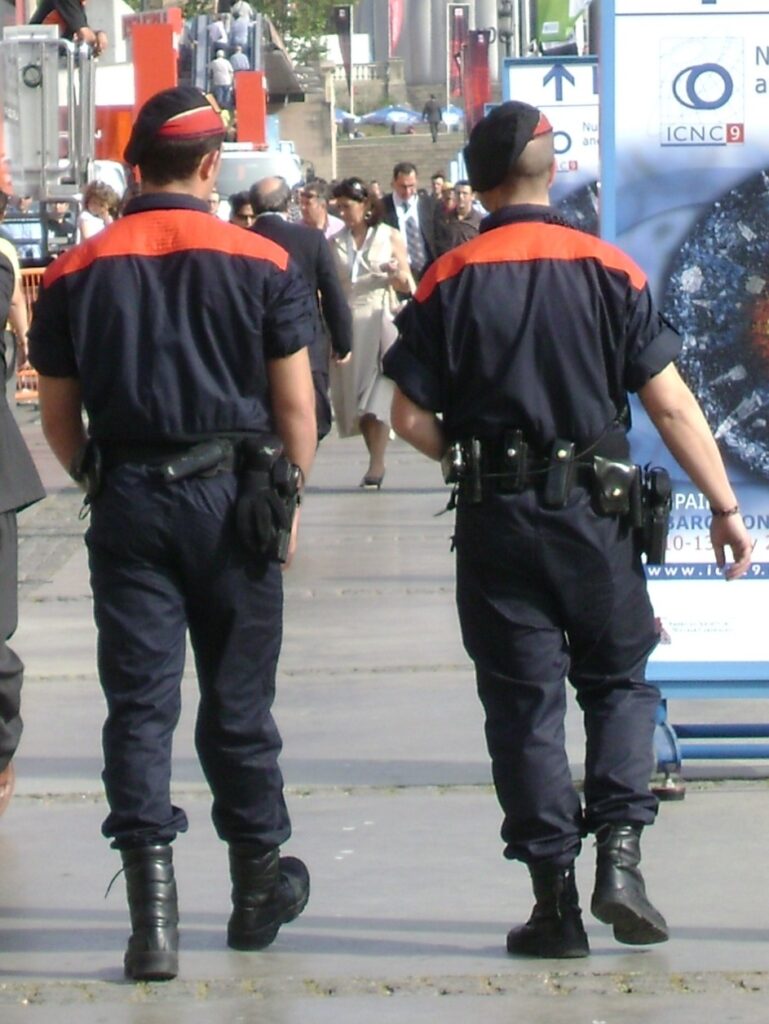
Mossos d’Esquadra: Catalonia’s Regional Police Force
In Catalonia, many responsibilities carried out elsewhere by the Guardia Civil or National Police fall under the authority of the Mossos d’Esquadra.
Their duties include:
• Public safety
• Criminal investigations
• Traffic enforcement
• Emergency response
Ertzaintza: The Basque Country’s Police Force
The Ertzaintza is the autonomous police service of the Basque Country.
Its responsibilities include:
• Public security
• Traffic control
• Criminal investigations
• Protection of public institutions
Policía Foral: Navarra’s Own Police Service
Navarra also operates its own regional police force, the Policía Foral, which performs many of the same functions as the Mossos d’Esquadra and the Ertzaintza.
Who Should You Call?
For newcomers to Spain, the system can be simplified as follows:
National Police
• NIE applications
• Residency permits
• Official documents
• Crime reports in urban areas
Guardia Civil
• Traffic accidents on highways and rural roads
• Rural policing
• Environmental and wildlife issues
Local Police
• City traffic issues
• Noise complaints
• Local municipal matters
The Most Important Number in Spain: 112
If you are ever unsure which authority to contact, remember one number:
112
Spain’s emergency coordination centre will automatically notify the appropriate service:
• Police
• Fire brigade
• Ambulance services
• Civil protection authorities
Calls are free of charge and, in many regions, operators can assist callers in English, German and several other languages.
A System of Many Uniforms – But Clear Responsibilities
At first glance, Spain’s policing system may seem complex. In reality, the various forces have clearly defined responsibilities and work closely together.
For expats, foreign residents and visitors, understanding the differences between the Guardia Civil, National Police and Local Police can make navigating daily life in Spain considerably easier. Once you know what organisations such as UCO, GEO or SEPRONA actually do, the abbreviations that frequently appear in the news suddenly become much easier to understand.
Spain remains one of the safest countries in Europe, supported by a well-organised network of national, regional and local law enforcement agencies.