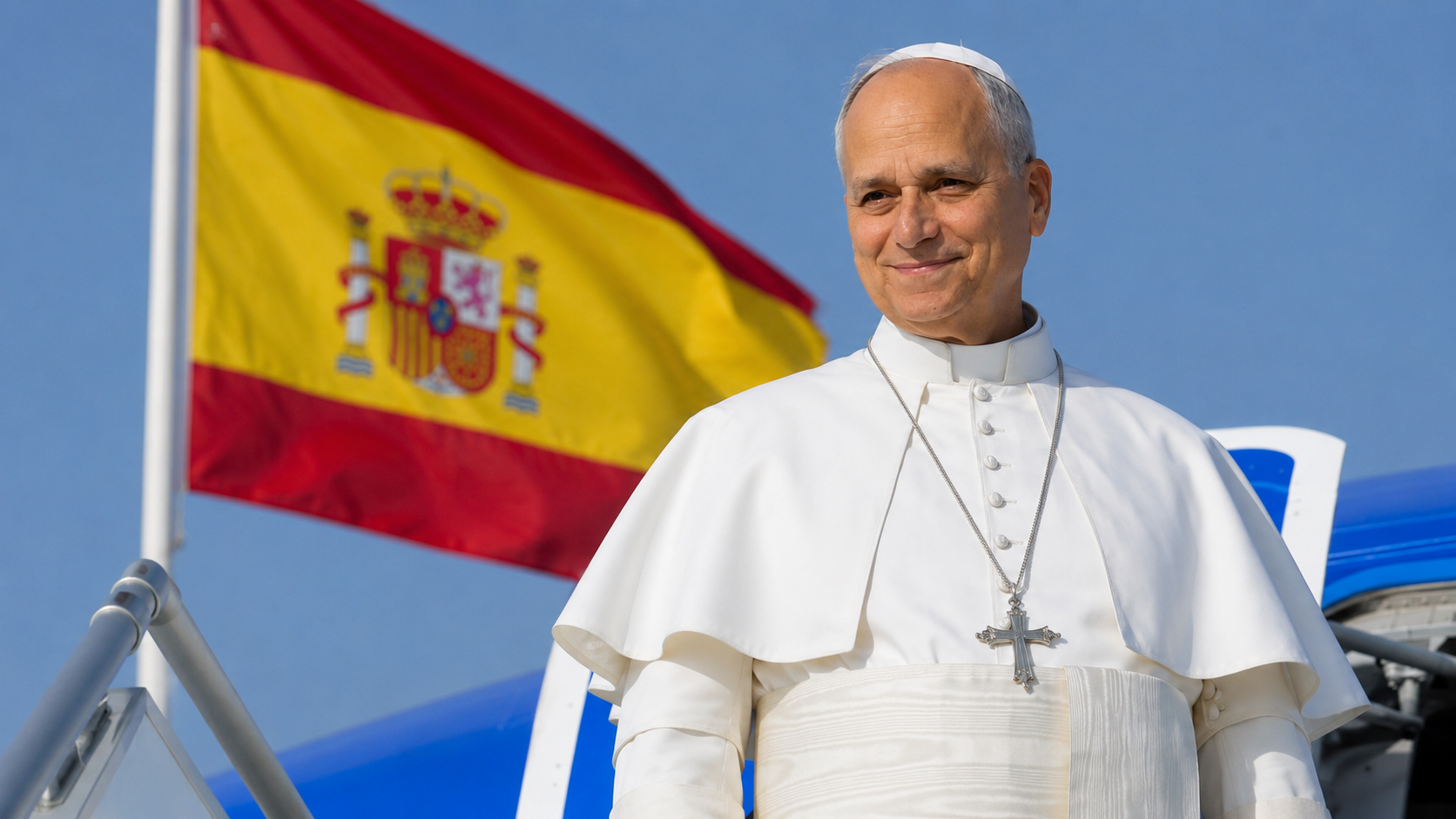
As part of his visit to Spain, Pope Leo XIV has made a strong statement of solidarity with migrants at the port of Arguineguín in the Canary Islands. The location has long been considered one of the main arrival points for people travelling along the dangerous Atlantic route from West Africa to Europe.
Spain Expat Press Editorial Team
by Marlon Gallego Bosbach
The Pope was received there by representatives of the Church, aid organisations, and local authorities. Numerous migrants and volunteers also attended the event. The visit was marked by moments of remembrance and prayer for the victims of migration across the Atlantic.
Arguineguín as a symbol of the migration route
The port of Arguineguín in Gran Canaria has, in recent years, become a symbolic location in Europe’s migration debate. Thousands of people arrive on the Canary Islands every year in small boats, many of them after a dangerous crossing often accompanied by dramatic rescue operations.
At times, the port was internationally referred to as the “Muelle de la vergüenza” (“dock of shame”), after makeshift reception centres were set up there under difficult conditions. Today, it is a central location for the initial reception and registration of migrants who have survived the Atlantic route.
Message of humanity and dignity
In his address, Pope Leo XIV emphasised the universal importance of human dignity. He stated that it must not depend on origin or nationality. Migrants, the Pope said, should not be reduced to numbers, but must be recognised as individuals with unique personal stories and circumstances.
He also expressed his gratitude to the numerous organisations and emergency services working in the Canary Islands to provide care and support for refugees. In particular, he highlighted church-based and humanitarian organisations that provide daily assistance at Europe’s border.
Commemoration of the victims of the Atlantic route
A central moment of the visit was a silent prayer for those who did not survive the crossing of the Atlantic. The so-called Atlantic route is considered one of the most dangerous migration routes in the world, with repeatedly documented deaths at sea.
As part of the ceremony, a symbolic memorial site was also visited, including a cross sculpture made from driftwood from a stranded migrant boat. The Pope paused there in silent prayer and reflected on the humanitarian dimension of migration.
Appeal to politics and society
Leo XIV also used his visit to issue a clear appeal to the international community. He called for greater efforts to create safe and legal migration routes, as well as closer cooperation between countries of origin, transit, and destination.
In addition, he spoke out firmly against the exploitation of migration as a business and warned of criminal networks that take advantage of the vulnerability of many people. He also stressed that the integration of migrants in Europe must be placed more firmly at the centre of political decision-making.
The Canary Islands remain under continued migration pressure
The Canary Islands continue to be an important arrival point for migrants from West Africa. Authorities and aid organisations regularly report new arrivals in small boats, while thousands of people are simultaneously reported missing at sea or do not survive the crossing.
The Pope’s visit once again draws international attention to the situation on the ground, which requires both humanitarian assistance and political solutions at the European level.
Significance of the visit
The visit of Pope Leo XIV is being interpreted as a strong moral signal. While concrete political decisions were not the focus, the emphasis was clearly placed on the human dimension of migration.
For many observers, the visit is seen as an attempt to shift the migration debate in Europe more strongly towards humanity and responsibility, while also making the work of aid workers on the ground more visible.