A tragic love story that became legend
Spain Press Editorial Team
On Valentine’s Day, Europe traditionally looks to Verona. Romeo and Juliet have long embodied the ideal of tragic love. Yet Spain, too, has its own enduring love story — one that is just as old, just as painful and deeply rooted in historical reality: the Lovers of Teruel.
This is not a Spanish version of Shakespeare. It is a distinctly Iberian story, shaped by honour, duty and time — and that is precisely why it has survived for centuries.
Love in 13th-century Spain (Castilien)
The story unfolds in 13th-century Teruel, at a time when marriage was rarely a matter of personal choice. Love mattered, but social status, family honour and economic security mattered more.
Diego de Marcilla and Isabel de Segura were in love, but Diego lacked the fortune required to marry her. Isabel’s family refused the match. Diego asked for five years to seek wealth and prestige elsewhere. Isabel agreed to wait.
And she kept her word.
A tragedy without rebellion
Unlike Romeo and Juliet, there is no youthful defiance here. No escape plan. No revolt against family authority.
Diego leaves.
Isabel waits.
Time passes.
Diego returns — too late.
Isabel has been married off to another man, not out of love, but obligation. When Diego asks her for a final kiss, she refuses — not because she no longer loves him, but because her sense of honour forbids it. Diego dies that very night.
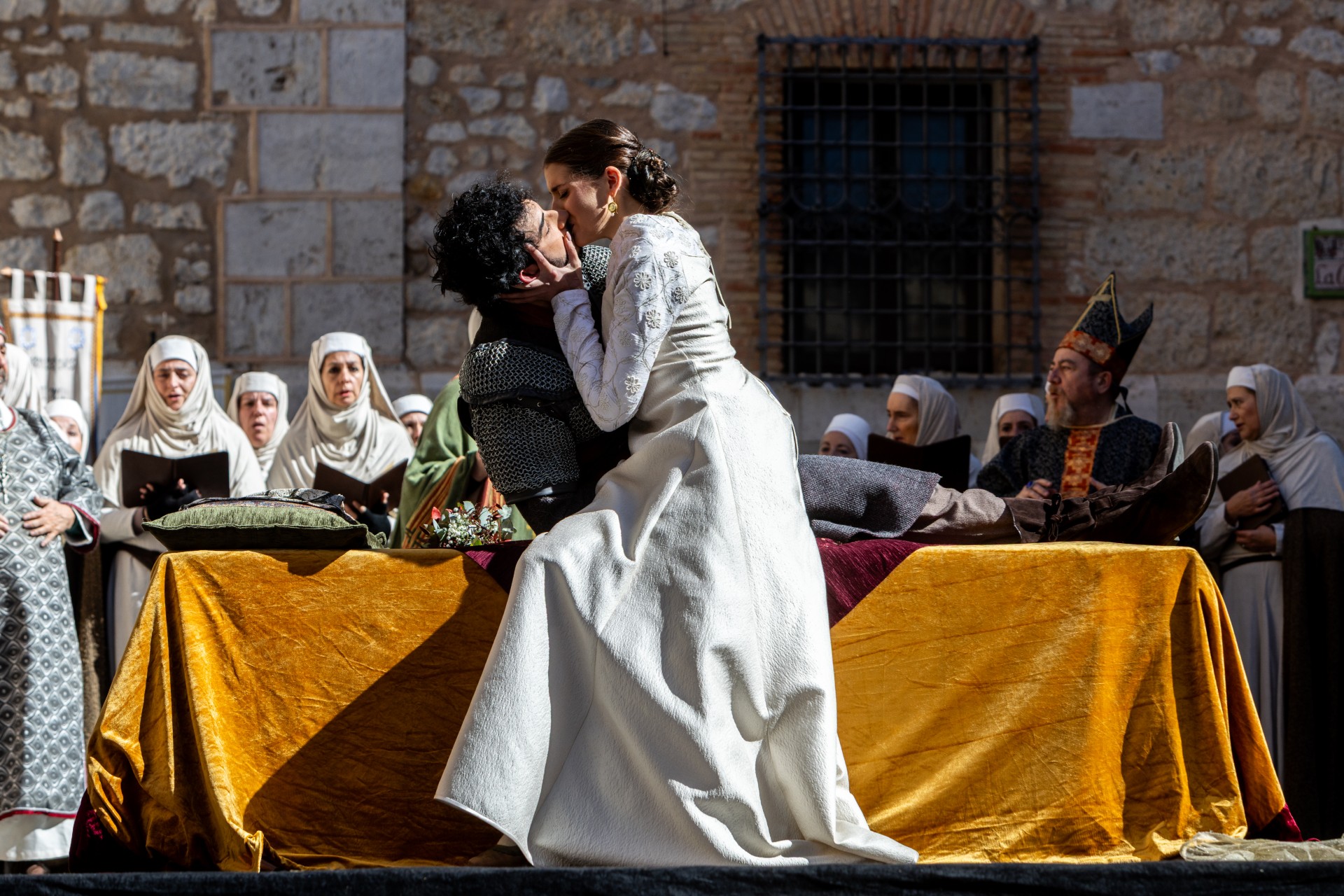
The following day, at his funeral, Isabel does what she could not do in life. She kisses him — and dies beside him.
That is the moment when history turns into legend.
Spain and Shakespeare: two visions of love
The comparison with Romeo and Juliet is inevitable, yet the contrast is revealing:
-
In Verona, love rebels
-
In Teruel, love endures in silence
-
Shakespeare tells a story of impulsive passion
-
Teruel tells a story of patience, sacrifice and restraint
For many Spaniards, this makes the Lovers of Teruel even more tragic — and more human.
A place of memory
Today, Diego and Isabel rest in the Mausoleum of the Lovers of Teruel, inside the Church of San Pedro. Their alabaster effigies lie side by side, their hands extended towards one another — almost touching, but never quite meeting.
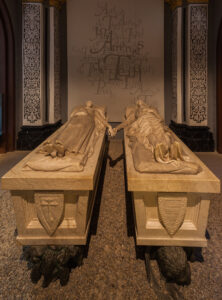
It is a deliberate detail.
They never touched in life.
And even in death, distance remains.
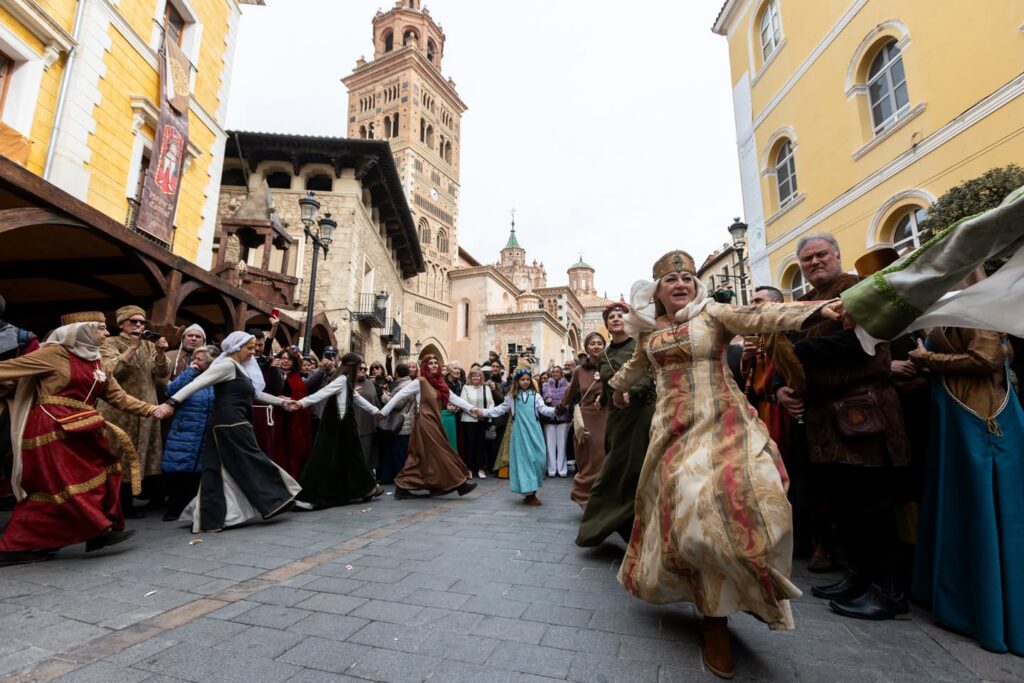
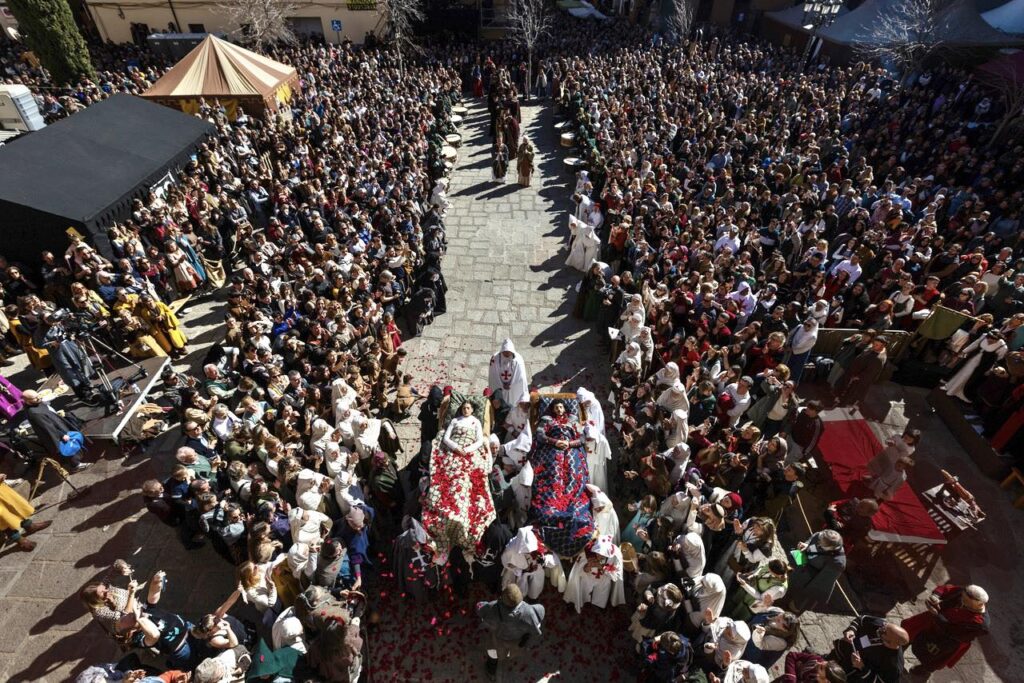
Every February, usually around 14 February, the city reenacts the story during Las Bodas de Isabel de Segura. Teruel transforms into a medieval stage, with period costumes, street performances and theatrical reconstructions.Far from a tourist gimmick, the event is one of Spain’s most carefully curated historical reenactments, attracting thousands of visitors and involving much of the local population.
Why the story still matters
The Lovers of Teruel speak to universal themes:
-
waiting
-
loss
-
missed timing and the weight of social rules.
-
is love enough?
In a world that often celebrates love as instant and victorious, this story offers a different perspective — one in which love does not conquer everything, but remains dignified, loyal and unforgettable.
A Spanish Love Legend
Italy has Romeo and Juliet. Spain has Diego and Isabel.
Their love had no happy ending.
But it achieved something rarer: immortality.