Spain is approaching 20,000 centenarians and ranks among the European countries where people are particularly likely to reach 100. What might sound like a demographic curiosity is, in fact, a glimpse of a profound social transformation. If growing numbers of people live into their 90s and beyond, it will change not only healthcare and social care, but our cities, homes, families, working lives, pensions – and perhaps our very idea of what it means to be old.
Spain Expat Press Editorial Team
Some statistics appear little more than curiosities until we stop to consider what they might mean for the society in which we will live.
Spain’s centenarians are a case in point.
According to the latest available estimate based on population data from Spain’s National Statistics Institute (INE), 18,751 people aged 100 or over were living in Spain in the first half of 2026.
The gender divide is striking: 15,234 were women and just 3,517 were men.
There is, however, an important qualification to the increasingly quoted figure of 20,000. Spanish medical organisations are already referring to more than 20,000 centenarians, including the Spanish Society of General and Family Physicians (SEMG) in connection with its research into extreme longevity. But according to the latest statistical series based on INE data, Spain has not yet officially crossed that symbolic threshold.
Given the speed of recent change, it may only be a matter of time.
A 75% rise in less than a decade
The remarkable part of the story is not simply how many centenarians Spain has, but how quickly their numbers have grown.
In the second half of 2016, Spain had 10,847 people aged 100 or over. By the second half of 2025, the figure had risen to about 19,041.
That represents an increase of roughly 75% in less than a decade.
Reaching 100 remains an extraordinary achievement, of course. But it is already considerably less unusual than it was for our parents’ or grandparents’ generations. If current demographic trends continue, our perception of extreme old age may change profoundly over the coming decades.
Numbers alone can be misleading
Comparing the raw number of centenarians from one country with another tells us relatively little.
The United States has a population of more than 340 million. Spain has fewer than 50 million. A much larger country can naturally have many more centenarians simply because it has many more people.
A more revealing question is this: how many centenarians are there for every 100,000 inhabitants?
On that measure, Spain becomes particularly interesting.
The Spanish figure for the first half of 2026 works out at approximately 38 centenarians for every 100,000 people. In other words, about 0.038% of Spain’s entire population has already celebrated its 100th birthday.
That may sound tiny, but internationally it is significant.
The 2020 US census counted 80,139 centenarians. Because of the country’s vastly larger population, that represented about 20 centenarians per 100,000 people.
Proportionally, Spain has almost twice as many.
Italy, another European country associated with exceptional longevity, had about 23,500 centenarians at the beginning of 2025, equivalent to roughly 40 per 100,000 inhabitants.
France had already reached around 30,000 centenarians in 2023, or approximately 44 per 100,000.
Spain is therefore not unique. But alongside France and Italy, it belongs to a group of European societies in which extreme longevity has become remarkably common.
Japan remains in a league of its own
Then there is Japan.
In September 2026, the country recorded 107,677 people aged 100 or over.
Even more extraordinary than the headline number is what it represents relative to Japan’s population: approximately 87.5 centenarians per 100,000 inhabitants – more than twice the Spanish rate.
Japan remains one of the world’s great laboratories of longevity.
Yet the comparison also illustrates why Spain’s experience matters. With fewer than 50 million inhabitants, it is approaching 20,000 centenarians and is firmly among the countries where extreme longevity is becoming comparatively common.
On one revealing measure, Spain ranks second in Europe
There is another way of comparing longevity that may be more revealing still.
France’s national statistics institute, INSEE, examined how many people who were already 60 years old in 1980 survived another four decades to reach their 100th birthday.
The approach has an important advantage: it largely removes the distortion created by comparing countries of vastly different sizes.
The result was striking.
France ranked first among the European countries examined.
Spain came second.
For every 1,000 people who were 60 in 1980, 21 survived to 100 in France. In Spain, the figure was 16.
Italy recorded 14, Switzerland and Portugal 12, Sweden and Norway 10, and the UK nine.
On this particular measure, Spain is not simply a country with a large elderly population. It is one of Europe’s centres of exceptional longevity.
So why Spain?
That leads to perhaps the most fascinating question of all: why do comparatively so many people in Spain reach such extraordinary ages?
There is no simple answer, and certainly no Spanish secret formula for reaching 100.
Researchers increasingly believe that extreme longevity results from a complicated interaction between genetics, diet, physical activity, environment, healthcare and social circumstances.
Spain happens to combine many of those ingredients.
Generations of Spaniards grew up eating diets rich in fresh produce, pulses, vegetables, fish, fruit and olive oil. Many of those now celebrating their 100th birthdays also spent decades being physically active without ever thinking of what they were doing as “exercise”.
They walked extensively, carried out physical work and incorporated movement naturally into everyday life, long before gyms, fitness trackers or health apps became part of modern culture.
Spain has also traditionally maintained strong family and social networks. Regular contact with relatives, friends and neighbours, participation in community life and lower levels of social isolation may all play a role.
At the same time, improvements in healthcare mean people now survive illnesses that would have killed members of previous generations.
Modern longevity research is therefore less interested in finding a single miracle ingredient than in understanding how diet, exercise, preventive medicine, healthcare, social relationships and psychological wellbeing interact over an entire lifetime.
Increasingly, researchers are also asking whether having a sense of purpose – a reason to remain engaged with life – may matter more than we once realised.
Galicia: Spain’s longevity laboratory
Within Spain, one region has become particularly interesting to researchers: Galicia.
More than 2,000 centenarians live there, with the provinces of Lugo and Ourense showing especially notable concentrations of people reaching extreme old age.
Spanish researchers are increasingly studying what those who live exceptionally long lives have in common, particularly those who remain relatively healthy and independent.
Ourense, in particular, is emerging as an important area for longevity research.
Studies of healthy centenarians repeatedly point towards familiar factors: a balanced traditional diet, physical activity embedded in daily life, relatively low tobacco and alcohol consumption, close family and social relationships, and a lower burden of certain chronic diseases.
The scientific question is therefore changing.
It is no longer simply a matter of asking why some people live to 100.
The more important question is why some reach 100 and remain remarkably healthy while doing so.
Living longer is not enough
This distinction may ultimately prove more important than the number of centenarians itself.
The success of an ageing society cannot simply be measured by birthdays. There is little point in extending human life indefinitely if many of those additional years are dominated by serious illness and complete dependence.
The real challenge is to extend healthy life expectancy.
People need not merely to survive into their 90s and beyond, but to remain capable for as long as possible of walking, thinking, communicating, maintaining relationships and living independently.
The longevity revolution is therefore about more than adding years to life. It is about adding life to those extra years.
And that could change society more profoundly than we currently imagine.
When does old age actually begin?
Even our understanding of what constitutes “old age” may have to change.
A few decades from now, it may seem increasingly strange to describe someone as old simply because they have turned 65.
What does it mean to be 70 if you might reasonably have another 20 or 25 years ahead of you? What does retirement at 65 mean if you live until 95?
That could amount to 30 years of life after retirement.
It is not simply a short final chapter. It is almost another adult lifetime.
A 70-year-old can travel, study, work part-time, start a business, exercise, help raise grandchildren, fall in love or begin an entirely new project.
Society may therefore have to become far better at distinguishing chronological age from a person’s actual physical and cognitive condition.
Our cities were not designed for this
One of the most visible consequences of longevity will be the way we design our towns and cities.
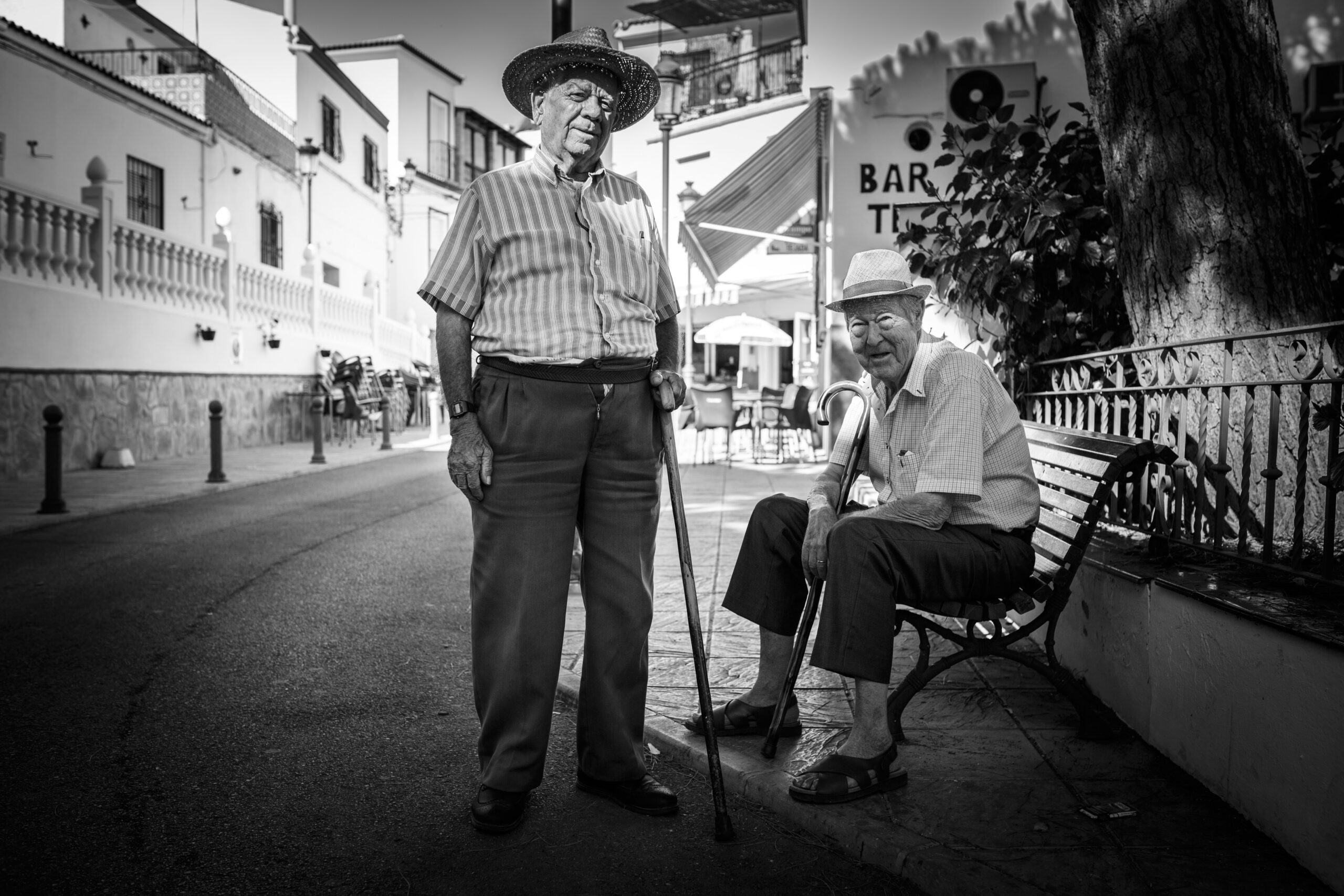
What should a city look like when a growing proportion of its residents are 70, 80, 90 or even 100 – and want to remain independent?
Accessible pavements, places to sit and rest, easy-to-use public transport, lifts, pedestrian crossings that allow enough time to cross safely, nearby medical facilities, local shops, green spaces and good lighting will all become increasingly important.
Above all, people will need neighbourhoods in which they can continue to conduct their daily lives without requiring a car – or another person’s assistance – for every basic task.
The walkable city will no longer be merely an environmental or urban-planning ideal. It will increasingly become a matter of public health.
Our homes will have to change too
The same applies to housing.
Most people want to remain in their own homes, or at least in familiar surroundings, for as long as possible. An ageing society will therefore have to adapt a substantial part of its existing housing stock.
Step-free showers, wider doors, lifts, non-slip floors, smart-home technology, automatic lighting, fall-detection sensors, advanced emergency systems and connected medical devices could eventually become commonplace.
New forms of housing are also likely to expand: communities designed for independent older people, intergenerational housing and buildings where residents retain their own private homes while sharing certain services or communal spaces.
Longevity will not simply reshape medicine and social care. It will become an increasingly important force in the property market.
Who will look after us?
There is, however, a much harder side to the longevity revolution.
Not everyone will reach 90 or 100 in good health. An older population will inevitably mean greater demand for care among people living with chronic illnesses, frailty, dementia or physical dependence.
Spain will require far more professionals working in geriatrics, nursing, physiotherapy, rehabilitation and home care.
At the same time, the traditional family structure is changing. Spaniards are having fewer children, families are smaller, and adult children increasingly live in different cities or countries. Women, who historically carried much of the unpaid responsibility for caring for elderly relatives, are now fully integrated into the workforce.
A model in which families are expected to shoulder most of the responsibility for caring for older relatives will therefore become increasingly difficult to sustain.
Who will care for us when we are 90 or 100? may become one of the defining social questions of the coming decades.
A 100-year life will change work and retirement
Our relationship with work will also have to evolve.
A society in which millions of people can expect to live into their 90s cannot be organised in exactly the same way as one in which life expectancy was substantially lower.
The future may not consist of working full-time until a particular birthday and then leaving employment completely the following day. More gradual transitions could become increasingly common: part-time work, consultancy, combining employment with retirement income, or even beginning new professional careers after 60.
Inevitably, this also raises questions about the long-term financing of pensions.
People aged 65 and over already account for around 21% of Spain’s population. Under the INE’s long-term demographic scenarios, their share could rise to approximately 31% in the coming decades.
That would not be a minor demographic adjustment. It would amount to a fundamental transformation of Spanish society.
Even inheritance will come later
There is another consequence of longevity that receives surprisingly little attention.
If parents live until 95 or 100, many of their children will not inherit until they themselves are 65 or 70.
That could weaken the traditional role of inheritance as money that helps the next generation buy its first home, start a family or establish a business. Wealth may increasingly pass from one generation to another much later in life.
Family structures themselves will change too.
Four generations alive simultaneously will become increasingly common, while even five living generations within one family may eventually cease to seem extraordinary.
Spain’s centenarians may only be the beginning
A decade ago, Spain had around 10,800 centenarians. Today, the latest statistical estimates put the number at almost 19,000, while medical organisations are already speaking of more than 20,000.
And the number is expected to rise dramatically. Some projections suggest that Spain could have more than 100,000 centenarians by 2050.
The men and women celebrating their 100th birthdays today should therefore not be viewed simply as remarkable survivors from another era. They may also offer us an early glimpse of the society in which many of us will eventually live.
Spain is already among the European countries where reaching 100 is comparatively common. Having succeeded in extending human life, the more difficult task now begins: adapting our cities and homes, our health and care systems, our working lives, our pensions and our families to a society in which extreme old age will become increasingly ordinary.
That will probably require us to rethink ageing itself.
The defining question of the coming decades may no longer simply be:
How long can we live?
It may be something far more important:
How do we want to live all those extra years?
And perhaps Spain’s almost 20,000 centenarians already have something to teach us about the answer.