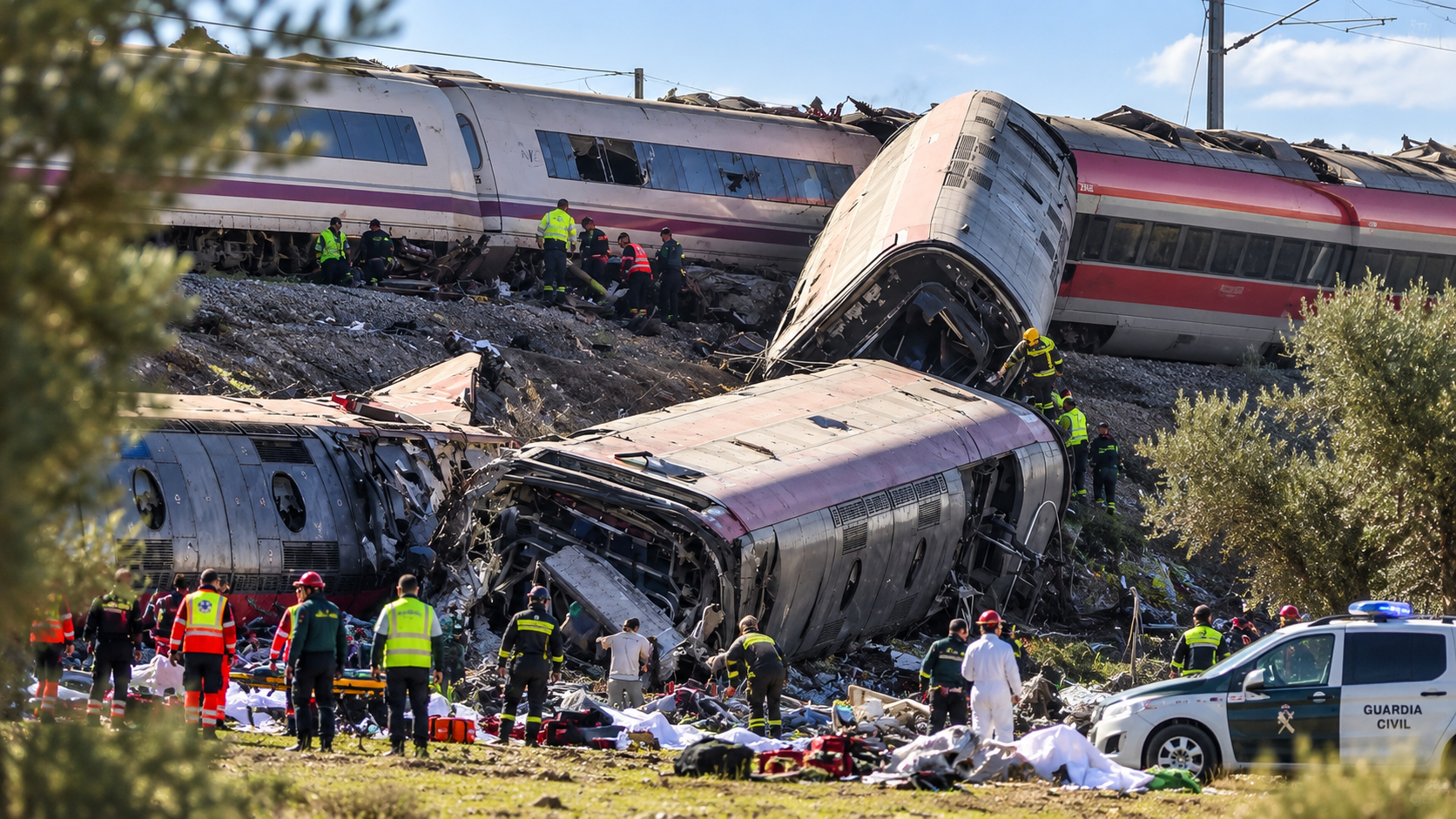
The investigation into the devastating rail disaster near Urda, in the province of Toledo, is raising serious questions about the safety of Spain’s high-speed rail network. Three computers dating back to the early 1990s are reported to have been at the centre of the technical failure that triggered the chain of events leading to Wednesday’s collision between two high-speed trains. More troubling still, an upgrade of the signalling infrastructure had already been commissioned in 2021, under a contract worth approximately €94 million. The revelations are intensifying scrutiny of Transport Minister Óscar Puente’s emphasis on human error as a principal factor in the disaster.
Spain Expat Press Editorial Team
Three Computers from the 1990s at the Centre of the Disaster
It is a revelation that raises profound questions in the aftermath of one of Spain’s worst railway tragedies in recent history.
The technical malfunction that disabled the train control system on a section of the Madrid–Seville high-speed railway on Wednesday morning reportedly originated in a communication failure involving three computers.
According to information provided by Spain’s Ministry of Transport, the malfunction affected the LZB automatic train protection system, which has been in operation since the country’s first high-speed railway line opened in 1992.
Investigations published by the Spanish newspaper 20minutos indicate that the computers involved date back to the early 1990s, making them more than three decades old.
At approximately 8.30 am, the LZB system failed in the vicinity of Urda railway station, in the province of Toledo.
What initially appeared to be a technical disruption rapidly developed into a catastrophic sequence of events.
A Modernisation Programme Commissioned Five Years Earlier
Perhaps the most troubling aspect of the emerging information is that the replacement of the ageing signalling infrastructure had been planned for years.
In September 2021, Spain’s railway infrastructure manager, Adif, awarded a major contract to modernise the Madrid–Seville high-speed line.
Worth approximately €94 million, the principal contract covered the renewal of signalling equipment, train protection systems and telecommunications infrastructure.
A central element of the programme was the introduction of the European Rail Traffic Management System (ERTMS), intended to replace the existing LZB technology.
The contract specified an implementation period of 52 months, placing the original completion timetable around the beginning of 2026.
However, at the time of Wednesday’s accident, the new system had not yet entered regular operation on the affected section of track.
This raises an unavoidable question: why had the modernisation of one of Spain’s most important high-speed railway connections not been completed?
A Critical Decision Taken in Madrid
Following the failure of the LZB system, responsibility for managing the affected train movements fell to Adif’s railway control centre at Madrid’s Atocha station.
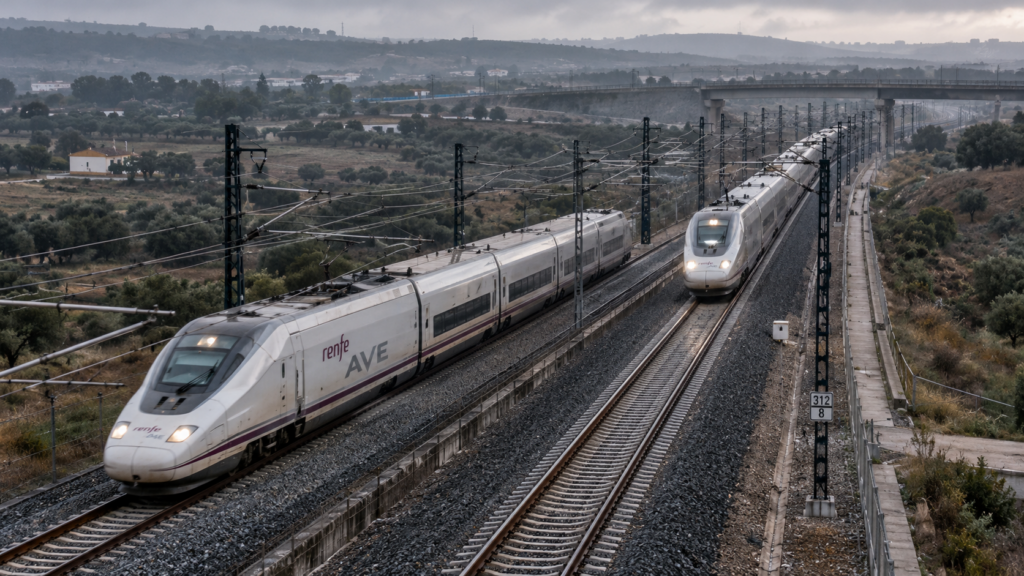
During the subsequent disruption, a Renfe AVE high-speed train was authorised to continue its journey.
According to information released so far, the driver was instructed to proceed at normal operating speed.
The problem was that another high-speed train, operated by Iryo, had come to a standstill further along the same section of railway as a result of the technical failure.
Although the control centre had been informed that the train ahead was stationary, the earlier authorisation for the following AVE service was reportedly not withdrawn in time.
The two trains subsequently collided.
The circumstances have placed a fundamental question at the centre of the investigation: how could a train be authorised to proceed into a potentially dangerous situation after the failure of an automatic safety system?
Transport Minister Points to Human Error
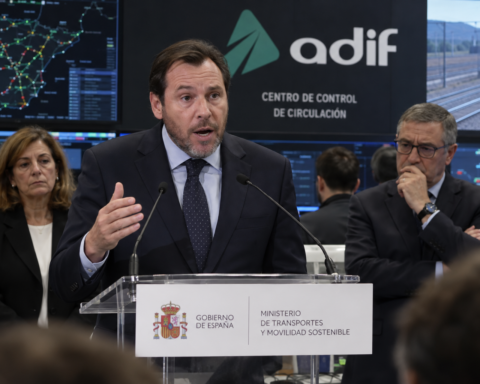
Spain’s Transport Minister, Óscar Puente, has described the decision to allow the AVE train to continue at normal speed as inexplicable.
His initial account has placed considerable emphasis on an apparent error in the management of train movements.
However, this interpretation has prompted criticism from railway unions and industry specialists.
While the decision taken by the control centre remains a central issue, representatives of the railway sector have warned against attributing responsibility exclusively to an individual employee.
The technical malfunction, they argue, was the starting point of the entire sequence of events.
Had the signalling system remained operational, the exceptional decisions required of the control centre might never have arisen.
The investigation must therefore establish not only whether an incorrect instruction was issued, but also why the wider technical and operational safety arrangements failed to prevent the resulting danger.
Was the Ageing Technology Still Fit for Purpose?
An important distinction needs to be made.
The LZB train protection system, originally developed in Germany, continues to be regarded by railway specialists as a reliable and effective safety technology.
Its age alone does not necessarily mean that it is unsafe or unsuitable for modern railway operations.
The more significant questions concern the computer infrastructure supporting the system, including maintenance requirements, the availability of replacement components and long-term operational reliability.
While the newer European ERTMS system has been introduced across numerous sections of Spain’s high-speed rail network, the Madrid–Seville route has continued to rely on the older LZB technology.
Whether the planned modernisation would have prevented Wednesday’s collision remains impossible to establish at this stage.
Nevertheless, the fact that the infrastructure upgrade had been commissioned years earlier is likely to become an important element of the investigation.
Railway Unions Demand a Wider Investigation
Attention is also turning to the working conditions, training and operational procedures governing staff at railway control centres.
According to Spanish media reports, the railway union Sindicato de Circulación Ferroviario intends to call for a review of the working conditions and professional training of employees responsible for managing train movements.
Particular attention is expected to focus on how control centre personnel respond to exceptional operating circumstances, especially when automated protection systems fail and decisions must be taken under considerable pressure.
Investigators will need to determine whether established safety procedures were followed, whether operational safeguards were adequate and what role the condition of the technical infrastructure may have played.
Recorded communications between train drivers and the control centre are also expected to provide crucial evidence.
Another Disaster on the Madrid–Andalusia High-Speed Route
The tragedy near Urda has been particularly devastating for Spain because it follows another serious railway accident earlier this year.
In January 2026, a major rail disaster occurred near Adamuz, in the province of Córdoba, on the high-speed connection between Madrid and Andalusia.
Just months later, the safety of this strategically important railway corridor is once again at the centre of national attention.
Spain operates one of the largest high-speed rail networks in the world.
For decades, the AVE has represented technological progress, modern infrastructure and the country’s ambition to lead Europe in high-speed rail transport.
The latest events have placed that reputation under intense scrutiny.
The Question of Responsibility Remains Unanswered
The investigation into the Urda disaster is still at an early stage.
No final determination has yet been made regarding the precise combination of technical, operational or human factors responsible for the collision.
Nevertheless, the information emerging so far suggests that the inquiry will need to extend well beyond the actions of a single railway employee.
Why were computers dating back to the early 1990s still operating as part of the signalling infrastructure?
Why had the modernisation programme commissioned in 2021 not been fully implemented?
Could additional safeguards have prevented a collision even if an incorrect instruction had been issued?
And, ultimately, who bears responsibility for allowing a technical malfunction to develop into a disaster of such magnitude?
These questions are likely to dominate not only the technical investigation but also the wider political debate surrounding Spain’s railway infrastructure.
In a railway disaster of this magnitude, identifying the final mistake in a chain of events is not enough. The crucial question is why the wider safety system failed to prevent that mistake from becoming a catastrophe.