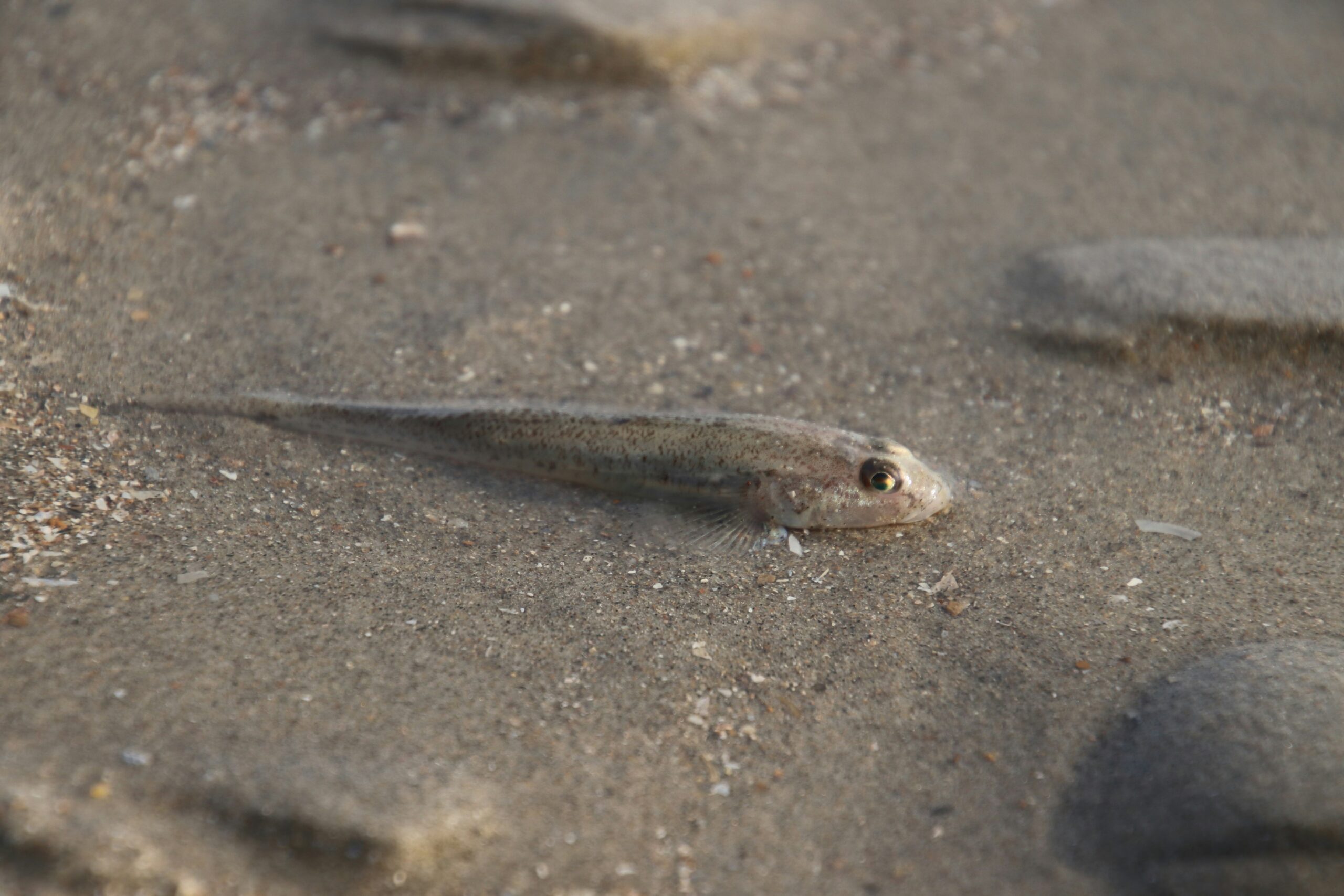
At a beach in the Andalusian province of Huelva, a weever fish (commonly known as the lesser weever) has once again been spotted – an inconspicuous marine creature that lives buried in the sand and is considered one of the most common causes of painful stings on European beaches. The sighting is raising increased concern among swimmers and lifeguards at the start of the summer season.
Spain Expat Press Editorial Team
by Marlon Gallego Bosbach
Well camouflaged – but highly venomous
Weever fish are small bottom-dwelling fish that bury themselves almost completely in the sand during the day. Only their eyes and dorsal spines protrude slightly. This camouflage is precisely what makes them so dangerous: beachgoers often step on them by accident while walking in shallow water.
The fish have venomous spines along their dorsal fin, which can cause a painful sting upon contact. Those affected typically report intense, stabbing pain that spreads quickly and can last for several hours. In addition, swelling, nausea, or dizziness often occur.
Typical summer phenomenon along the coast
Weever fish are not a new or unusual phenomenon along the Andalusian coast. Sightings are particularly common between June and October, when water temperatures rise and more beachgoers visit the shores.
The shallow, sandy stretches of the Costa de la Luz are considered a typical habitat for the species. However, experts stress that this is not an “invasion”, but rather a seasonal occurrence that returns every year.
Why the risk is now increasing
With the start of the summer season, not only does the number of beachgoers increase, but so does the risk of incidents. Many holidaymakers are unaware of the danger, as the fish remains virtually invisible beneath the sand.
Lifeguards therefore regularly warn against walking barefoot in shallow water. Children in particular, as well as people who spend long periods playing or wading in the surf, are considered especially at risk.
What to do in an emergency?
If a sting occurs, experts recommend acting quickly. The affected area should immediately be immersed in hot water at a temperature of around 40 to 45 degrees Celsius, as the heat helps to neutralise the venom and significantly relieve the pain. This process can be repeated for several minutes to up to an hour.
If symptoms are severe or there is any uncertainty, it is advisable to seek medical attention immediately. Cold or ice should be strictly avoided, as they can in many cases worsen the pain.
A simple preventive measure
The most important protective measure remains simple: wearing beach shoes. They prevent the venomous dorsal spines from reaching the skin in the first place. This precaution is regularly recommended by local authorities, especially on sandy beaches with calm waters.