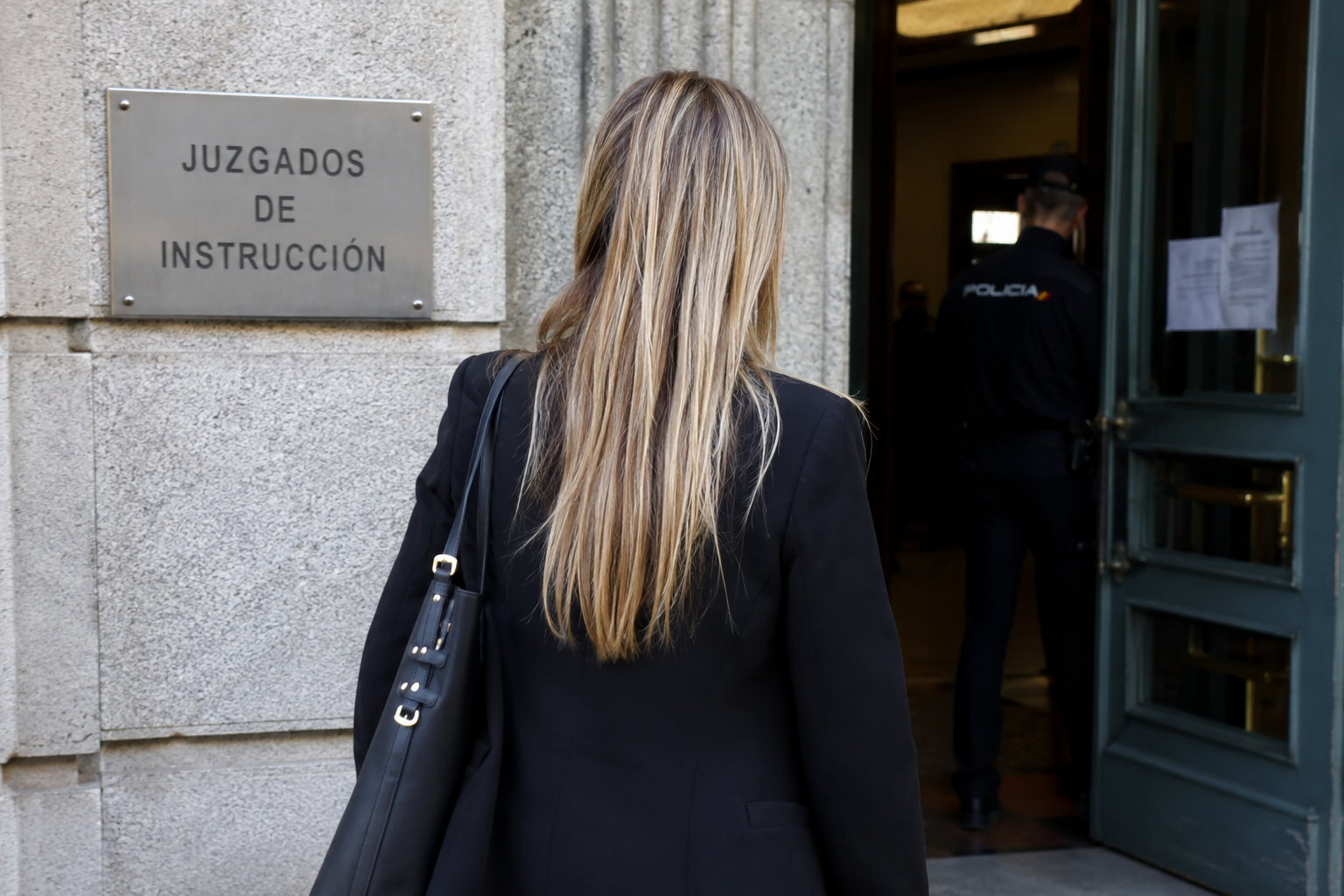
The decision by Judge Juan Carlos Peinado to confiscate the passport of Begoña Gómez, the wife of Spanish Prime Minister Pedro Sánchez, marks a dramatic new chapter in a case that has dominated Spanish politics for months.For supporters of the government, the investigation is politically motivated and designed to weaken the Prime Minister. For critics, it raises uncomfortable questions about power, influence and privilege at the highest levels of the Spanish state.
Whatever the eventual outcome, one fact is beyond dispute: rarely in modern Spanish democracy has the spouse of a serving Prime Minister found herself at the centre of such a far-reaching judicial investigation.
And at the heart of the controversy lies a question that continues to divide public opinion: how did a woman without a formal university degree come to occupy some of the country’s most influential academic and institutional positions?
Spain Expat Press Editorial Team
An Unusual Professional Journey
Before becoming a household name, Begoña Gómez built a career in fundraising, sustainability projects and institutional relations.
Unlike many academics who lead postgraduate programmes or university chairs, Gómez does not hold a recognised university degree or an official postgraduate qualification within the Spanish higher education system.
Yet over the years she established herself within professional circles focused on fundraising, corporate sustainability and social impact initiatives. She later became Director of the Africa Center at IE University, one of Spain’s most prestigious private educational institutions.
Her profile grew even further when she took a leading role at Madrid’s Complutense University, where she co-directed an extraordinary university chair and became involved in several executive education programmes.
Legally, there may have been nothing unusual about these appointments. Politically, however, they have generated intense scrutiny.
Critics argue that it is difficult to separate Gómez’s professional rise from her position as the wife of the country’s most powerful politician. Supporters counter that professional experience and networking are legitimate qualifications in their own right.
The question remains unavoidable: would the same opportunities have emerged had her surname been different and had she not been married to the Prime Minister?
The Software Project Under Investigation
One of the most intriguing aspects of the case concerns a digital platform developed within the framework of the university chair she helped oversee.
According to court documents, several private companies contributed technical expertise, personnel and resources to the development of the software.
Investigators are now attempting to determine who ultimately controlled the rights to the platform and whether assets created through collaborative efforts involving businesses and university structures may have been registered or managed in a way that improperly benefited Gómez.
This element of the investigation has become particularly significant because it forms the basis of one of the most serious allegations under examination: the alleged misappropriation of intellectual property and related assets.
Her legal team strongly rejects any wrongdoing and insists that all activities were conducted lawfully and transparently.
Influence, Access and Power
The central focus of the investigation, however, goes beyond software. Judge Peinado is examining whether Gómez may have used her privileged position and extensive network of contacts to provide advantages to businesses or organisations connected to projects in which she was involved.
The case is not centred on a single transaction or contract. Rather, investigators are seeking to establish whether proximity to political power translated into professional, institutional or commercial benefits. It is this question that has transformed what might otherwise have been a technical legal dispute into a matter of national political significance.
A Debate Beyond the Courtroom
Regardless of the verdict eventually reached by the courts, the affair has already triggered a broader debate about transparency and accountability in public life.
In modern democracies, public trust depends not only on the absence of corruption but also on the absence of reasonable doubts about conflicts of interest.
When the spouse of a head of government gains access to influential academic, business and institutional networks, questions inevitably arise about where professional merit ends and political proximity begins.
For many Spaniards, this is precisely why the case matters.
It is not merely about legal definitions. It is about public confidence in the integrity of institutions and the perception that opportunities are awarded on merit rather than connections.
A Defining Political Test
The withdrawal of Gómez’s passport represents one of the strongest measures taken since the investigation began.
Her lawyers have described the decision as disproportionate and insist there is no risk of flight. The judge, however, maintains that the seriousness of the allegations justifies the restrictions imposed.
Ultimately, it will be for the courts to decide whether the evidence supports the accusations or whether the case collapses under judicial scrutiny.
Yet whatever the final judgment, the affair has already become one of the most consequential political controversies of Pedro Sánchez’s premiership.
What began as a dispute over influence and professional relationships has evolved into a broader examination of power, privilege and accountability at the highest levels of Spanish public life.
The verdict may take months to arrive.bThe political consequences are already being felt.