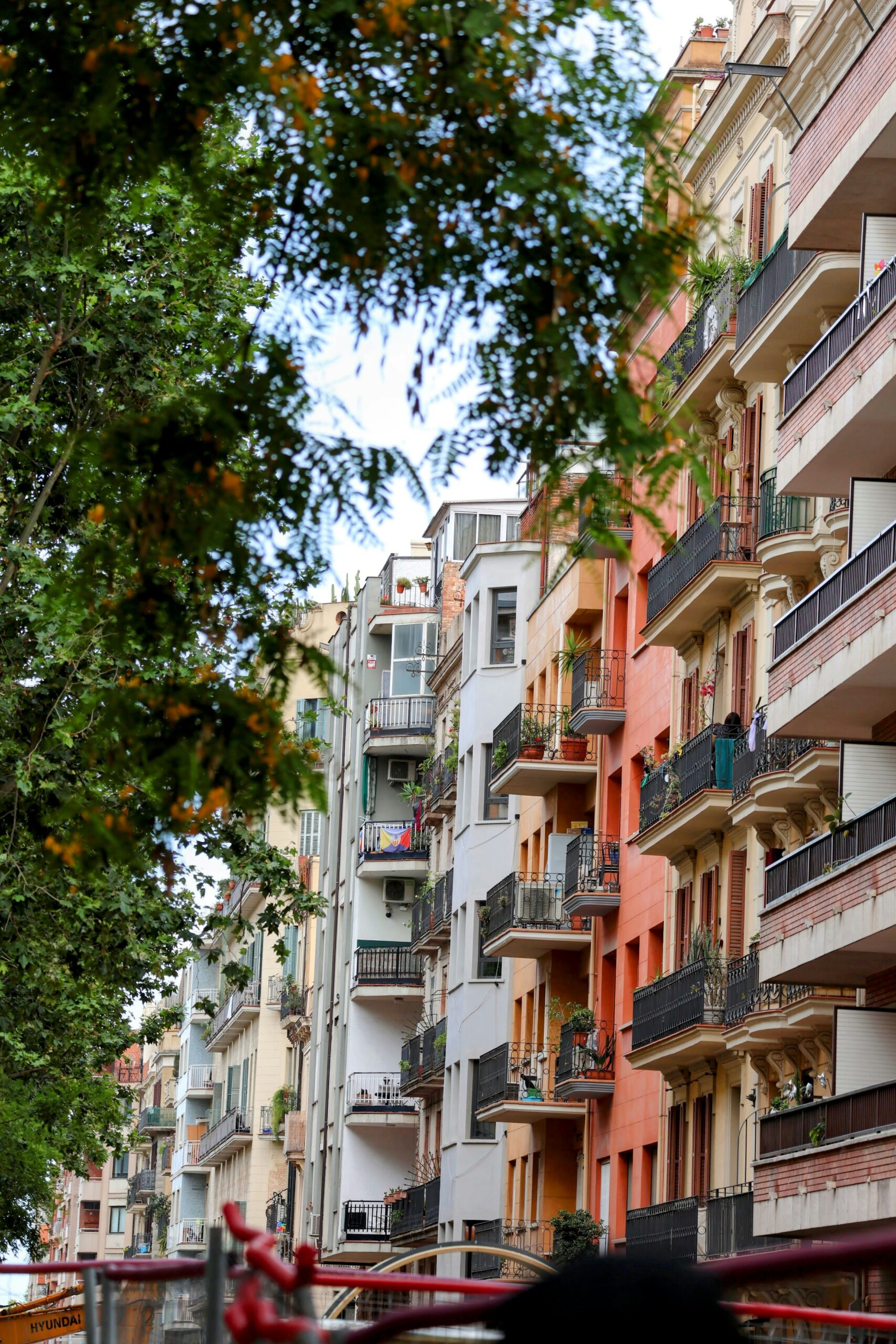
A new study highlights the significant need for energy-related renovations in Spain: 94.2 percent of residential buildings fall into energy efficiency classes D through G. Despite state and European funding programs, the modernization of the building stock has not yet progressed rapidly enough.
Spain Expat Press Editorial Team
by Marlon Gallego Bosbach
The majority of Spanish residential buildings have comparatively poor energy efficiency. According to a study by the real estate valuation firm Tinsa, 94.2 percent of houses and apartments fall into energy efficiency classes D through G. Consequently, there remains a significant need for energy-related renovations.
The results are drawn from the report “State of Energy Efficiency in Spain 2026,” which examines the condition of Spain’s building stock and progress in energy-related modernization.
Existing building stock as a key challenge
A key reason for the low energy efficiency is the age of many Spanish residential buildings. A large proportion were built before stricter energy efficiency requirements for new buildings were introduced.
In contrast, the picture is different for newer buildings: around 88 percent of energy certificates for new builds fall into efficiency classes A, B, or C.
This difference illustrates the extent to which energy standards in the construction sector have changed. While newer properties are often designed with greater efficiency from the outset, older buildings frequently require subsequent modernization.
Spain must significantly accelerate the restructuring process
To meet its national energy targets, Spain must significantly reduce energy consumption in its residential buildings. A saving of 26,394 gigawatt-hours is targeted by 2030. According to the study, achieving this would require the energy-related renovation rate to be around one and a half times higher than the rate seen between 2020 and 2025.
However, even with such an increase, less than half of Spain’s building stock would have undergone energy-efficient renovation by that time. Study author Cristina Arias therefore sees a much greater need for action. To achieve a moderate level of efficiency, Spain would need to roughly quintuple its current renovation efforts. Achieving a building stock that approaches European zero-emission targets by 2050 would actually require a tenfold increase.
Funding programs have enabled numerous renovation projects
In recent years, the energy-efficient modernization of Spanish residential buildings has been supported by European recovery funds. The Next Generation EU program provided funding for this purpose.
According to the state energy agency IDAE, the energy consumption of Spanish households fell by around eleven percent between 2011 and 2024. However, an increase of 1.7 percent was recorded again in the final year of the period under review.
By the official end of the residential building subsidy program on June 30, 2026, renovation work on 203,297 residential buildings in more than 4,600 municipalities had been certified. The final number of subsidized renovations is estimated at between 410,000 and 510,000. An official final report is expected in early 2027.
The initial target of the Spanish recovery plan was the renovation of 510,000 homes by mid-2026. In the long term, the government had aimed for an annual renovation rate of 300,000 buildings.
Millions of heating and hot water systems need to be replaced
In addition to building insulation, the modernization of technical systems also plays an important role. According to the study, around 3.5 million heating and hot water systems would need to be replaced within four years. Furthermore, insulation measures would be required for approximately 1.2 million apartments and houses by 2030.
The measures are intended to help reduce energy consumption and improve the efficiency of the building stock.
How much energy can be saved through renovations?
The potential for savings depends heavily on the construction and condition of the specific property. According to the study, energy-efficiency renovations can reduce energy consumption by approximately 25 to 75 percent for detached houses. For apartments, the potential savings range from 10 to 50 percent. Possible measures include improved thermal insulation and the replacement of outdated heating and hot water systems.
In addition to their impact on energy consumption, such modernizations can also influence ongoing energy costs. However, the actual savings depend on the specific building and the renovation work carried out.
Energy-related modernization remains a long-term task
The results of the Tinsa study show that, despite progress already made, Spain still faces a significant challenge. While support programs to date have enabled numerous renovations, the targeted modernization of the building stock continues to require substantial investment.
It will be particularly crucial to determine how energy-efficient renovation can be financed and accelerated following the end of the current funding program.
For property owners, improving energy efficiency remains a key factor in reducing the energy consumption of their properties. At the same time, Spain must significantly step up its renovation efforts to meet national and European climate targets.