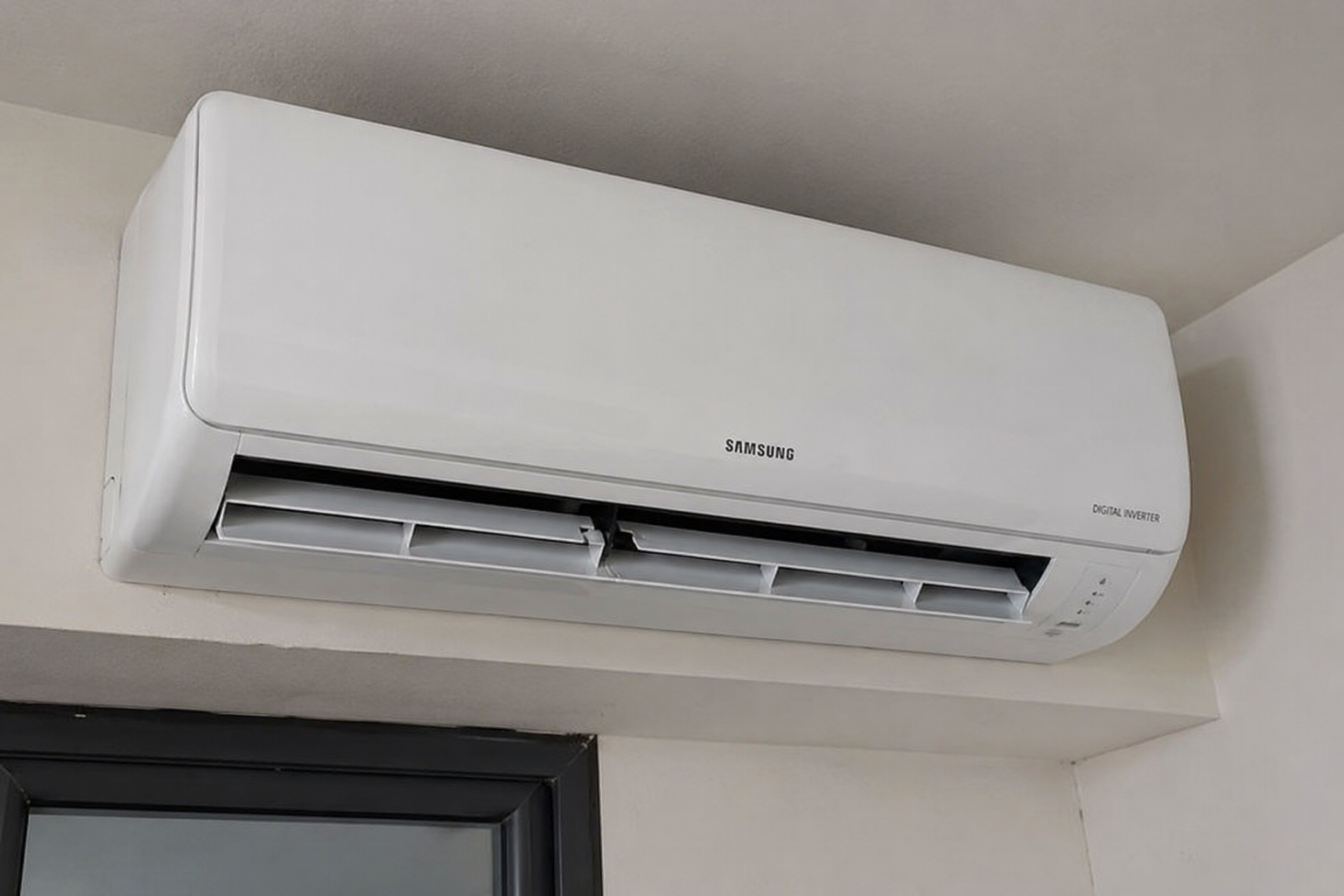

In Spain, temperatures are climbing – and so are many tenants’ expectations. With the first serious heatwaves of the year, the same question keeps returning: is a landlord in Spain obliged to install air conditioning in a rented flat? The blunt legal answer is far less refreshing than the thought of switching the unit on: no, they are not – even if the thermometer hovers around 40 degrees for days. A duty to provide air conditioning only arises in a very narrowly defined scenario.
Spain Expat Press Editorial Team
Habitable, yes. Air‑conditioned, no.
The legal framework is clearly drawn. Spain’s urban rentals law, the Ley de Arrendamientos Urbanos (LAU), requires landlords to keep a property in a condition that guarantees its habitability. In practice, that means the home must be safe, not detrimental to health and suitable for use as a permanent residence. It covers issues such as faulty wiring, serious damp problems or structural defects.
What the law does not guarantee is any particular level of comfort. Air conditioning falls squarely into that category. It undoubtedly makes life in a Spanish flat more pleasant in summer, but it is not part of the minimum legal standard. From the legislator’s point of view, the fact that a dwelling becomes hot in August is first and foremost a climatic reality – not, by itself, a rental defect that automatically triggers claims against the owner.
When heat becomes a structural issue
That does not mean extreme temperatures can never be a matter for housing law. Where building defects make matters significantly worse – rotten window frames, poorly insulated roofs, a position that turns the flat into a heat trap – the line into uninhabitability can, in theory, be crossed.
In such situations another concept comes into play: substantial impairment of normal use. If it can be shown that, under realistic conditions, the flat can scarcely be used or that the occupants’ health is at risk, a landlord may be obliged to act. Even then, however, the law is not demanding that a split unit be hung on the wall. What it does require is that structural causes are addressed – better insulation, remedial works, or other measures that restore habitability. Whether the eventual solution involves an air‑conditioning unit is more a question of practical sense than legal obligation.
The tenancy agreement: sharper than the statute book
Where the statute book stays vague, the tenancy agreement gains weight. If the contract expressly mentions an existing air‑conditioning unit – in the property description or an inventory – that device becomes part of the landlord’s contractual obligations. At that point, comfort turns into a duty: if the unit fails through normal wear and tear, responsibility for repair or replacement lies with the owner, just as it would for a built‑in heating system or a listed appliance.
The converse is equally clear. If there is no reference to air conditioning in the contract, a tenant cannot simply demand that the property be upgraded. Spanish law does not provide a right to turn an ordinary flat into a fully air‑conditioned city apartment at the landlord’s expense. Anyone who wants certainty on the point needs to settle it before signing – and do so in writing.
Installing a unit yourself? Only with consent
Many tenants therefore adopt a pragmatic stance: if the landlord will not pay, they will have a unit installed at their own expense. Legally, that is not a trivial step. Fitting an air‑conditioning unit is treated as an alteration to the property and, under Spanish law, significant alterations are not permitted without the landlord’s consent. Where an external unit is to be mounted on the façade, the building’s owners’ association will often also have a say. In many communities, a formal majority decision is required; a couple of undocumented drill holes in common property can quickly turn into an expensive mistake.
If the landlord agrees, nothing should be left to chance. It ought to be clear on paper: who pays for purchase and installation; who is responsible for servicing and repairs; whether the unit stays with the property when the tenancy ends, or can be removed by the tenant.
What may begin as a friendly verbal understanding can turn into a matter of proof if the relationship deteriorates. Without a written record, disputes and messy endings are almost guaranteed.
The sensible approach: negotiate before the heatwave hits
Until legislators decide to tighten the rules on heat stress in homes, the most pragmatic approach is distinctly unglamorous: talk early and put things in writing. Anyone renting out or renting in Spain would be wise not to leave cooling to chance, but to address the issue explicitly in the contract – whether as guaranteed equipment, a voluntary extra or something that is clearly excluded.
If the conflict has already flared up, a cool head is usually more useful than a rush to the courts. Compromises – sharing the cost of a unit, agreeing other heat‑mitigation measures, or adjusting the rent – are often quicker and more predictable than waiting for a judge. One thing is certain: the next heatwaves will come. A statutory right to air conditioning, for now, will not.