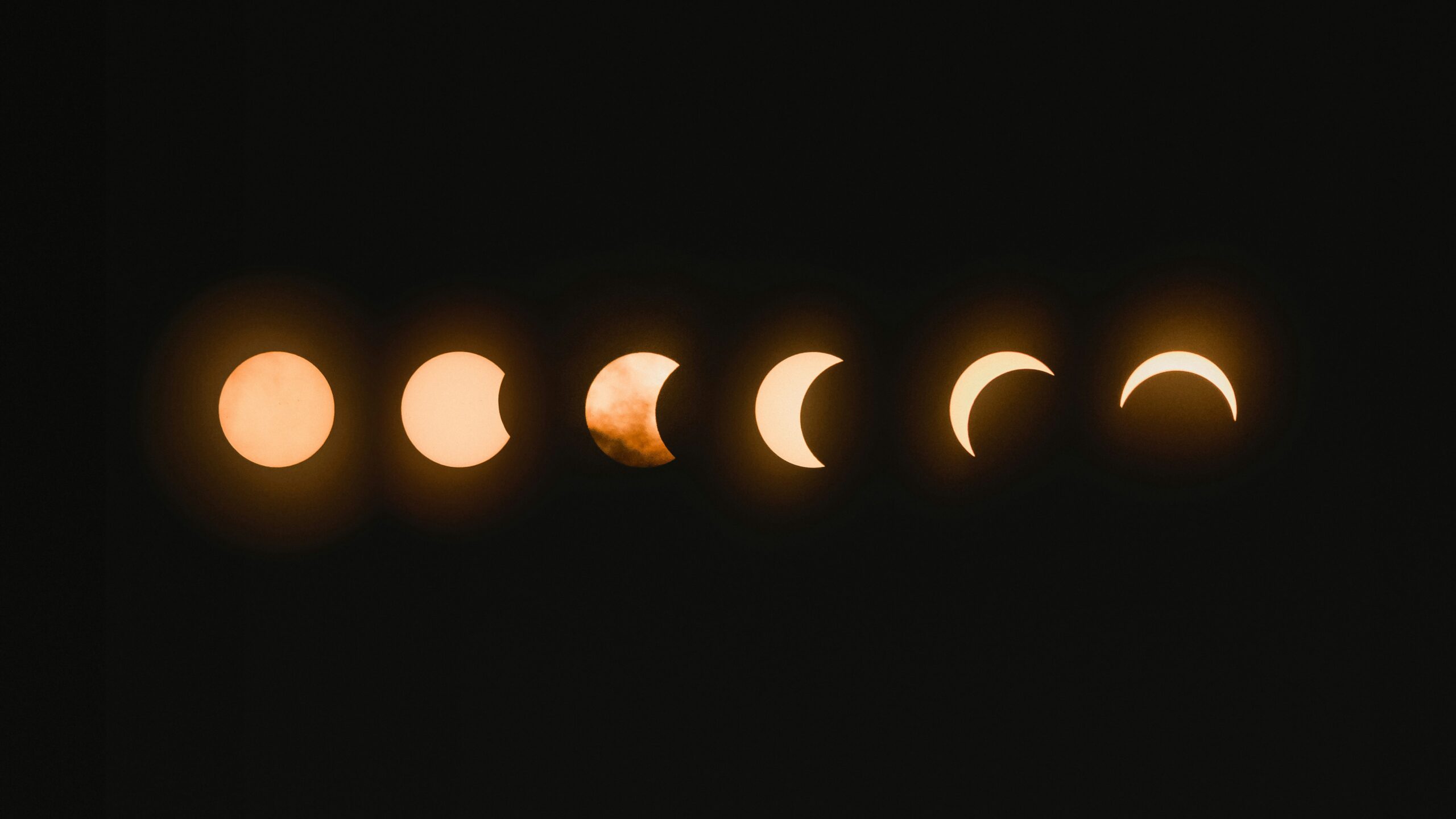
On the evening of 12 August 2026, daylight will briefly disappear across a broad swathe of Spain as the Moon completely covers the Sun.
It is an astronomical event that scientists, amateur astronomers and tourism authorities have been anticipating for years. While much of Europe will see only a partial solar eclipse, Spain is one of the few countries to lie directly within the path of totality.
But the experience will vary dramatically depending on where you are
Spain Expat Press Editorial Team
The Moon’s shadow will sweep across Spain
The total eclipse will reach Spain from the north-west in the early evening, crossing Galicia before moving across northern and central parts of the country towards the Mediterranean. The Balearic Islands will be among the last places in Spain to experience totality.
Outside this relatively narrow corridor, the eclipse will still be clearly visible. Large parts of southern Spain will see a substantial portion of the Sun obscured by the Moon, but will remain outside the zone of complete darkness.
Internationally, the path of totality will cross areas including north-eastern Greenland and western Iceland before reaching Spain. Elsewhere across much of Europe, western Africa and northern North America, the eclipse will be partial.
Spain faces one particular complication: the eclipse will occur relatively close to sunset.
That means choosing the right location will be especially important. Even within the path of totality, observers will need an unobstructed view towards the western horizon as the Sun will already be relatively low in the sky.
These provincial capitals are inside the path of totality
According to astronomical calculations, numerous Spanish provincial capitals are positioned within the zone where the Moon will completely cover the Sun.
A Coruña – maximum at around 8.28pm
Lugo – around 8.29pm
Oviedo – around 8.28pm
Santander – around 8.27pm
Bilbao – around 8.28pm
Vitoria-Gasteiz – around 8.28pm
León – around 8.29pm
Palencia – around 8.30pm
Burgos – around 8.29pm
Zamora – around 8.31pm
Valladolid – around 8.31pm
Soria – around 8.30pm
Segovia – around 8.32pm
Zaragoza – around 8.30pm
Teruel – around 8.32pm
Guadalajara – around 8.32pm
Cuenca – around 8.32pm
Lleida – around 8.29pm
Tarragona – around 8.30pm
Castellón de la Plana – around 8.32pm
Valencia – around 8.33pm
Palma de Mallorca – around 8.32pm
Exact timings will vary slightly according to the observer’s precise location.
Some locations will have an even better view
Simply being inside the path of totality is not the only consideration.
Particularly sought-after locations are those close to the eclipse’s centre line, where observers are positioned more centrally within the Moon’s shadow and totality can last longer.
In Spain, this line passes close to locations including Avilés, Oviedo, Aranda de Duero, Soria, Peñíscola and Palma de Mallorca.
The prime viewing corridor therefore stretches almost all the way across the country, from the Atlantic to the Mediterranean.
In A Coruña, for example, the partial phase is expected to begin at around 7.31pm, with the eclipse reaching its maximum at approximately 8.28pm.
In Burgos, the eclipse begins at around 7.33pm and reaches its decisive phase at approximately 8.29pm.
Mallorca will experience the event slightly later. In Palma, the eclipse is expected to begin at around 7.38pm, reaching its maximum at approximately 8.32pm.
A race against sunset
The timing is one of the most distinctive features of Spain’s 2026 eclipse.
By the time the Moon’s shadow crosses the country, the Sun will already be low above the horizon. That could produce spectacular scenes, particularly along the coast and in open countryside, but it also creates an additional challenge for anyone hoping to see totality.
Mountains, buildings or other obstacles towards the western horizon could be enough to obscure the Sun during the crucial moments.
Those planning to travel for the eclipse may therefore find elevated locations, coastal viewpoints and open landscapes preferable to densely built-up city centres.
There is, of course, one factor that even the most precise astronomical calculations cannot predict months in advance: the weather.
Cloud cover could ultimately determine whether thousands of people witness the Sun disappear completely or simply experience the eerie darkness produced by the Moon’s shadow.
Andalusia will see the eclipse – but not totality
Madrid, Andalusia and other areas further south lie outside the corridor of totality.
The eclipse there will remain partial.
Nevertheless, the event should still be striking. Depending on the location, a substantial proportion of the Sun will be obscured as the Moon passes in front of it.
Anyone determined to experience complete totality will need to travel into the corresponding corridor across northern and eastern Spain or to the Balearic Islands.
Spain becomes one of Europe’s prime eclipse destinations
The significance of 12 August extends well beyond astronomy.
Hotels, municipalities and tourism businesses in areas along the path of totality have been preparing for additional visitors. Major solar eclipses regularly attract people willing to travel considerable distances for the chance to spend just a few moments inside the Moon’s central shadow.
Spain is also entering an extraordinary period for eclipse watchers.
Another major solar eclipse will follow in August 2027, this time with southern Spain playing a particularly important role. That eclipse is expected to be one of the most spectacular of the century because of the exceptional duration of totality in parts of its path.
For 2026, however, attention will first turn to northern Spain, the Mediterranean coast and the Balearic Islands.
On the evening of 12 August, for a few extraordinary moments, something exceptionally rare will happen in one of Europe’s sunniest countries:
The Sun will disappear.