Elegant mansions, students from around the world, sweeping Atlantic beaches and summer evenings that seem to last forever: there is a small town on Spain’s northern coast that, despite its popularity, has managed to preserve a remarkably traditional character. In July and August, Comillas, in Cantabria, comes alive in a way that feels distinctly different from the country’s Mediterranean resorts.
Spain Expat Press Editorial Team
A traditional summer retreat for Spanish families
Comillas has a long history as a summer destination for Spain’s affluent classes. During the 19th century, the town attracted aristocrats, wealthy businessmen and even members of the Spanish royal family. Its grand villas, palaces and imposing casonas remain reminders of that era.
That heritage continues to shape the atmosphere during the summer months. Many Spanish families have been spending their holidays here for generations. In August, family homes fill up again, grandparents, parents and children gather around the same tables, and teenagers meet friends in the historic centre in the evenings.
There is an elegance to Comillas, but little ostentation. Unlike some of the more glamorous resorts on the Mediterranean, summer here tends to unfold in a quieter, more understated fashion.
Fundación Comillas brings an international crowd
There is, however, another side to summer in Comillas.
Among the Spanish holidaymakers are young people and students from around the world, many of whom come to learn more about Spain, its language and its culture.
An important part of this international presence is the Fundación Comillas, based in the imposing former university complex overlooking the town. It is not a university in the conventional sense today. The foundation focuses particularly on the Spanish language and Hispanic culture.
Students from different countries come to Comillas to improve their Spanish and deepen their understanding of the country’s history and culture, including through summer courses.
Their presence subtly changes the atmosphere during the holiday season. English, German, French and other languages can be heard alongside Spanish in cafés and streets.
For these young visitors, much of the learning inevitably happens outside the classroom – ordering a coffee, chatting to local people, going to the beach or spending an evening with Spanish students and other young people.

A walk through another Spain
Comillas is best explored on foot.
Its historic centre is a maze of small squares, old stone houses and narrow, winding streets. Between them stand the grand residences that tell the story of the town’s prosperity during the 19th century.
Among its most extraordinary buildings is El Capricho de Gaudí, one of the few works designed by Antoni Gaudí outside Catalonia. Colourful, playful and unmistakably unconventional, it is a reminder of just how fashionable and influential Comillas became during that period.
Above the town stands the historic complex now occupied by the Fundación Comillas, its monumental architecture providing a striking contrast with the intimate streets below.

The angel watching over the town
One of the most unusual sights in Comillas lies on a hill close to the coast.
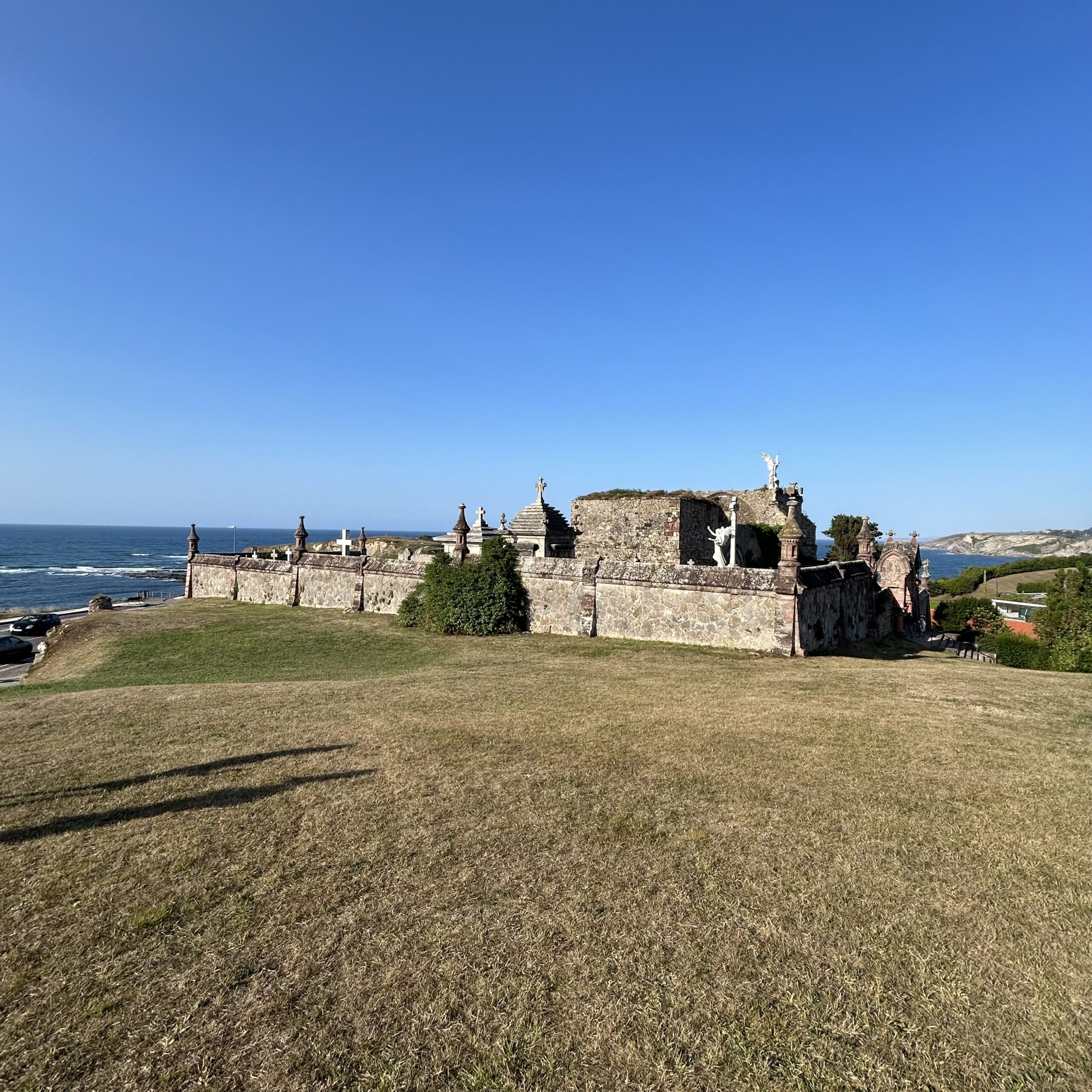
The town’s historic cemetery was built around the ruins of an old church. Rising dramatically above its walls is the Ángel Exterminador, the imposing angel created by Catalan sculptor Josep Llimona.
Visible from different parts of the town, the figure appears to watch over Comillas and the sea beyond.
From the hill, there are sweeping views across the rooftops, Cantabria’s intensely green landscape and the Atlantic.
It is particularly memorable towards sunset.

The Atlantic sets the rhythm
The beaches around Comillas feel very different from the densely developed stretches of Mediterranean coastline.
Here, the landscape is broad, green and open. Meadows and hills begin not far beyond the sand, while the Atlantic dominates the horizon.
The weather is part of the experience. Sunshine, clouds and wind can replace one another remarkably quickly, and it is precisely this changing light that gives the Cantabrian coast much of its beauty.
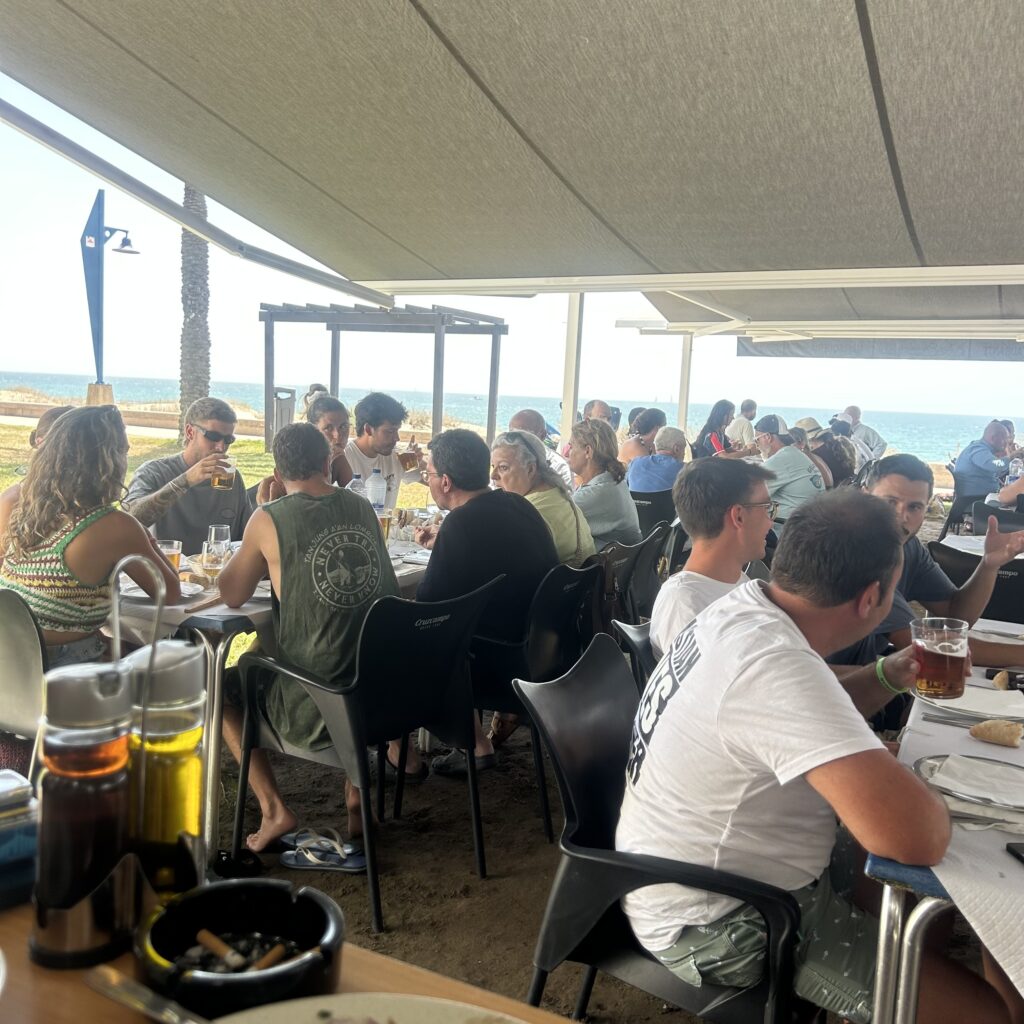
During the day, the beaches belong to families, surfers and walkers. As evening approaches, life gradually moves back into town.

When Comillas is at its best
Perhaps the finest part of the day begins after the beach.
The terraces and narrow streets of the historic centre fill again. Children remain outside long after dinner, teenagers meet their friends and international students mingle naturally with the summer crowd.
Then the light begins to change.
The sun sinks towards the Atlantic, the old façades take on a warm glow and the surrounding hills catch the final light of the day.
These are the unforgettable sunsets of a Cantabrian summer – no beach club, elaborate staging or loud music required.
Comillas can certainly become busy in August, and it is no longer an undiscovered destination. Yet it still feels very different from many of Spain’s best-known holiday resorts.
Perhaps it is the history. Perhaps the old houses and intensely green landscape. Perhaps it is the mixture of Spanish families and young people arriving from across the world.
Or perhaps it is simply because so much here still feels surprisingly natural.
Comillas is a place that never needed to reinvent the Spanish summer. And that may be precisely what makes it so special.